

[비즈한국] Companies sometimes make decisions that are difficult to explain by money alone. Understanding the laws or systems hidden behind these actions provides deeper insight into the inner workings. 'Useful Business Legal Tips (BizLaw)' introduces key insights to help understand business trends.
While perspectives may vary depending on one's position, the level of sanctions imposed on a company when a violation of fair trade law is confirmed is never light. Once allegations are raised, undergoing investigations by regulatory bodies is, in itself, a significant burden. This process often leads to administrative sanctions such as corrective orders or fines, and in cases involving criminal charges, it can lead to criminal prosecution. Furthermore, disclosing these violations to the media during this process often triggers a flood of public complaints and generates negative public sentiment.
Why, then, do companies continue to repeat these violations? There are many reasons, but a cold-headed analysis leads to the same conclusion: no matter how severely a company is punished, if the individuals directly involved in the violation remain unscathed, the violations will inevitably continue.
In East Asia, where collectivism is emphasized, prioritizing loyalty and cohesion within the company is often welcomed if it results in corporate profit. Whether the underlying act violates the law or harms others is often overlooked. This is the common sentiment in Korea. Furthermore, there is a perception that it is unreasonable to punish individuals for work done on behalf of the company, especially when they were just trying to earn a living.
Until recently, the prevailing practice was that even when a company was punished, individuals directly involved in the illegal activity—with few exceptions—were not held accountable. In fact, if illegal acts generated profit, those responsible were often praised for being "competent" and were subsequently promoted. Consequently, when professionals in the industry met, compliance was often dismissed as talk from those who didn't understand the "real" business, while those who could circumvent regulations and maximize short-term efficiency were the ones celebrated.
The situation has changed recently. It is evident through various circumstances that the personal responsibility for corporate business activities has increased. For instance, Supreme Court precedents establish that management who cause loss to a company through illegal acts, such as price fixing, bear the responsibility for damages. Because corporate management controls the decision-making process, there had been skepticism about whether it was realistically possible to hold management liable for damages based on the argument that poor management or judgment caused the loss.
In light of these circumstances, the shareholder derivative lawsuit system was introduced, allowing shareholders to file lawsuits on behalf of the company. Under this system, in industries such as cement, butane gas, construction, and steel, CEOs and executives are now held liable for damages to their companies.
Some precedents appear quite harsh. Even if a director was not directly involved in the decision-making process regarding price fixing, they cannot escape liability if they violated their duty to oversee the business execution of the CEO and the directors in charge. In other words, since corporate business is conducted in a divisional and organized manner under the direction of the CEO and responsible directors, a director's duty of supervision is not limited to tasks they directly oversee but extends to the overall execution of company business. Therefore, other executives and even employees are subject to this duty of supervision.

Even if the company profited from price fixing, that profit cannot be deducted from the damages the director must pay back to the company. The Supreme Court ruling 2024Da316391 contains a striking passage. The court stated, "A company must not use crime as a means of business activity. If a director violates laws while executing company business, even if the violation generates profit for the company, deducting that profit from the damages cannot be permitted, as it would condone the retention of illegal gains from the director's violation and exempt the director from responsibility to that extent, thereby encouraging corporate crime and director misconduct."
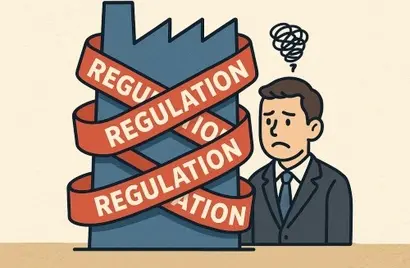
A common opinion voiced recently is the criticism of overly powerful regulations. The argument is that strengthening regulations is not a cure-all. Opinions that regulations are excessive are heard not only in the field of fair trade law but also across industries such as construction and manufacturing. The view is that a regulation-only approach might show visible legal enforcement in the short term, but in the long term, it suppresses individual creativity and undermines the market's autonomous functions.
Perhaps anticipating this, the Supreme Court, in the aforementioned cases that strengthened individual responsibility, provided an alternative to harmonize with the principle of responsibility. This can be seen as both a task for companies and individuals, and a future goal.
The Supreme Court ruled that for tasks involving high legal risks in light of the company's purpose, size, nature of business, and legal regulations, a director can fulfill their duty of supervision by establishing and operating an internal control system. This system should systematically identify all relevant laws, manage compliance, and ensure that if a violation is discovered, it is immediately reported or disclosed to take corrective measures.
Of course, such a system must not be a mere formality or a cover to shield individuals. Whether an internal control system was reasonably established and normally operated cannot be validated simply by the existence of a system or a designated position. It is judged by the content of the system, the actual duties assigned to the position, whether the system is substantively operated, and whether the duties were performed normally.
In accordance with this Supreme Court ruling, the Fair Trade Commission's 2024 notice stipulates that companies introducing and operating a 'Compliance Program' (CP) and achieving a certain grade will receive reduced fines and be exempted from ex-officio investigations. Much like a pair of wheels working in balance, the field of fair trade law has introduced benefits for proactive risk prevention alongside the strengthening of regulations.
While this appears to be a sophisticated development where ideals and reality are in harmony, one issue that will likely be raised moving forward is that such CP systems require significant manpower and costs, which will inevitably create disparities between large corporations and SMEs in terms of legal compliance or the ability to secure exemption from sanctions. Furthermore, awareness of legal enforcement may also differ based on company size. While the revitalization of CP is welcome, these issues are expected to be raised in the future.