

[비즈한국] The industrial complexes that once served as the foundation of national growth are aging rapidly. Complexes that have passed the 20-year mark since construction now account for 38% of the total, and this is projected to exceed half by 2030. As outdated facilities and industrial structures can lead to decreased productivity and regional economic stagnation, the government is accelerating regeneration projects. Experts point out that it is necessary to refer to overseas cases that have revitalized areas through the attraction of high-tech industries and spatial diversification.
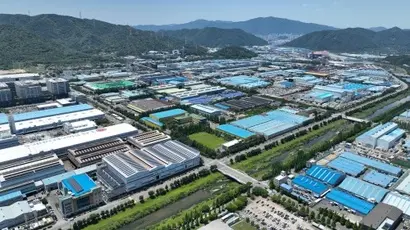
On September 22, the Ministry of Land, Infrastructure and Transport announced the ‘2025 Regeneration Project and Revitalization Zone Competition for Aging Industrial Complexes.’ The regeneration project supports the expansion and maintenance of infrastructure as well as the relocation of industrial sectors for modernization. Selected industrial complexes will receive up to 50 billion KRW in national funding for infrastructure improvements such as roads, parking lots, and parks. Along with this, revitalization zone projects aimed at diversifying functions within the complexes will be carried out in parallel.
The core of the revitalization zone project is to change land use and allow complex development to strengthen the cultural, convenience, and support functions of the industrial complexes. By allowing industrial land to be converted into residential facilities, office spaces, knowledge industry centers, amenities, and employee welfare facilities, the project opens a path for these complexes to evolve beyond mere production hubs into spaces where life and innovation coexist.
Lee Sang-ju, Head of the Office of Land and Urban Policy at the Ministry of Land, Infrastructure and Transport, emphasized, "For balanced regional development, it is important not only to create new industrial complexes but also to ensure the sustainability of existing aging ones," adding, "We will support these projects so that the public and private sectors can work together to breathe new life into these areas."
In reality, if an industrial complex fails to fulfill its role, it creates negative ripple effects throughout the local community. Aging, if not addressed in response to changes in the industrial structure, goes beyond physical deterioration to cause declines in the local economy, employment, and even the outflow of the youth population. This leads to weakened tax revenue for local governments and stalled regional development. Preventing regional extinction has made industrial complex regeneration an urgent task that can no longer be delayed.
Experts identify the influx of young people and the attraction of new industries as the keys to solving the problem. Woo Han-seong, a senior researcher at the Korea Industrial Complex Corporation’s Institute for Industrial Complex Policy, explained, "To overcome the decline in competitiveness and productivity of industrial complexes, a youth-friendly environment is necessary," adding, "We are creating spaces where young people can work and stay by building youth culture centers and remodeling old factories."
Overseas cases illustrate the direction for regeneration projects. The Phoenix district in Dortmund, Germany, is a prime example of high-tech transformation. When the Ruhr industrial region, once a center for coal and steel, began to decline, abandoned steel mills were transformed into complex spaces where high-tech industries and leisure areas coexist. The western side attracted information and communications and microsystem companies centered around the Micro-Nano Technology Center, while the eastern side created high-end residential complexes and waterfront/leisure spaces. The combination of industrial attraction with residential and leisure functions successfully restored regional competitiveness.
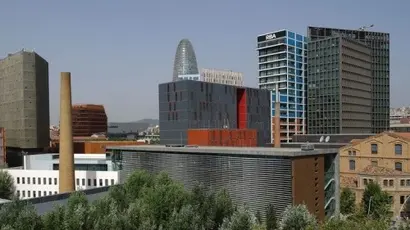
The ‘22@BCN project’ in Barcelona, Spain, is also noteworthy. It repurposed the underdeveloped Poblenou industrial area into an innovation cluster, universities, offices, hotels, and educational institutions, reorganizing it into a space where high-tech industry and daily life coexist. In particular, the institutional mechanism that induced private participation by offering benefits like eased height restrictions to landowners in exchange for returning a portion of their land for social housing, public facilities, and green space is cited as a key factor in its success.
Such overseas cases provide implications for domestic regeneration projects. Kim Ryun-hee, a research fellow at the LH Land and Housing Institute, stated, "Land use must keep pace with social demands," and added, "It is necessary to convert these into complex new industrial sites according to changes in the industrial structure."
Another challenge is environmental management. Outdated treatment facilities worsen local environmental pollution. In fact, accidents involving the leakage of hazardous substances from aging underground pipes have repeatedly occurred in the Ulsan industrial complex. This problem is a task that must be solved alongside industrial complex regeneration.
Germany’s ‘IBA Emscher Park Project’ reinforced wastewater treatment facilities to prevent environmental destruction around the Emscher River, which flows through the industrial area, and introduced a system to charge fees for domestic wastewater and impermeable paved surfaces. Domestically, efforts are also being made to improve management levels by reducing hazardous substance emissions through the Smart Green Industrial Complex project and by establishing integrated control centers.