

[비즈한국] The government conducts a "preliminary feasibility study" (pre-feasibility study) for various national projects that require large-scale budget investments. For projects requiring 30 billion won or more in state funds, the project can only proceed if the study concludes it is economically viable, or if it is granted an exemption due to urgency, such as regional balanced development or international bidding requirements.
The pre-feasibility study serves as the final safeguard against the waste of taxpayer money. However, it has been found that some projects that passed or were exempted from these studies are seeing slower-than-planned progress or poorer-than-expected performance, leading to the waste of public funds. This has led to criticism that the pre-feasibility process, which should be rigorous, may have become lax due to budget pork-barreling among regions or participation in overseas projects tailored to the preferences of the administration.
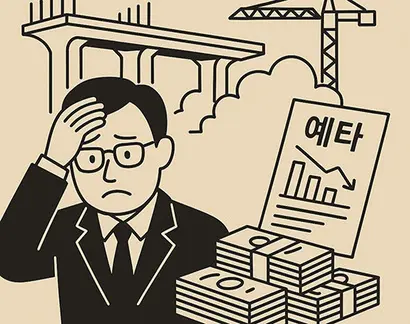
The pre-feasibility study was introduced in 1999 to verify the validity of projects requiring large-scale national budget input in advance. It is intended to prevent budget waste and project insolvency, and budget allocation is only possible if economic feasibility, policy effectiveness, and regional balanced development are recognized. The target for the study is any new project with a total cost of 50 billion won or more and requiring at least 30 billion won in state financial support.
Nearly 20 to 30 projects are subject to these studies annually; according to the Korea Development Institute (KDI) and others, 335 projects have been subject to such studies over the past 15 years. Notably, in 2021 alone, 40 projects were subjected to the study. However, projects essential for regional balanced development or urgent matters like international development project bids are eligible for exemption. Over the past 15 years, there have been 18 cases of projects receiving such exemptions.
Some projects that have passed or been exempted from these strict studies are not being executed as originally planned. According to the National Assembly and various public institutions, the Korea Railroad Corporation's (KORAIL) project to relocate the Susaek rail yard and the project to relocate the Busan railway vehicle maintenance depot were reported to begin in November 2020 and September 2021, respectively. However, as of May this year, the execution rate for both projects remains at 0%, with no progress made.
The Susaek rail yard relocation project has been delayed due to difficulties in relocation negotiations with Goyang City, while the Busan railway vehicle maintenance depot project has effectively collapsed as no private companies participated in the call for bids. Furthermore, KORAIL's project to replace aging passenger trains was initially planned to purchase 150 train cars by August 2021, but due to supply chain disruptions caused by COVID-19 and other factors, only 104 cars were delivered as of the end of 2024.
The Korea District Heating Corp.'s Suwon integrated energy project passed the pre-feasibility study between 2019 and 2020, but the execution rate has stalled at 1.8% due to delayed investments caused by soaring oil prices and increased financial risks for the corporation. The Korea Midland Power's Boryeong Unit 6 fuel conversion replacement project, which began in 2021, has seen an execution rate of only 13% due to a two-year delay caused by civil complaints from residents in the affected area. The Jeju International Free City Development Center’s Jeju Advanced Science and Technology Park Phase 2 project saw its execution rate reach only 50.5% as project costs rose during delays in licensing and permits.
According to the National Assembly, 13 projects that passed or were exempted from these studies are currently progressing slower than planned. When projects stall or drag on, the budget available for other projects decreases, and the financial burden on the public grows as future inflation increases the costs of those specific projects.
Additionally, there are cases where projects were evaluated as profitable during the pre-feasibility study but resulted in losses, negatively impacting the finances of the public institutions that initiated them. The Korea Southern Power’s South Jeju Combined Cycle Power Plant construction project passed the study in 2018 with expectations of turning a profit by 2021. The initial study projected a cumulative profit of 41.4 billion won by 2024; however, the project has incurred continuous losses since its inception in 2020, with the deficit accumulating to 24.6 billion won by 2024.
The Korea Western Power’s Dongducheon combined-cycle joint development project was also evaluated to have a cumulative profit of 276.1 billion won by 2024, but it actually incurred a cumulative loss of 77.6 billion won during that period. Factors including a drop in profit margins due to rising Liquefied Natural Gas (LNG) prices since the study and increased financial costs from rising interest rates played a role. According to the National Assembly, 20 projects, including these, were initially projected to generate a total cumulative profit of 2.5423 trillion won, but in reality, they have incurred a cumulative loss of 939.8 billion won due to poor performance.