

[비즈한국] Shilla Duty Free is finally pulling out of Incheon International Airport. The duty-free industry, having endured a long recession, seems to be shutting down businesses one after another this year. As the sense of crisis in the duty-free sector reaches its peak, job insecurity among frontline staff is also rising rapidly.
A Domino Effect of Business Withdrawals
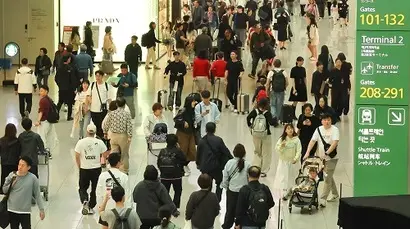
Recently, Shilla Duty Free decided to return its business rights for the DF1 zone at Incheon International Airport (halting operations). In the 2023 bidding process, Shilla Duty Free was awarded and has been operating the DF1 (perfumes and cosmetics) and DF3 (fashion boutique) zones. The original contract was set to run until June 30, 2033, but the company decided to withdraw before fulfilling the term, accepting a penalty of 190 billion won. The withdrawal is scheduled for March of next year.
Shilla Duty Free had been in conflict with Incheon International Airport Corporation over rental adjustments. Currently, rent for Incheon Airport duty-free shops is calculated by multiplying the total number of departing passengers by the rent per passenger. However, while the number of departing passengers has increased, duty-free sales have decreased, leading to rising operational burdens and worsening profitability.
Shilla Duty Free stated, “Since signing the Incheon Airport duty-free operation contract in 2023, the duty-free market has faced rapid environmental changes, including shifts in the consumption patterns of our main customer base and reduced purchasing power. We requested a rent adjustment from the Incheon International Airport Corporation, but it was not accepted.” They added, “With losses being too high to continue operations at Incheon Airport, we had no choice but to decide to return the business rights for the DF1 zone.”
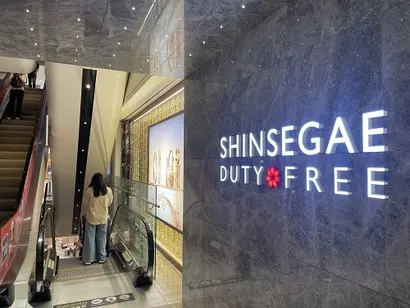
Industry observers suggest that Shinsegae004170 Duty Free may also shut down its Incheon Airport duty-free operations. Like Shilla, Shinsegae has also been requesting rent reductions from the Incheon International Airport Corporation. It is widely speculated that the company's future response plan will be determined after the group’s regular personnel reshuffle. Shinsegae Duty Free stated, “Nothing specific has been decided yet, and we are carefully reviewing various response options.”
The duty-free industry has been unable to escape a long-term slump since COVID-19. Sales have plummeted as the number of Chinese group tourists dropped significantly, compounded by high exchange rates and changes in tourist spending habits, making a recovery in performance appear distant.
A duty-free shop employee, identified as A, said, “These days, foreign tourists often tell their guides that they would rather go to Olive Young or Daiso instead of a duty-free shop,” adding, “As places offering similar quality products at lower prices gain popularity, the reason to visit duty-free shops has diminished. The consumption patterns of tourists have changed completely.”
Having endured a long-term recession, the duty-free industry seems to have reached a breaking point, with businesses closing or downsizing one after another this year. Earlier this year, Shinsegae Duty Free closed its Busan branch, while Hyundai Duty Free closed its Dongdaemun branch in July and reduced the operating area of its Trade Center branch. With Shilla Duty Free now also giving up its Incheon Airport business, the sense of crisis across the industry is intensifying.
An industry official explained, “In the past, we could have generated sales through Chinese daigou (shoppers), but companies no longer prefer that method of selling. Recovering the duty-free business environment won’t be easy,” adding, “The industry atmosphere is completely stagnant. Younger employees are resigning one after another because they see no vision for the future.”
Jobs Disappearing, Workloads Increasing
The long-term recession in the duty-free industry is also leading to staff cuts. The number of full-time employees in the TR (Duty Free) division of Hotel Shilla008770 fell by 11%, from 752 at the end of 2023 to 666 in June 2025. Hotel Lotte TR also saw a 18% reduction, from 910 to 750, over the same period.
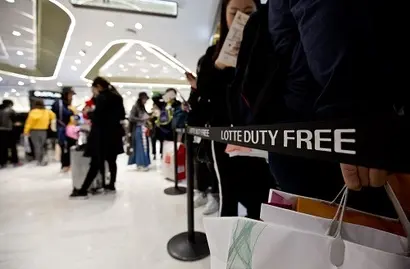
Lotte Duty Free carried out massive restructuring last year, cutting about 160 jobs. To save costs, tasks previously handled by outsourced personnel have been shifted to internal staff. A Lotte Duty Free labor union official said, “Following the restructuring, some employees were reassigned. With reassignments to logistics or pickup counters, it has become common for existing manager-level staff to perform the same tasks as general entry-level employees,” adding, “Rumors of another round of personnel appointments this year are circulating, which is further heightening employee anxiety.”
With the withdrawal of brands from duty-free shops continuing, the job outlook for frontline staff is growing increasingly dim. An industry official said, “When contract expiration dates approach, many brands are choosing to leave one after another,” adding, “Employees who worked at those brand stores are losing their jobs.” The official added, “While some brands have unions that can voice concerns, most do not. The invisible job insecurity is even more serious.”
On September 10, the Department Store and Duty Free Shop Sales Service Labor Union held a rally in front of the Shinsegae Department Store main branch to raise awareness about issues such as worsening employment instability and labor shortages. The union stated, “Since the closure of the Shinsegae Duty Free Busan branch last January, the risk of employment instability arising from the return of duty-free business rights has been steadily increasing,” addressing the issue of the employment crisis for workers.
The Department Store and Duty Free Shop Sales Service Union has been in collective bargaining with major department store and duty-free shop brands since March, with the signing of an employment stability agreement as a key agenda item. However, negotiations ultimately broke down, and the parties are now in the mediation process.
A union official said, “Due to staff reductions, instances where one person runs a store previously managed by three or four people are increasing, leading to excessive workloads. We are in a working environment where it is difficult to even freely eat or use the restroom,” adding, “Even when vacancies arise due to maternity or childcare leave, they are not being filled. We are demanding that reinforcement of personnel is absolutely necessary in these areas.”