

[비즈한국] The Ministry of Health and Welfare (MOHW) has announced a regulatory plan regarding the use of donated human tissues for cosmetic and plastic surgery procedures, following recent reports by Bizhankook. This measure comes as ethical controversy has grown over the use of human tissues, donated for the purpose of saving lives, in skin cosmetic procedures (Related articles: [Exclusive] 'Human-derived skin boosters' causing a stir in dermatology turn out to be extracted from 'cadavers'; [Exclusive] Human tissues donated for medical treatment used in cosmetic procedures without notification).
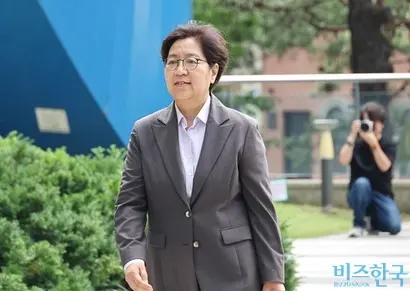
The Ministry of Health and Welfare stated that because the use of human tissues (skin) donated by the public for simple cosmetic or plastic surgery purposes rather than for treatment or rehabilitation—such as for cancer or burns—could negatively impact the motivation for donation, it plans to establish improvements in consultation with the Ministry of Food and Drug Safety (MFDS). These include requiring the purpose of the graft to be recorded during tissue transplantation, distributing a standard contract for the distribution of imported tissues, and providing administrative guidance to relevant associations to refrain from using tissues for cosmetic and plastic surgery purposes.
Current laws do not contain provisions prohibiting the use of human tissues for cosmetic or plastic surgery. The MOHW also explained, "Even for the same human tissue, medical staff consider both therapeutic effects and the patient's aesthetic satisfaction, making it difficult to uniformly prohibit or allow such use by law." This implies that there are areas where it is difficult to clearly distinguish between treatment and aesthetics. Representative examples include breast reconstruction for breast cancer patients, skin regeneration for burn patients, and skin treatment for acne scar improvement.
However, the MOHW explained that for domestic human tissues, it is currently regulating their use for simple cosmetic purposes through the 'Human Tissue Distribution Agreement' of the Korea Public Tissue Bank. The explanation is that by specifying such terms in the distribution agreement, they are indirectly regulating the practice. Nevertheless, in reality, some graft materials are being prescribed in medical settings for both therapeutic and cosmetic purposes.
Furthermore, unlike domestically donated tissues, human tissues imported from overseas are not subject to any regulations. As a result, graft materials processed from imported human tissues are being openly used for skin beauty procedures.
Consequently, the MOHW has stepped up to regulate the issue by creating a 'standard contract.' A ministry official stated, "The current situation (regarding human tissues being used for cosmetic surgery) has been shared with the MFDS. We plan to consult with the MFDS to distribute a standard contract to be applied when tissue banks that import human tissues distribute them to domestic medical institutions."
The ministry is also taking steps to curb the misuse of domestic human tissues. The MOHW plans to mandate the recording of the purpose of transplantation when human tissues are used. Currently, while the recipient and the date are reported during transplantation, the purpose of the procedure is not. In addition, the MOHW announced that it would provide administrative guidance to relevant associations, such as recommending that they refrain from using tissues for cosmetic and plastic surgery purposes.