

[비즈한국] An amendment to the 'Act on the Development of the Popular Culture and Arts Industry', which governs matters related to pop culture artists and the industry, went into effect on August 1. As the name suggests, the 'Pop Culture Industry Act' is more focused on the perspectives of companies and the industry rather than those of the artists themselves. This highlights the need to revise the law to recognize pop culture artists as equal subjects of rights. In particular, measures to strengthen youth protection and empower them as autonomous individuals are urgently needed. Let us examine the regulations related to adolescents.
First, the role of parents as legal representatives is often excessive. This is especially true in a social climate where some parents still exercise rights as if they own their children. If a legal representative consents, contracts that might otherwise violate the Juvenile Protection Act or the Labor Standards Act can still be signed. Allowing a minor's rights to hinge entirely on parental consent can significantly infringe upon the individual rights of the adolescent. Even when the legal representative is a parent, such authority should be recognized only in ways that promote the growth and rights of the minor as an individual.
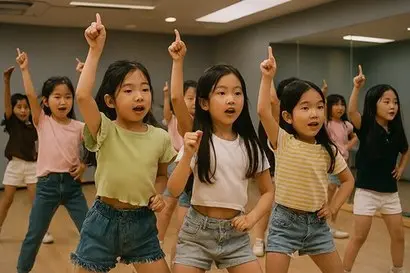
The practice of proxy contracts by parents also leaves much room for re-evaluation. There are many cases where "slave-like" activities continue because parents agree to auxiliary clauses that the adolescent pop culture artists do not want. In reality, rights such as physical and mental health, the right to education, personality rights, the right to sleep, the right to rest, and the freedom of choice cannot be directly managed, supervised, or controlled by the legal representative and are instead left entirely to the company (agency). Compensation and damages for health issues resulting from excessive dieting and the like are insufficient. How the right to education is concretely guaranteed is unclear, and there is no guarantee for cases where poor performance occurs due to lack of support. In our current legal system, issues of good faith when personality rights are infringed are not yet grounds for contract termination. This was clearly demonstrated in the NewJeans and Fifty Fifty situations.
On the set of pop culture productions, the standards for service time provided by young artists are not strictly observed. If an agreement is reached with the legal representative, these service time standards can be altered at will. In particular, for K-pop trainees, service hours are in a gray area. While practice time may seem to be for the trainee's own benefit, it ultimately amounts to providing service to the company. If a system were implemented where trainees receive salaries, as seen in Japan, the application of service hours would likely become clearer for them as well. A legal framework that explicitly provides compensation for trainees is necessary.
Age standards also need to be segmented. Current age regulations for young pop culture artists use 15 years old as the threshold. This creates a paradox in protecting idols or child actors that differs from other laws. We can compare how these age criteria differ from other relevant laws. The Framework Act on Juveniles defines youth as those between 9 and 24. The Civil Act and the Juvenile Protection Act define it as under 19. The Child Welfare Act, the Motion Picture and Video Products Promotion Act, the Performance Act, the Music Industry Act, and the Game Industry Promotion Act also follow the Juvenile Protection Act. The Labor Standards Act defines minors as those between 15 and under 18, and explicitly states that those under 15 cannot be employed.
However, the Pop Culture Industry Act allows adolescents under 15 to work up to 35 hours per week. While work between 10 PM and 6 AM is prohibited, this can be extended until midnight if the following day is a school holiday, subject to the consent of the adolescent and their legal representative. Adolescents 15 and older can provide service for up to 40 hours per week. If the adolescent agrees, it can be extended by 1 hour per day and up to 6 hours per week. Work from 10 PM to 6 AM is prohibited, but even in this case, it is allowed if the adolescent and the legal representative consent.
This contradicts the Labor Standards Act. According to the Labor Standards Act, the weekly working hours for a minor under 18 is, in principle, a maximum of 35 hours. Yet, the Pop Culture Industry Act treats overtime for artists aged 15 to 18 as a given. It is impossible to monitor this on the field. Moreover, with mutual consent, they can be made to work even more. In the position of the 'subordinate' party, they have no choice but to accept it. Due to the nature of the pop arts industry, every artist acts individually, making resistance difficult.
Young cultural artists should be required to register with relevant agencies to be allowed to work. Contract details must be verified for the purpose of youth protection. Additionally, child actors working on production sets range from toddlers to elementary school students, so service regulations should be applied differently based on age groups. The intensity of labor is completely different between a 35-hour work week for a 15-year-old and for a toddler.
Following the amendment to the Pop Culture Industry Act, a system for designating a 'Youth Protection Officer' has been in effect since August 1. To protect the fundamental rights of adolescents, all business operators must designate a Youth Protection Officer, who must be an executive of the company or a department head responsible for youth protection. However, it is questionable whether designating an internal employee or a decision-maker of the company as the Youth Protection Officer will be truly effective.
The amended law also includes a new provision allowing the Minister of Culture, Sports and Tourism to request pop culture business operators and staff to submit materials regarding the protection of youth human rights. However, there are no regulations on what responsibilities or punishments are imposed when the Youth Protection Officer fails to perform their duties properly. An objective third-party agency or entity is needed to monitor this.
It is said that the protection of young pop culture artists is strengthening under the law. Some argue that the rights of artists have become "too" strong. Such claims were also made regarding the NewJeans situation. While some view this as an increase in the influence of young stars, this is actually the power of their fandom, not legal or institutional power. Protective measures for young pop culture artists remain insufficient.
The important thing is not to simply view them as objects of protection, but to enable them to grow through education and, through that growth, establish themselves as members of society and active participants in the industry. Correspondingly, we must move toward a direction that fosters the interests and development of companies as well.
The author, Kim Heon-sik, has spent his time navigating the forest of popular culture phenomena since his 20s, driven by the expectation that there is a way to make the world a better place through culture. He continues on this path in the 21st century, where artificial intelligence and quantum computers are active, with the same belief.