

[비즈한국] Discussions regarding the merger of KTX and SRT have recently been taking place. Within the Korea Railroad Corporation (KORAIL), the operator of KTX, there is growing sentiment that KTX and SRT should be integrated to reduce redundant costs. However, SR, the operator of SRT, is generally opposed to the merger. Amidst this, the Lee Jae-myung administration has recently been conducting discussions on the KTX-SRT merger. Since the ruling Democratic Party of Korea is also in favor of the integration, observers suggest that the possibility of a merger is not low.
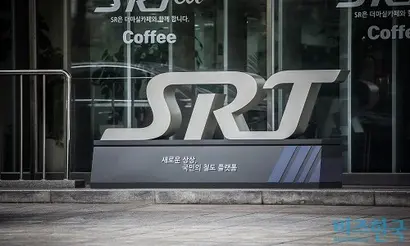
Domestic high-speed rail is bifurcated into KTX, operated by KORAIL, and SRT, operated by SR. Until the 2000s, KTX held a monopoly on domestic high-speed rail, but the high-speed rail market entered a competitive system with the official launch of SRT in 2016.
Voices calling for the KTX-SRT merger are emerging from within KORAIL. The Korean Railway Workers' Union (KRWU), composed mainly of KORAIL employees, held a series of press conferences throughout September at major domestic stations, including Seoul, Daejeon, Gwangju Songjeong, Busan, and Yeongju stations, to demand the KTX-SRT merger.
The KRWU argues that if KTX and SRT are merged, it will result in effects such as an expansion of routes, reduction of redundant costs, and lower fares. There is also criticism that SRT is disadvantageous in terms of profitability because it monopolizes so-called "profitable routes." KORAIL recorded an operating loss of 73.6 billion won last year, while SR recorded an operating profit of 37.7 billion won.
The KRWU has demanded the KTX-SRT merger several times in the past. During the Yoon Suk-yeol administration, no concrete discussions on the merger took place. It is said that this reflects the political atmosphere. SRT was a project spearheaded by former President Park Geun-hye. Former President Park launched SRT as part of "railway privatization," and the then-opposition party strongly opposed the launch of SRT. Since then, voices criticizing SRT have consistently emerged within the Democratic Party of Korea, while the People Power Party has generally viewed SRT positively.
Coincidentally, SR is staffed by many figures with deep ties to the People Power Party. SR Vice President Shim Young-joo served as an administrative officer in the Presidential Secretariat during the Yoon Suk-yeol administration, and SR Standing Auditor Park Jin-yi served as a director at the Presidential Security Service during the Park Geun-hye administration.
However, with President Lee Jae-myung taking office, discussions on the KTX-SRT merger are gaining momentum. In fact, the KTX-SRT merger is one of President Lee Jae-myung's campaign promises. Ahead of the 2022 presidential election, President Lee stated on social media, "I will integrate KTX and SRT to eliminate regional discrimination and enhance public utility, such as through fare discounts." In his 2025 presidential campaign platform, he also mentioned, "Expansion of public convenience and strengthening of safety through the integration of the bifurcated high-speed rail system and increasing service frequency."
The Lee Jae-myung administration has recently been collecting opinions regarding the KTX-SRT merger. The Ministry of Land, Infrastructure and Transport (MOLIT) held a meeting for the KTX-SRT merger in August. The KRWU did not attend the meeting. The union stated, "Looking at the list of outside members who participated in the meeting, one cannot help but doubt whether MOLIT officials have the will to implement the president's pledge," adding, "Since most of the participants are people who advocate for competition and oppose integration, the KRWU unfortunately had no choice but to declare its absence."
The ruling Democratic Party of Korea currently holds 166 seats, which is more than a majority of the 298 National Assembly seats. If you add the lawmakers from the Rebuilding Korea Party, Progressive Party, Basic Income Party, and Social Democratic Party, which are classified as part of the ruling coalition, the total reaches 184 seats. Independent lawmakers such as Kim Jong-min, Woo Won-shik (Speaker of the National Assembly), Lee Chun-suk, and Choi Hyuk-jin are also considered to be from the Democratic Party or aligned with the ruling coalition. If they support the Lee Jae-myung administration, the president's policies could be implemented more easily.
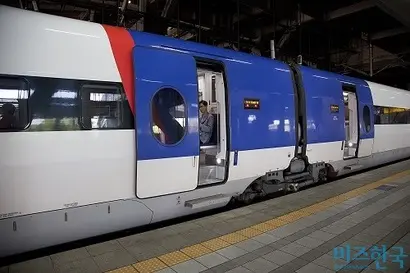
The problem is that SR opposes the merger. No matter how large the ruling party is, it cannot simply ignore the opinion of SR, the direct party involved. As the KRWU mentioned, there is a high possibility that manpower restructuring will take place to cut redundant costs. If restructuring proceeds, the administration will have to endure backlash from SR employees. Of course, employees of SR, a public enterprise, cannot be fired without cause.
SR had previously refrained from taking an official company stance. However, it released an unusual statement on September 17. SR stated, "SRT is 10% cheaper than existing high-speed trains, and through various discounts, it has saved the public approximately 880 billion won in transportation costs since its opening," and added, "The operation of SRT has created a virtuous cycle of attracting customers across the railway sector, such as through other operators reviving mileage systems, which has reduced high-speed rail costs for the public." SR further added, "The level of overall high-speed rail passenger service, including SRT, has improved every year from 84.9 points in 2016 to 92.2 points in 2022," and that "SR is playing the role of a catalyst in transforming 'supplier-monopoly railways' into 'railways for the people.'"
In this atmosphere, it is expected that it will be difficult for the Lee Jae-myung administration to rush the KTX-SRT merger. Instead, there are predictions that it will proceed sequentially by first integrating some services. Minister of Land, Infrastructure and Transport Kim Yoon-duk stated in his response to the personnel hearing in July, when he was a candidate, "We will evaluate the bifurcated railway operation system through pilot projects for service integration, such as cross-operation of KTX and SRT."
However, the KRWU is demanding an immediate merger, not just cross-operation. In a statement, the union claimed, "Stop the wordplay and integrate the high-speed rail operators into one without delay," adding, "There is no such thing as social resources that can be wasted to maintain the current unreasonable competitive system." If the KTX-SRT merger is delayed, the KRWU's criticism will follow accordingly. For the Lee Jae-myung administration, it is a situation where it is difficult to avoid criticism from SR executives and employees if it merges KTX-SRT, and criticism from KORAIL and the KRWU if it does not merge or delays the process.
MOLIT plans to hold a second meeting regarding the KTX-SRT merger soon. It is reported that the ministry has requested various stakeholders to organize their points of contention. More in-depth discussions on the merger are expected at the second meeting.