

[비즈한국] Celltrion068270 has secured a local production facility in the United States. While US government approval is still pending, the company announced plans to finalize the process this year and begin product validation procedures as early as next year. This is considered to be past the most critical phase of the acquisition. The factory, acquired to counter US tariff policies, will begin full-scale production of Celltrion's pharmaceuticals starting late next year. It is expected to serve as a forward base for local US supply and the expansion of its CMO (Contract Manufacturing Organization) business.
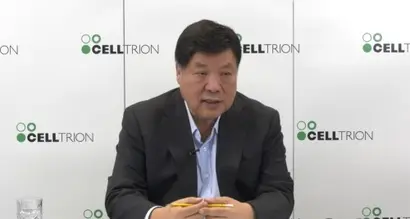
On the 23rd, Celltrion Chairman Seo Jung-jin held an online press conference to announce the signing of the final agreement to acquire a production plant from the US pharmaceutical company Eli Lilly. The acquisition will be carried out through Celltrion USA, the company's US subsidiary, and funding will be secured through a paid-in capital increase. The acquisition cost alone reaches 460 billion won, with an additional 240 billion won to be invested in operating funds for the facility.
Chairman Seo explained that if demand for pharmaceuticals increases, they are considering an additional investment of 700 billion won for expansion. He stated, “Under a non-disclosure agreement with Eli Lilly, I cannot reveal the production capacity, specific products, or the number of local employees at the plant,” but added, “With a total investment of 1.4 trillion won, including future expansions, the production capacity will reach 1.5 times that of our current Songdo Plant 2.” Songdo Plant 2 has an annual capacity of 90,000 liters of biopharmaceuticals. The plant to be acquired consists of a total of four buildings, including production facilities, a logistics warehouse, a technical support building, and an operations building, on a site of approximately 45,000 pyeong (about 148,760 square meters). It is reported that there is also about 11,000 pyeong of idle land available.
Chairman Seo explained that viewing US tariff issues as a constant, it is a logical business judgment for an exporter to build local production facilities as a new business opportunity. He emphasized, “US tariffs are a difficult situation facing not just Korea, but the entire world,” adding, “As we expect our EBITDA (earnings before interest, taxes, depreciation, and amortization) to exceed 3 trillion won next year, we have sufficient investment capacity to continue making aggressive investments where necessary.” He further elaborated, “Compared to building a plant from scratch, this saves six years of time, and when considering logistics costs for domestically produced pharmaceuticals, we expect to save 1.5 trillion won. Furthermore, if the US were to raise pharmaceutical tariffs to 200%, this acquisition provides the added benefit of expanding our CMO business in a situation where building new plants in the US would be difficult.”
Celltrion assesses that this acquisition has completely resolved its tariff-related risks. To prepare for potential tariffs, the company had previously implemented short- to mid-term strategies, such as proactively moving two years' worth of pharmaceutical inventory to the US and expanding production contracts with local CMO providers.
The company also expects no issues with labor proficiency, as it will retain 100% of the existing plant staff. Regarding recent visa issues faced by US joint ventures of Hyundai Motor005380 and LG Energy Solution373220, Chairman Seo expressed confidence that Celltrion would not face similar problems. Since the company is acquiring an existing local plant to produce its own products, dispatching domestic personnel to the site is inevitable. Chairman Seo stated, “In principle, we take sufficient precautionary measures six months in advance when sending employees on assignments, and we have been using E2 (investor) visas, so we haven’t had any issues so far. There is talk that issuing professional H-1B visas costs 140 million won per person, but we have no intention of going that route.”