

[비즈한국] It has been confirmed that Sevenbrau Yangpyeong, a subsidiary of the craft beer company Sevenbrau, has recently been declared bankrupt. Sevenbrau, which led the craft beer craze with the popularity of ‘Gompyo Wheat Beer,’ has been facing a series of adverse events, including a conflict with Daehan Flour Mills001130 and the commencement of corporate rehabilitation procedures. With the addition of a subsidiary’s bankruptcy, there are concerns that management uncertainty may further escalate.

Attempted Sale Since Last Year Fails… ‘Sevenbrau Yangpyeong’ Ultimately Files for Bankruptcy
Sevenbrau Yangpyeong, a subsidiary of craft beer company Sevenbrau, has been declared bankrupt by the court. According to BizHankook's coverage, the Seoul Bankruptcy Court decided on the bankruptcy of Sevenbrau Yangpyeong on September 17. The deadline for filing claims is October 10, and the creditors' meeting and asset investigation date have been set for October 23.
Sevenbrau established its beer production facility, ‘Yangpyeong Brewery,’ in Yangpyeong, Gyeonggi Province, and launched its subsidiary, Sevenbrau Yangpyeong, in 2017 when the craft beer craze was at its peak. This location produced Sevenbrau’s signature craft beers such as ‘Han River,’ ‘Seoul,’ and ‘Yangpyeong.’ At the time of the plant's expansion, Sevenbrau had expected to generate over 6 billion won in annual revenue from the Yangpyeong Brewery facility alone.
However, as the fervor in the craft beer market cooled, Sevenbrau Yangpyeong's performance plummeted. As of the end of 2023, Sevenbrau Yangpyeong held 6.3 billion won in assets and 6.1 billion won in liabilities, maintaining a net asset value of 120 million won. By the end of 2024, assets shrank to 6.17 billion won, while liabilities grew to 7.58 billion won. Its net assets deteriorated to –1.4 billion won, resulting in a state of complete capital erosion. In February of this year, the land and buildings held by Sevenbrau Yangpyeong were seized due to unpaid taxes.
In an effort to alleviate financial distress, Sevenbrau had been attempting to sell major assets, including land, buildings, and machinery at its Hoengseong and Yangpyeong plants, since the end of last year. However, the sales process was unsuccessful, and it ultimately entered bankruptcy proceedings.
Sevenbrau stated, “The bankruptcy of Sevenbrau Yangpyeong was a voluntary filing based on the company’s internal judgment. It was a strategic decision for business restructuring and the reorganization of production facilities. The company has consistently pursued various self-rescue efforts, including the sale of assets, to minimize harm to creditors and pay off debts. However, as the sale failed, normal debt fulfillment became difficult, making the legal protection of bankruptcy inevitable.”
Furthermore, Sevenbrau emphasized that the industry-wide downturn played a significant role in the background of Sevenbrau Yangpyeong’s bankruptcy. A Sevenbrau official added, “This bankruptcy is not just due to financial deterioration. The significant decrease in bottled beer sales due to the overall stagnation of the beer market, coupled with failed attempts to find a breakthrough through exports that did not lead to profit improvement, were the main causes. In response to this deteriorating business environment, strategic decisions were made for mid-to-long-term structural improvements, such as corporate integration, productivity enhancement, and business efficiency.”

Delisting, Subsidiary Bankruptcy… Will Sevenbrau’s Management Uncertainty Grow?
Yangpyeong Brewery, which is closing down due to bankruptcy, recorded a total production of 856 kl last year, accounting for 29% of Sevenbrau's total beer production. Currently, the majority of Sevenbrau’s beer volume is produced at the Iksan Brewery (2,076 kl production in 2024). Since Yangpyeong Brewery's production share was not high, it is observed that there will not be a significant disruption in product supply even if the Yangpyeong plant ceases operations.
A Sevenbrau official conveyed, “The production functions of the Yangpyeong plant have been integrated into the Iksan headquarters production facility. Currently, product supply is being stably carried out through the headquarters' production line. This is a measure for operational efficiency, quality maintenance, and supply stability. Apart from the bankruptcy proceedings, we are fulfilling our responsibilities to customers and the market.”
Industry experts point out that even if there is no direct production disruption, the bankruptcy of a subsidiary could negatively affect brand image and investor confidence. In particular, coupled with the ongoing corporate rehabilitation proceedings of the parent company Sevenbrau, assessments suggest that doubts regarding the overall management stability of the company are deepening.
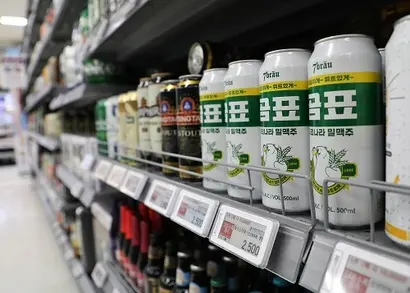
Founded in 2011, Sevenbrau has expanded its business area by launching various craft canned beer products. In particular, the ‘Gompyo Wheat Beer,’ introduced in collaboration with Daehan Flour Mills in 2020, was a huge success, with cumulative sales exceeding 60 million cans, drawing significant attention in the liquor market.
However, when the trademark license agreement expired in March 2023, Daehan Flour Mills replaced the manufacturer of Gompyo Wheat Beer with Jeju Beer, and Sevenbrau's performance subsequently worsened rapidly. Eventually, the company filed for corporate rehabilitation with the Seoul Bankruptcy Court in May of this year, and the process is currently ongoing.
Last month, the Listing Disclosure Committee of the Korea Exchange KOSDAQ Market decided to delist Sevenbrau. This was a measure taken as reasons for substantive examination of listing eligibility arose due to the public announcement of the commencement of rehabilitation proceedings. Sevenbrau responded by submitting an objection to the Korea Exchange regarding the delisting decision on September 11.
Meanwhile, the legal dispute with Daehan Flour Mills over the termination of the Gompyo Wheat Beer contract continues. While Sevenbrau claims it suffered massive losses due to Daehan Flour Mills' unilateral contract termination, Daehan Flour Mills argues that Sevenbrau damaged its brand image by making false claims. Following a lawsuit filed on May 30 to confirm the non-existence of debt against Sevenbrau, Daehan Flour Mills has recently filed a damage suit as well.
In a situation where external conflicts persist, the bankruptcy of the subsidiary Sevenbrau Yangpyeong further exacerbates concerns about Sevenbrau's management stability. A Sevenbrau official explained, “Sevenbrau Yangpyeong has been operated as an independent legal entity separate from the Sevenbrau headquarters and other affiliates. This bankruptcy does not have a direct impact on the management and financial situation of the headquarters or other entities.”
The official added, “Currently, the bankruptcy process is underway under court supervision, and measures such as asset liquidation, debt settlement, and corporate dissolution are scheduled to take place as the process reaches completion. All processes will be handled fairly and responsibly according to legal standards, with priority given to protecting the rights of creditors. We sincerely apologize for the concern caused by the bankruptcy of Sevenbrau Yangpyeong.”