

[비즈한국] The launch of a fourth internet-only bank has fallen through. Although the Financial Services Commission (FSC) announced the results of the preliminary license review, not a single applicant passed the evaluation. Financial authorities determined that none of the applicants were suitable, citing a focus on clear ownership by major shareholders and capital strength. With the preliminary review results delayed by months and ending in the rejection of all candidates, attention is shifting to the status of these potential banks.
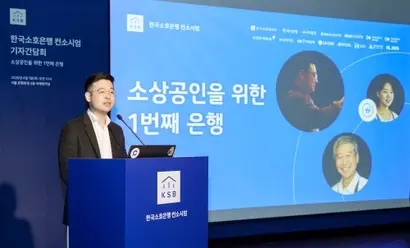
The FSC announced the results of the internet-only bank preliminary license review during its 16th regular meeting on September 17. The four applicants vying to become the nation's fourth internet-only bank—Soso Bank, Korea Soho Bank, Podo Bank, and AMZ Bank—all failed to receive preliminary banking licenses, leaving the existing three-bank system (K-Bank, Kakao Bank323410, and Toss Bank) intact.
Applications for the new internet-only bank licenses were submitted in March. Initially, the U-Bank consortium (led by P2P lender Lendit with participation from Hyundai Marine & Fire Insurance001450, Hyundai Department Store069960, and Naver Cloud035420) and the Douzone Bank consortium (led by Douzone Bizon with participation from DB Insurance and Shinhan Bank) were considered strong contenders, but both withdrew their applications. With the departure of these major candidates, momentum for the fourth bank initiative weakened, and ultimately, none of the remaining applicants were approved.
The review results were originally scheduled for June but were postponed, eventually emerging only after the early presidential election and a change in leadership at the financial authorities. From September 10 to 12, an external evaluation committee consisting of 10 experts in finance, internal controls, accounting, IT, consumer affairs, and fintech conducted a closed-door evaluation, ultimately deciding to reject all candidates.
Explaining the delay in the announcement, financial authorities stated, "The review was delayed because we requested supplementary materials as the applicants' initial submissions were insufficient. While the standard review period is two months, the time taken for applicants to supplement their documents is not included in that period."
The authorities unusually denied speculation that the delay was due to the regime change. The FSC stated, "It is inappropriate to link these preliminary license review results to the launch of the new government," adding, "The results were determined based on the evaluation by the external committee and the Financial Supervisory Service (FSS)."
According to the FSC, the common reason for rejection was a lack of capital strength. Comparing the preliminary license criteria from 2015, 2019, and 2024, the "Capital and Funding Plan" category was raised significantly from 100 points in previous years to 150 points in 2024 (out of a 1,000-point total). A new category, "Supply Plan and Feasibility for Local Business Financing," was also introduced (50 points). The "Suitability as a Bank Shareholder" category saw its weighting reduced from 100 points to 50 points during the same period.
Korea Soho Bank, considered a frontrunner, included major commercial banks such as Hana, Woori, and NH Nonghyup in its consortium, but was hindered by concerns over the major shareholder's capital strength and the sustainability of its business model. The major shareholder of Korea Soho Bank is Korea Credit Data (KCD), which led the consortium, and its history of losses appears to have been an issue. KCD recorded operating losses of 29.1 billion won in 2023 and 38.1 billion won in 2024.

Soso Bank, a "repeat applicant," was criticized for having opaque major shareholders and insufficient potential for additional capital contributions. Soso Bank is led by the Korea Federation of Micro Enterprise and counts small and medium-sized enterprises as shareholders. It had previously applied for a preliminary license in 2019 but was rejected. It gathered new letters of intent and shareholders for a second attempt, but failed again this time.
However, Soso Bank maintains that it had identified its major shareholder before the review. A representative from the Soso Bank consortium explained, "While the major shareholder was not clearly defined at the time of the initial application, we finalized it as an IT company afterward. Even though we secured a total of 322.5 billion won in capital after the major shareholder was confirmed, we were still rejected."
Podo Bank and AMZ Bank also received negative evaluations regarding opaque ownership, capital strength, and the potential for further capital injections. Podo Bank aimed to be an "internet-only bank for overseas Koreans," led by groups like the World Korean Merchants Federation. While Meritz Securities was listed as a shareholder, it was reportedly only showing intent to invest. AMZ Bank launched with the goal of being a "challenger bank" for farmers and the MZ generation. Although agricultural distribution organizations signed a business agreement in July 2024, it did not disclose its shareholder composition at the time of the application.
With all fourth internet-only bank consortia failing, eyes are on their next moves. Korea Soho Bank and Soso Bank, which have expressed strong intentions to enter the banking sector, announced immediately after the results were released that they would try again. Podo Bank and AMZ Bank, whose shareholder structures were relatively ambiguous, have not released any statements.
On behalf of KCD, CEO Kim Dong-ho stated, "Because the financial organization responsible for bank licensing is currently undergoing restructuring, there will likely be a lull for a while, but I believe a bank specialized for small business owners will certainly emerge within the new government's term. If an internet-only bank for vulnerable groups and small business owners is to be created, it will be Korea Soho Bank." KCD expressed its plan to continue pursuing financial services for small business owners, even if the policy direction shifts toward "small licenses."
The Soso Bank Preparatory Committee also expressed its determination, stating, "It is unfortunate that we were rejected in the preliminary license review, contrary to our expectations. The need for digital finance centered on small business owners is growing. We will address our shortcomings and challenge again with a feasible model."
Although authorities stated the result had nothing to do with the change in government, the industry expects the project to be reorganized and pursued under the new administration. An industry insider predicted, "Since President Lee Jae-myung pledged to establish a bank specialized in mid-interest loans for vulnerable groups during his campaign, the launch of a fourth internet-only bank or a bank specialized for small business owners is unlikely to be scrapped. However, due to large-scale reforms such as splitting the Ministry of Economy and Finance into the Ministry of Finance and Economy and the Ministry of Planning and Budget, we must first wait and see which organization will be in charge of bank licensing."