

[비즈한국] South Korean bio-company Alteogen196170 has achieved a remarkable feat by crossing the threshold of the U.S. Food and Drug Administration (FDA). This was accomplished not through a new drug, but through a formulation-change platform. Applied to a global blockbuster drug (with annual sales exceeding $1 billion), it is expected to generate up to 1 trillion won in annual royalty revenue, which is projected to further heighten interest in securing platform technologies moving forward.
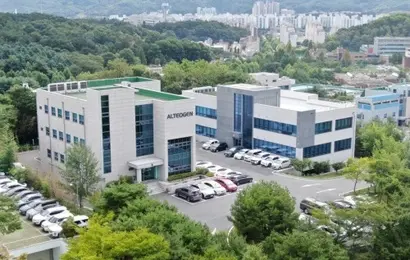
According to industry sources on the 22nd, Merck's (MSD) immuno-oncology drug 'Keytruda CurieX,' which incorporates Alteogen’s 'ALT-B4' technology, will be launched in the U.S. as early as next month. Keytruda CurieX, which received approval from the FDA on the 20th, is the subcutaneous (SC) formulation of Keytruda. Keytruda is the world's top-selling drug with $29.5 billion (41 trillion won) in sales last year, holding 29 indications including non-small cell lung cancer, melanoma, pancreatic cancer, ovarian cancer, gastric cancer, head and neck cancer, and triple-negative breast cancer in its intravenous (IV) formulation.
With Keytruda’s U.S. patent expiring in 2029 and its European patent in 2031, Merck is utilizing Alteogen’s technology to maintain its market dominance even after the launch of Keytruda biosimilars. The patent for Keytruda CurieX expires in 2039. As the SC formulation offers significantly higher patient convenience—taking 1–2 minutes to administer compared to 30 minutes to an hour for the IV formulation—a large portion of Keytruda's sales is likely to shift to Keytruda CurieX.
Merck also has high expectations for the SC formulation, anticipating that Keytruda CurieX will account for more than half of Keytruda's sales by 2028. Securities analysts project that if Alteogen receives mid-single-digit percentage royalties from Merck, it could generate nearly 1 trillion won in annual revenue.
However, the potential for a full-scale patent dispute with Halozyme remains a burden. Alteogen and Halozyme are the only two companies in the world that hold platform technology patents for converting existing IV biologic drugs into SC formulations using human hyaluronidase. Last November, Merck initiated an inter partes review (IPR) to invalidate Halozyme’s SC formulation technology patent, 'Enhanze,' and Halozyme filed a patent infringement lawsuit against Merck this April. Nevertheless, Alteogen’s technical competitiveness is widely recognized, as evidenced by its ALT-B4 licensing agreements with other global pharmaceutical companies like AstraZeneca and Daiichi Sankyo, and both Merck and Alteogen have expressed strong confidence regarding the patent issues.
Given that Alteogen achieved FDA approval 11 years after beginning the development of its SC formulation conversion technology in 2014, platform technologies are expected to receive significantly more attention in the domestic pharmaceutical and bio industry. While company value has traditionally been tied to the success or failure of individual drug R&D projects, possessing platform technology that can be applied to various drug developments can be advantageous not only for maximizing performance but also for risk management.
Kim Sun-ah, a researcher at Hana Securities, predicted, "This FDA approval will help new partners currently in contract negotiations gain confidence, leading to expectations for further technology transfers." Eom Min-young, a researcher at Shinhan Securities, added to the optimism by stating, "We expect recognition of tens of billions of won in milestone payments due to the FDA approval in the third quarter, with milestone payments based on sales to be reflected in the fourth-quarter results. Global approvals are also entering their final stages, with Keytruda CurieX expected to be approved in Europe in the fourth quarter of this year."
To date, only nine new drugs developed by domestic pharmaceutical and bio companies have received U.S. FDA approval, starting with LG Chem's051910 antibiotic 'Factive' in 2003. Among them, only SK Biopharmaceuticals'326030 epilepsy treatment 'Xcopri' and Yuhan Corporation's000100 non-small cell lung cancer treatment 'Lazcluze' (domestic name: Leclaza) are considered to have the potential to become global blockbuster treatments.
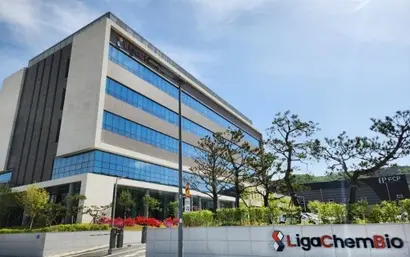
The platform technologies receiving attention following Alteogen are LigaChem Biosciences’ 'ConjuALL' and ABL Bio’s 'Grabody.' Both companies have recently achieved notable technology export results based on their respective technologies. LigaChem Biosciences has signed 13 technology transfer agreements worth over 10 trillion won for its ADC (antibody-drug conjugate) candidates and core technologies. In October last year, it signed a 1 trillion won deal with Japan’s Ono Pharmaceutical, and in December 2023, it secured a 2.2 trillion won technology export deal with Janssen Biotech.
ABL Bio, a developer of bispecific antibodies, possesses three platforms: 'Grabody-B,' which has high blood-brain barrier (BBB) permeability and safety; 'Grabody-T,' which targets 4-1BB involved in T-cell (immune cell) activation; and 'Grabody-I,' which targets immunomodulators PD-L1 and LAG-3. In particular, this past April, the company signed a technology transfer agreement for developing multiple new target candidates using Grabody-B. The total deal size reached 4.1104 trillion won, the second-largest single technology export contract in history. The largest was Alteogen's 4.6770 trillion won ALT-B4 technology export to Merck in June 2020.
In addition, Peptron is conducting joint research applying its long-acting drug delivery platform 'SmartDepot' to Eli Lilly's obesity drug candidate, while D&D Pharmatech has licensed out an obesity drug candidate based on 'OralLink,' a platform that converts injectables into oral formulations.