

[비즈한국] On January 29, 2011, just before the Lunar New Year holiday, 32-year-old screenwriter Choi Go-eun was found dead in her rented room in a multi-family house in Seoksu-dong, Anyang, Gyeonggi Province. In the cold of winter, she was found in a room without heating on the first floor. A note she left for the woman living on the second floor left a deep impact.
“Thank you so much for all your help. It’s embarrassing, but I haven’t been able to eat anything for days. If you have any leftover rice or kimchi, please knock on my door.”
In the 2000s, the fact that someone in Korea had lost their life to starvation was, beyond sorrow, a major shock. Following Choi Go-eun's death, the Korea Artists Welfare Foundation was established on November 19, 2012. However, there is a little-known fact. Novelist Kim Young-ha, who taught Choi at the Korea National University of Arts, posted a different story on his website on February 14 of that year, which did not receive much public attention. The core of his message was as follows:
“I was surprised that so many people naturally believed Go-eun died of starvation. This was likely due to the sensationalist reporting by The Hankyoreh, which first broke the story. The note reported by the newspaper also differs slightly from the truth. Of course, this is not to say she lived in abundance. But I heard that she managed her life with dignity and confidence. And I heard from the friends who handled her final moments that her direct cause of death was not malnutrition, but a seizure caused by hyperthyroidism and its complications.”
Author Kim Young-ha first emphasized that the cause of Choi Go-eun’s death was not starvation. He stated that even though she was in financial difficulty, she was proud and independent. Furthermore, the note she left was misrepresented. The original letter was as follows:
Hello, Ma’am.
This is the room on the first floor.
I hesitated many times out of shame...
Would it be possible to get a little bit of rice or kimchi...
I am truly sorry for asking time and time again.
I believe I will be able to receive some overdue payments in mid-to-late February,
so I will make sure to settle the electricity bill.
I apologize for keeping you waiting.
I am always sorry and ashamed for your help... but thank you.
-From the first floor
Media reports omitted the fact that she was expecting money within a month and highlighted a dramatic narrative of starvation. They likely wanted to emphasize the hardship of the writer's life. A point that deserves particular attention is her medical condition. She did not die from starvation, but from an existing illness. If Choi had been diagnosed earlier and received proper treatment, her fate might have been different. One would not imagine that a young person could lose their life to a seizure caused by hyperthyroidism and its complications. In this way, young artists are easily left in a medical blind spot.
September 5 marked the fourth anniversary of the passing of music video director Kwon Soon-wook, the older brother of singer BoA. The late Kwon passed away on September 5, 2021, while battling peritoneal cancer. It was only about four months after he went public with his illness. He was only 39 years old. After debuting with Poppin' Hyun-joon’s "Sajahoo" music video, he was at the center of K-pop music videos. He directed videos such as Girl's Day's "Twinkle Twinkle," Mamamoo's "Piano Man," and BoA's "Only One" and "Kiss My Lips," directing over 500 advertisements, music videos, and dramas over 14 years. In a post on social media, he wrote, "The cause of my cancer was stress," adding, "In the year before I got sick, I produced 70 projects and experienced all kinds of stress."
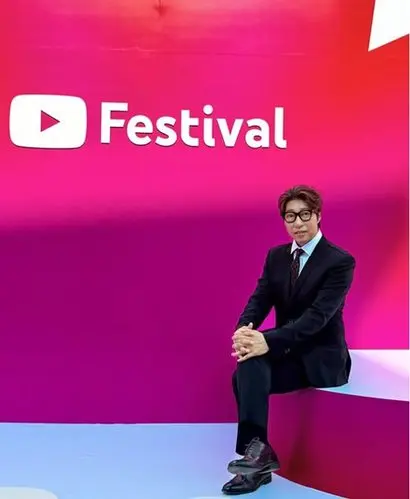
It is the same for famous content creators. Recently, the death of Daedotesogwan due to a myocardial infarction came as a huge shock. He had said, "I haven't been able to sleep much," and "I've been getting hair and makeup done since the morning, I wonder if I even slept for 3 hours." Even in that exhausted state, he conducted a live broadcast for about 5 hours and 30 minutes. As a first-generation creator active since 2010, he had 1.44 million subscribers and was called the "Yoo Jae-suk of the BJ world" and "YouTube's national MC," but his labor intensity was extreme. He often mentioned feeling stings in his heart, and his late father had also passed away from a myocardial infarction. He was overworked despite having a family history of the condition.
Sudden death from overwork is common among people in their 40s. According to research from the Korea Institute for Health and Social Affairs, overwork (long working hours of 60+ hours per week) increased the risk of cardiovascular disease by 47.7% and the risk of overall death by 9.7%. A study on UK civil servants found that working more than 3 hours of overtime increased the risk of heart disease by about 70%.
Content creators and artists often work at night. Day and night are reversed, meals become irregular, and even exercise becomes difficult. This is even more true for freelance artists. The perception that pulling all-nighters to work is a form of "burning one's artistic soul" is still rampant in the industry. Future generations should not burn their bodies like candles to create. The late director Kwon Soon-wook also said, "I want to tell you that getting cancer at a young age makes treatment itself very difficult, and the stage can jump several levels in just a few days," and "Cancer seems to create all kinds of complications." This is why we need to pay closer attention to the health of young artists.
With K-pop gaining attention and JYP Entertainment representative Park Jin-young becoming a co-chair of the Popular Culture Exchange Committee, it would be great to establish proper systems for artists' health. How about creating an "Artist Health Support Act" to ensure that artists, especially those working alone while burning their artistic passion, can receive timely health check-ups and treatment? They are our important cultural assets and creators of K-content. Their existence is precious as they continue to provide healing and hope to the public through healthy creative activities.
The "Popular Culture and Arts Industry Act," which regulates the health rights of adolescent idols, passed the National Assembly plenary session on December 31, 2024, but it is necessary to check if it is being implemented properly. In particular, it is necessary to understand the reality of trainees and conduct an exhaustive survey of their health status, and comprehensive health check-ups and treatment for female adolescents should be carried out. We could also consider ways for the government to provide exceptional incentives to agencies and production companies that ensure the health rights of their artists.
The author, Kim Heon-sik, has been walking through and navigating the forest of pop culture phenomena since his 20s, fueled by the expectation that there is a way to make the world a better place through culture. In the 21st century, where artificial intelligence and quantum computers are active, he continues on the same path with the same belief.