

[비즈한국] The Korea Art Support Project, which began as an initiative solely to support artists, has continued for 10 years. Keeping our initial intention, we have supported over 230 artists. It was a unique undertaking, never attempted by any other domestic media, cultural organization, or state institution. We take pride in the fact that those 10 years of persistence have been inscribed as a value in the 21st-century Korean art scene. Consequently, it is recognized that 'the 10-year history of the Korea Art Support Project has created a vantage point for observing the flow of contemporary Korean art.' Now, in Season 11, we aim to pave another path for Korean art.
The Korean cultural craze, which began with dramas and pop music, is drawing global attention. It is now expanding beyond popular culture to an interest in Korea itself. It feels as though a renaissance of Korean culture is unfolding.
We have also begun to dream of Korean culture being upgraded as one of the central axes of the world. To achieve this, we face the task of shifting the global interest, currently fixated on pop culture, toward the pure culture that serves as the foundation of Korean culture.
However, looking at the current state of pure Korean culture, it does not look rosy. The responsibility of the artists who create pure culture must be prioritized. This requires, first and foremost, the improvement of social systems, and must be supported by infrastructure centered on the role of opinion leaders and the media.
However, when we narrow our focus to fine art, such a dream seems distant. For a nation's art to become a pillar of the global flow, it must ground itself in the identity that serves as its roots. Looking at the history of global art, such examples are easily found. This is evidenced by French Impressionism, which led Western modern art; German Expressionism and abstract art, which laid the cornerstones of modern art; and American Pop Art, which anticipated the era of popular culture.
We began our modern art journey with a disconnection from traditional art. In the name of modern art, we indiscriminately accepted Western art, and we reached the 21st century without having germinated it into our own. It is an undeniable reality that we have failed to create a distinctively Korean art because our modernity was not built upon a traditional foundation.
Now is the time to restore tradition and find the Korean beauty that can be mined from it. However, the reality is moving in reverse. Specialized education for 'Dongyang-hwa' (Oriental painting), the foundation of traditional Korean art, is disappearing.
In fact, the term 'Dongyang-hwa' itself is inappropriate. It refers to traditional painting using ink or colors, brushes, and paper. 'Dongyang-hwa' was established during the Tang Dynasty in China, where it is called 'national painting.' In Japan, it is referred to by terms like sumi-e (ink wash) or color painting. 'Dongyang-hwa' simply means 'Oriental painting.' Since the entirety of Asia, centered on China, is called the 'East' (Dongyang), the term essentially describes a painting with an ambiguous nationality.
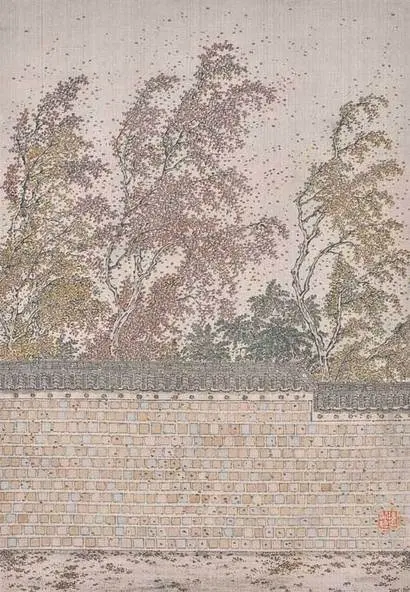
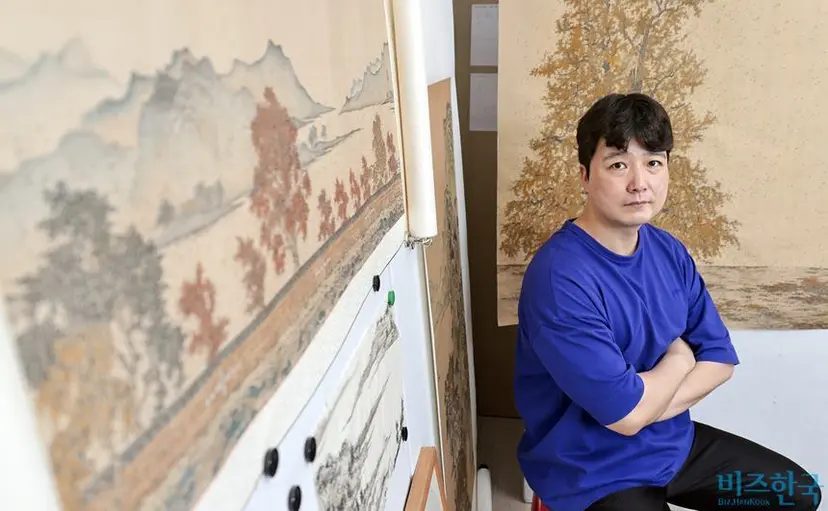
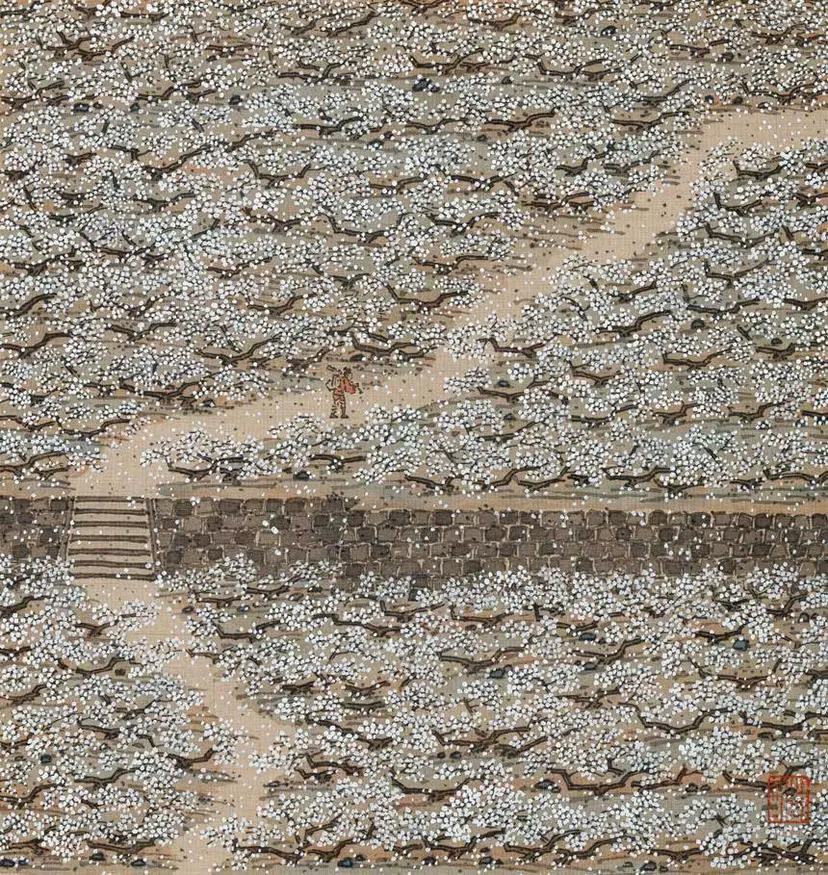
In this reality, the painting that Je Hyeon-mo presents forces us to reflect on many things.
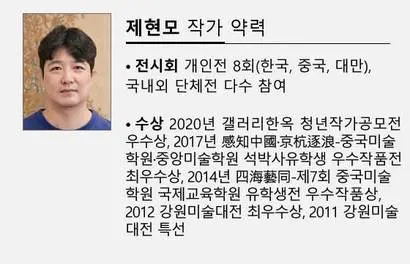
He is an artist who studied traditional painting in China. His paintings look like antique works because they are produced using traditional techniques and materials. He displays both idealized landscape paintings that appear to have been created during the Tang Dynasty and realistic landscape paintings based on our own nature. In doing so, he is attempting to create our own painting style that inherits tradition while fitting modern sensibilities.
The artist says the reason for his work is "an effort to create Korean paintings that possess the excellence of our tradition and a clear identity." We look forward to the day when Je Hyeon-mo's work is elevated as a part of the Hallyu (Korean Wave).