

[비즈한국] A unauthorized payment incident at KT030200 is causing ripples throughout the telecommunications industry. This incident, in which subscriber information was stolen and small-sum payments were made without authorization using femtocells (ultra-small base stations), has gone beyond a mere technical issue to undermine trust in the overall security of communication networks. Investors are looking unfavorably at the situation, noting that KT, which manages the national critical infrastructure, has shown a lapse in customer protection.
For investors, a security breach is no simple happening. It takes a significant amount of time to restore shattered trust, and stock price discounts during that interim are inevitable. The telecommunications sector, in particular, relies on "stability" as its greatest asset, given the nature of its business structure—creating stable revenue through long-term contracts with customers. However, this incident has cast doubt on that very "stability."
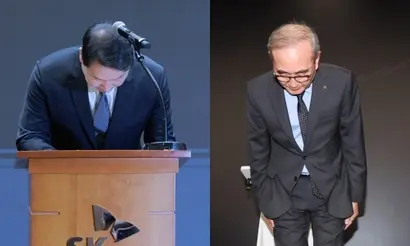
For now, KT must bear additional costs to prepare compensation and post-incident measures for affected customers. Discussions on strengthening regulations at the government and National Assembly levels are also inevitable. The potential imposition of fines, the mandatory implementation of the Personal Information Management System (ISMS-P) certification, and additional investments in security infrastructure could weigh on earnings in the short term. Furthermore, the possibility of some subscribers defecting to competitors due to anxiety cannot be ruled out.
In the securities industry, this incident is seen not merely as a hacking issue, but as a variable that could significantly impact stock prices depending on public sentiment and the political response.
Kim Hong-sik, an analyst at Hana Securities, diagnosed, "At this point, it is difficult to predict how the repercussions of this KT small-sum payment hacking will unfold," adding, "Optimistically, since the backlash from KT customers is not yet severe, it could end without measures such as rate cuts, penalty waivers, or fines. However, pessimistically, it could trigger a massive backlash similar to that seen with SK Telecom017670."
What makes this situation particularly concerning—unlike the case with SK Telecom—is that there are customers who have suffered actual financial damage. If victims initiate a class-action lawsuit or the issue gains traction in the political arena, larger-scale compensation and sanctions than those seen during the SK Telecom incident may follow.
Choi Min-ha, an analyst at Samsung Securities, projected, "Unlike the SK Telecom case, actual financial damage has occurred, so it is necessary to monitor the future situation," adding, "The results of the investigation and whether additional responses are taken will be key variables for restoring user trust and managing cost burdens."
Of course, not all negative news acts solely as a drag on stock prices. Paradoxical phenomena are often observed in the telecommunications industry. When one operator is hit by a security incident, another operator perceived as relatively stable sometimes benefits from a rebound. SK Telecom faced criticism on the 11th after posting a notice on its T World Mall stating, "SK Telecom customers, you can rest assured." Nevertheless, some in the market predict that "SK Telecom or LG Uplus032640 could benefit from this situation."
However, if KT can create an image of "transformation" through active compensation and the announcement of large-scale security investments, it could lead to a positive flow in the long term. The key is whether this crisis can be used as a turning point for structural improvement.
In terms of performance, the company remains solid for now. KT achieved an operating profit of 1 trillion won in the second quarter of this year, recording its highest-ever quarterly performance. Dividends have also expanded. The quarterly dividend is 600 won per share, a 20% increase from the same period last year. Some predict an annual dividend yield reaching the 6% range. Additionally, KT has emphasized its commitment to shareholder returns by announcing a plan to purchase and retire 1 trillion won worth of treasury shares by 2028. However, retirement is currently uncertain due to regulations limiting foreign ownership to 49%. While purchases are possible, retiring the shares would cause foreign ownership to exceed the legal limit. Thus, the timing of the retirement is being delayed due to institutional limitations.
Nevertheless, the reasons investors seek out telecom stocks remain unchanged: stability and dividends. In a situation filled with internal and external uncertainties, companies capable of returning stable cash flows are inevitably attractive to investors. Analyst Kim Hong-sik said, "If we consider that KT's shareholder return volume is expected to continue growing through next year, it would be a good strategy to use the emergence of this negative news as a buying opportunity."
Crises and opportunities always coexist in the stock market. While this incident may be a burden in the short term due to tighter regulations, increased costs, and damaged trust, it could serve as a catalyst for strengthening security capabilities and expanding shareholder returns in the long term. Investors need to make strategic judgments centered on the intrinsic value of the industry as a whole, rather than the immediate negative news. Will they be able to seize opportunity in the midst of a crisis?