

[비즈한국] Voices of criticism against President Lee Jae-myung’s policies have emerged from labor unions at state-owned power companies, including Korea Electric Power Corporation (KEPCO)015760 and Korea Hydro & Nuclear Power (KHNP). The KHNP union opposes the transfer to the Ministry of Environment under the government reorganization plan, while the KEPCO union objects to the restructuring plan for its power generation subsidiaries. In particular, there is concern within and outside of KHNP that the domestic nuclear power industry will shrink if it is transferred to the Ministry of Environment.
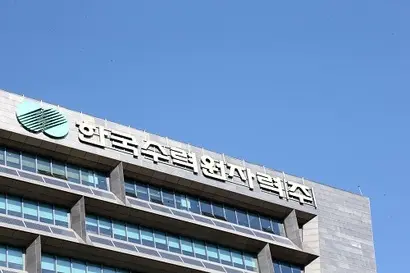
Separating energy from the Ministry of Industry, merging with the Ministry of Environment, and focusing on renewable energy
The Ministry of the Interior and Safety announced a government reorganization plan on September 7. According to the plan, the government intends to create a new "Ministry of Climate, Environment, and Energy" by integrating the energy sector of the Ministry of Trade, Industry and Energy with the Ministry of Environment. The plan involves reorganizing the Ministry of Environment into the Ministry of Climate, Environment, and Energy, which would carry out core functions related to carbon neutrality, such as environment, climate change, and energy. However, the resource industry and nuclear power export functions will remain under the Ministry of Trade, Industry and Energy, which will be renamed the Ministry of Industry and Trade.
Consequently, state-owned power companies such as KEPCO and KHNP are scheduled to be transferred as public enterprises under the Ministry of Climate, Environment, and Energy. This has sparked dissatisfaction within KHNP, as the nature of the Ministry of Environment makes it highly likely to oppose nuclear power projects. Most major domestic environmental groups support a nuclear phase-out policy, and it is difficult for the Ministry of Environment to simply ignore the demands of these groups.
The KHNP labor union is demanding the following: an immediate withdrawal of the plan to transfer the Ministry of Industry’s energy functions to the Ministry of Environment; that energy policy be pursued at a national strategy level, comprehensively considering industry, economy, and the environment; and the guarantee of a sufficient consultation process that reflects the voices of industrial sites.
The KHNP union argued, "The government's push to transfer energy policy to the Ministry of Environment is a hasty decision that weakens national competitiveness by separating industry from energy and threatens the survival rights of workers," adding, "A misguided transfer of energy policy could go beyond simple administrative reorganization and lead to serious consequences that shake the national economy."
The Korean Nuclear Society also issued a press release, criticizing the move by stating, "Entrusting the construction and operation of nuclear power plants to a department centered on environmental regulation will prioritize regulation over stable supply, inevitably leading to the contraction of the nuclear industry." They added, "This is an anachronistic decision that will set back supply capacity rather than responding to the rapidly increasing demand for electricity."
Even within the ruling party, there has been criticism. Lee Un-ju, a Supreme Council member of the Democratic Party of Korea, said at the party’s Supreme Council meeting on September 8, "I deeply regret that such an important issue is being pushed through so urgently," adding, "In an era of energy hegemony competition, I am very concerned about transferring energy, which is the core of industrial competitiveness, to a regulatory body like the Ministry of Environment, while leaving resources and nuclear exports to the Ministry of Industry. It feels like an idea conceived without any knowledge of the industrial field or reality."
President Lee Jae-myung is emphasizing the necessity of power supply through renewable energy rather than nuclear power. In a press conference marking his first 100 days in office on September 11, President Lee stated, "There is no place to build nuclear power plants, and even if we built them now, it would take 15 years for them to actually operate," and added, "We need massive amounts of power right now, and the energy system that can supply it quickly is renewable energy."
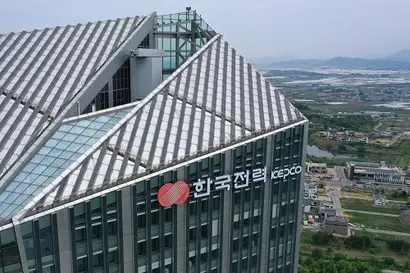
Deciding on a restructuring method to abolish coal-fired power plants by 2040
The government is also pushing for the restructuring of KEPCO’s power generation subsidiaries. Minister of Environment Kim Sung-hwan stated at a press conference on September 9, "To realize the presidential campaign promise of closing all coal-fired power plants by 2040, we must decide early on how to restructure the five power generation public enterprises."
KEPCO currently has six power generation subsidiaries: KHNP, Korea South-East Power, Korea Midland Power, Korea Western Power, Korea Southern Power, and Korea East-West Power. Excluding KHNP, which handles nuclear power, all of them are primarily engaged in coal-fired power generation. Therefore, the five KEPCO subsidiaries excluding KHNP are being discussed as subjects for restructuring.
If the restructuring of KEPCO’s subsidiaries proceeds, internal backlash is also expected. The Federation of Korea Electric Power Industry Trade Unions stated, "It is very regrettable that a specific public institution was singled out for restructuring through a sudden announcement while procedural steps were omitted, even though there was sufficient room for public discourse." They argued, "Instead of dismissing KEPCO and the power generation companies as relics of the fossil fuel era, the focus should be on how to strengthen their roles based on the public nature of electric energy, and how to create an integrated structure rather than a fragmented one."
KHNP CEO Hwang Joo-ho and KEPCO CEO Kim Dong-cheol were both appointed during the Yoon Suk-yeol administration. There is no guarantee that they will cooperate with the policies of the Lee Jae-myung administration. However, CEO Hwang Joo-ho's term has already expired, and KHNP is scheduled to appoint a new CEO soon. On the other hand, CEO Kim Dong-cheol has about one year left in his term, until September 2026.
As such, voices of opposition to President Lee Jae-myung's policies are growing within KEPCO and KHNP. For President Lee, his leadership could be impacted depending on how he responds to the backlash from KHNP and the nuclear industry. KEPCO and KHNP have not issued official positions at the company level. However, as the union's backlash cannot be simply ignored, some suggest that a government-level response is necessary.
Once the reorganization is complete, Minister Kim Sung-hwan is expected to be in charge of both KEPCO and KHNP. In other words, Minister Kim's response could affect President Lee Jae-myung’s approval rating. No countermeasures for the unions' concerns have been released yet. On the 9th, Minister Kim said, "The Lee Jae-myung administration’s promise to make the Ministry of Climate and Energy independent and combine it with the Ministry of Environment is a promise to the public and a judgment by the President," adding, "I will resolve concerns about the contraction of the nuclear industry through separate, thorough consultations."