

[비즈한국] The popularity of the Netflix animation ‘K-Pop Demon Hunters’ shows no signs of cooling down. BLACKPINK’s Rosé became the first K-pop artist to win ‘Song of the Year’ at the ‘MTV Video Music Awards’ for ‘APT.’ We are truly in the ‘Golden Age of K-Pop.’ But what lies behind it? Is the life of an idol as perfect as their flawless performances?
A new book has been released to answer that question. Published on the 11th, ‘K-Pop, Idols in Wonderland’ examines the unfair realities hidden behind the glamorous idol industry.
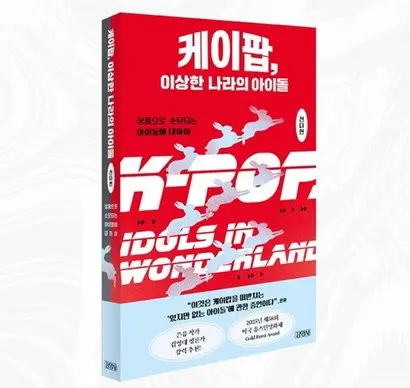
K-Pop, Idols in Wonderland
Written by Jeon Da-hyun, Gimmyoung, 284 pages, 17,800 won
The author, journalist Jeon Da-hyun, serialized an investigative series of the same name in BizHankook last year, which won the Gold Remi Award in the New Media Interactive Entertainment category at the 58th WorldFest-Houston International Film Festival. She has since expanded the work into this book, adding stories that could not be covered in the original articles and results from follow-up reporting.
The author interviewed over 40 stakeholders, including idols and trainees themselves, industry insiders, fandom members, as well as researchers, lawyers, and lawmakers. From the realities of practice rooms to unfair contracts and structural issues, the book sheds light on the problems of the K-pop industry from various angles and explores potential solutions.
The most distinctive feature of the K-pop industry is that idols—in other words, human beings—are treated as ‘products.’ Countless children dream of becoming idols and take on the challenge of becoming trainees. The process is marked by pain and endurance that are difficult to measure by the word "training" alone. It is a cycle of endless dieting, control, and practice, practice, and more practice. Like racehorses with blinders on, they run only toward their debut. Young teenagers spend years like this under the name of "trainees," neither students nor workers. There are numerous cases of them becoming "bone-thin," losing their menstrual cycles, and even suffering from mental health issues.
Even if they debut as idols and seem successful, many are "hollow inside." The "slave contract" controversy involving TVXQ in the past was a major issue, and the reality has not changed much even a decade later. They must complete at least seven years to be free from their contracts. Settlement issues are the same. Even after performing at concerts and events without a moment of personal time, it is difficult for them to receive proper payment. It is rare for an agency to accurately disclose how much an idol has earned and how much has been spent. The fact that even a top singer like Lee Seung-gi had never received a proper settlement from his agency came as a shock to many.
“This is a testimony about the ‘children who are present yet absent,’ who uphold K-pop.” - Endorsement by author Eun-yoo
‘K-Pop, Idols in Wonderland’ meticulously points out the problems that the K-pop industry is currently facing, yet never acknowledges. It listens to vivid testimonies from idols and former trainees, and lends an ear to the alternatives proposed by industry insiders, researchers, experts, and lawmakers. It goes beyond the domestic music industry to meet with overseas composers and producers who create K-pop, fandom members, and musicians from other genres. It broadens our view, which had been confined to Korea, and allows us to see K-pop through new eyes. This is thanks to the author’s hard work and passion that crossed national borders.

Some might feel uncomfortable with the fact that these problems are being "deliberately" brought up, as if it is "pouring cold water" on the current K-pop craze. That is not the case. The more problems are ignored, the larger they grow. If we pool our wisdom to solve these problems now, K-pop will surely evolve further. Above all, the idols—the children—who sing K-pop will become happier, and the fans will become happier too. Isn’t that the way for K-pop, which sings of a positive worldview, to truly become itself? Much like how Huntress and the fans complete the story together when they sing in unison.
Now, K-pop has gone beyond the category of a simple industry and become a culture that the whole world pays attention to. I hope this record can bring about meaningful, even if small, change. - From the Epilogue