

[비즈한국] The pharmaceutical and biotech industries are closely monitoring the recent large-scale crackdown on illegal immigrants in the United States. While the industry is drawing a line, noting that there is no direct impact for now, "visa issues" have emerged as a new risk factor for companies pushing to secure and operate production bases within the U.S. This incident is significant not only as a problem for a specific sector but as a warning light for all Korean companies expanding their presence in the global market.
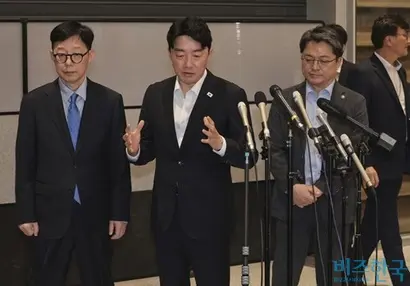
Pharma and Biotech industries: "No problems for now," but…
Currently, companies with full-scale production bases in the U.S. are limited to Lotte Biologics and SK Biopharmaceuticals326030. Lotte Biologics is operating its Syracuse, New York plant, acquired from the U.S. pharmaceutical company Bristol Myers Squibb (BMS), and has hired most of its workforce locally in the U.S. The company explained that it is unrelated to this situation, stating, "If necessary, we dispatch Korean personnel via official visas."
SK Biopharmaceuticals also stated there are no special issues, as its U.S. subsidiary operates primarily through local hiring. Furthermore, major companies like GC Biopharma006280, Chong Kun Dang185750, Boryung003850, JW Pharmaceutical, and Samsung Bioepis are dispatching personnel through legal channels, such as intra-company transferee visas (L1) or specialty occupation visas (H1B). Therefore, while the official industry stance is that there is "no direct impact," internal anxiety is rising.
The reason lies in long-term efforts to secure production bases within the U.S. Celltrion, Samsung Biologics, and SK Bioscience are reviewing the possibility of establishing or acquiring local U.S. plants. Unlike research labs, production facilities require long-term stay personnel—meaning a large number of skilled Korean engineers and operational staff. An industry official emphasized, "Even if this incident happened in a different sector, it could eventually apply to pharma and biotech," adding, "The government must secure stable and legal visa stay arrangements."
316 Koreans return home safely, yet ambiguous crackdown standards remain
The incident occurred on the 4th (local time) at the construction site of the Hyundai Motor Group–LG Energy Solution joint battery plant (HL-GA) in Savannah, Georgia. U.S. Immigration and Customs Enforcement (ICE) and Homeland Security Investigations (HSI) conducted a major crackdown, arresting a total of 475 people, 316 of whom were Korean nationals.
The issue was the discrepancy between entry status and the purpose of the stay. A significant number of personnel entered the country using ESTA (Visa Waiver Program) or short-term business/tourist visas (B1/B2) and engaged in work at the site. Authorities deemed this a "violation of purpose of stay." According to some reports, there were even cases where legitimate B1/B2 visa holders were detained, leading to criticism that U.S. enforcement standards are excessively ambiguous.
LG Energy Solution responded urgently. It ordered employees who had visited on ESTA to return home and had those with B1/B2 visas wait at their lodgings. Only personnel holding intra-company transferee visas (L1) and specialty occupation visas (H1B) remain on-site to continue working.
The 316 detained Koreans returned to Incheon International Airport on a Korean Air chartered flight at 3:30 PM on September 12, eight days after their detention. A total of 330 people were on board, including some foreign nationals. The returnees are reported to have suffered significant inconvenience and stress during the investigation and detention process.
The Ministry of Foreign Affairs and the Ministry of Trade, Industry and Energy explained that they expedited the return schedule through urgent consultations with U.S. authorities. However, as the fear that "even legal residents can be subject to crackdowns" was confirmed during this process, the legal uncertainty that Korean companies may face when managing human resources in the U.S. remains.
Government and industry demand "clarification of visa regulations"
At a meeting of companies investing in the U.S., hosted by the Ministry of Trade, Industry and Energy on the 8th, major companies requested that the U.S. government "clarify regulations so that B1 visa holders do not become subjects of crackdowns when performing duties locally." Currently, B1 visas only allow limited activities such as attending meetings or contract tasks; complaints were raised that this boundary was applied too strictly during this crackdown.
The government is also under pressure to establish institutional mechanisms, prompted by this situation, that allow Korean companies to invest in the U.S. stably. This is because the same problem could occur for all companies investing in the U.S., including those in semiconductors, batteries, and automobiles, not just the pharma/biotech sectors.
The industry interprets this incident not merely as an "immigration crackdown" but as an institutional flaw revealed amidst global supply chain competition. As more Korean companies push for large-scale overseas investment and local production, visa and labor regulation issues have become increasingly important variables.
A pharma and biotech industry official commented, "The fact that even personnel holding legal visas were included in the crackdown shows how unclear local regulations are," adding, "It is a clear contradiction for the U.S. to encourage the attraction of domestic production bases as a global investment hub while operating with ambiguous visa and labor regulations."