

[비즈한국] It has been identified that Vivozone Pharmaceutical082800 is directly requesting EDI (Electronic Data Interchange) data from CSO (Contract Sales Organization) firms to verify performance. As EDI data is prohibited from being arbitrarily extracted from medical institutions, this has sparked controversy. Concerns center not only on potential personal information leaks but also on the high likelihood of the data being used to facilitate kickbacks during the pharmaceutical supply process.
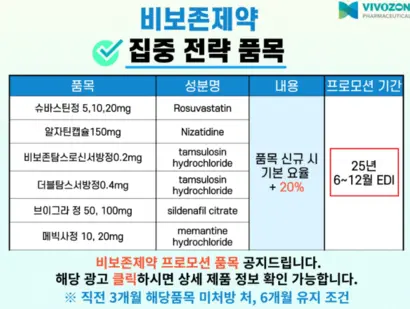
According to documents obtained by BizHankook on the 12th, the term "EDI" was included in a recent document where a CSO firm provided guidance on Vivozone Pharmaceutical's six strategic focus products. This has led to allegations that Vivozone Pharmaceutical is requiring EDI data when settling costs with CSOs.
EDI refers to information collected and analyzed by the Health Insurance Review & Assessment Service (HIRA) from prescription data processed at medical institutions and pharmacies. Because this data contains sensitive information, such as medical history as well as patients' personal information, it is understood that it should only be transmitted to HIRA.
While pharmaceutical companies or CSOs can obtain this information by applying for separate data disclosure through HIRA, it is known that CSOs, which must receive monthly settlements from pharmaceutical companies, are secretly requesting EDI data directly from medical institutions. Since this involves the arbitrary extraction of EDI data from medical institutions, there is no guarantee that personal information is being properly protected.
Furthermore, industry insiders state that such arbitrarily extracted EDI data is highly likely to be used in pharmaceutical companies' kickback strategies. Because EDI data allows for the quick and accurate identification of prescription volumes for specific drugs, it enables companies to track the prescription volumes of competing medications. Critics point out that this could lead to the practice of providing kickbacks to medical institutions to increase the prescription of their own products.
An industry official noted, "CSOs receive payment based on contracted margin rates once they verify drug prescription volumes with medical institutions," adding, "Requiring EDI data suggests an intention to use abnormally high margin rates to facilitate kickbacks or entertainment."
Some in the legal community also view this as problematic. A lawyer who is also a pharmacist explained, "I understand the intention to verify prescription volumes, but medical information cannot be arbitrarily handed over without patient consent," adding, "It is unlikely that patients would have consented to handing over their medical information to a CSO." This lawyer emphasized, "If patient personal information is disclosed, it could potentially violate both the Medical Service Act and the Personal Information Protection Act."
The Ministry of Health and Welfare responded cautiously. A ministry official stated, "If this leads to kickbacks, it is a problem, and it appears that institutional improvements are necessary."
In response, a Vivozone Pharmaceutical representative explained, "We understand that other pharmaceutical companies also use and provide guidance on EDI data," adding, "Personal information is not included at all."
Vivozone Pharmaceutical is a KOSDAQ-listed company that received approval from the Ministry of Food and Drug Safety last December for its non-narcotic analgesic, "Anafra Injection," as the 38th domestically developed new drug. It is reported that the company has signed a contract with a partner to handle domestic sales and distribution, with plans for a launch in the third quarter.