

[비즈한국] NCSoft036570 achieved a final victory last July in a corporate tax cancellation lawsuit filed against tax authorities, arguing that the taxes imposed on its game research and development (R&D) expenses were unfair. The Seoul Regional Tax Office had imposed additional corporate tax, claiming that NCSoft exceeded the deduction limit for foreign tax credits for the 2012–2016 fiscal years; in response, NCSoft filed a lawsuit to have the assessment cancelled. With the six-year legal battle concluding with the cancellation of the tax assessment, attention is now focused on the court's ruling regarding the taxation of game R&D expenses.
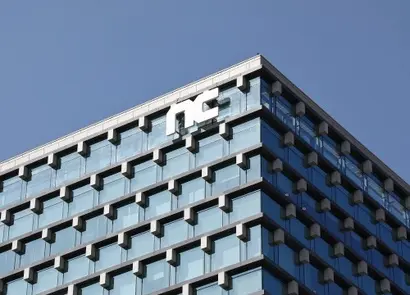
The legal dispute between NCSoft and the Samsung District Tax Office over game development costs concluded in NCSoft's favor after six years. In August 2019, NCSoft filed a lawsuit seeking the cancellation of 5.6 billion won in excessive corporate taxes imposed by the Samsung District Tax Office. Although NCSoft won in the first trial, the tax office appealed, and the second appellate court issued a partial victory for NCSoft this past February. Both parties appealed to the Supreme Court, but on July 16, the Supreme Court dismissed the appeals without a hearing, finalizing the appellate court's ruling. A dismissal without a hearing means the Supreme Court determined there were no legal grounds for further deliberation.
The core issue of the dispute was how game R&D expenses should be categorized during the tax calculation process. The outcome was particularly notable because whether a game was commercialized and whether it was serviced overseas affected tax deductions. NCSoft spent approximately 775.5 billion won on game R&D for the 2012–2016 fiscal years. Of this amount, about 500.7 billion won—representing expenses for games that were either discontinued or still in development—was categorized as foreign-sourced income (income generated abroad), and NCSoft calculated its foreign tax credit limit based on this to file its corporate tax returns. A foreign tax credit is a system that allows companies to deduct a portion of taxes paid abroad from their domestic corporate tax, intended to prevent double taxation and reduce the corporate tax burden.
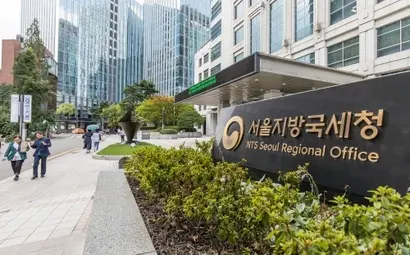
However, the Seoul Regional Tax Office reached a different conclusion following an integrated corporate tax audit conducted in 2017–2018. It re-calculated foreign-sourced income by classifying the entire game R&D expenditure from the previous period (approximately 775.5 billion won) as "common expenses for domestic and foreign-sourced income." The tax office determined that NCSoft had exceeded its foreign tax credit limit, leading the Samsung District Tax Office to impose approximately 25.6 billion won in additional corporate taxes for the 2012, 2013, and 2015 fiscal years. For the 2016 fiscal year, since NCSoft had already overpaid, the tax office issued a refund notice for approximately 3.8 billion won.
NCSoft protested this decision. Believing that the tax was overestimated by approximately 5.6 billion won, the company filed for a tax tribunal in June 2018, which was rejected. The Tax Tribunal sided with the tax authorities, stating, "Since online games can be launched abroad at any time after commercialization, they can be viewed as common expenses for domestic and international business activities."
However, the situation reversed once it reached the courts. The first-instance court ruled that "there is no basis to recognize the entire R&D expenditure as common expenses for domestic and foreign-sourced income." Of the 20 games for which NCSoft invested R&D expenses between 2012 and 2016, only three were actually launched. The court determined that it could not be concluded that R&D expenses for failed or ongoing games generated foreign-sourced income. Furthermore, given that NCSoft's overseas sales proportion was only 15–24% at the time, the court ruled it difficult to assume that these R&D investments contributed to both domestic and international profits, ultimately declaring the tax assessment illegal.
In the second trial held following the Samsung District Tax Office's appeal, the court again ruled in favor of NCSoft. However, unlike the first trial, it recognized the tax authorities' judgment regarding games that were successfully launched. It also noted that the portion of the tax adjustment involving the 2016 tax reduction (the 3.8 billion won refund) was not subject to this litigation.
The appellate court found that the evidence submitted by the tax authorities was insufficient to prove that all R&D expenses were common expenses linked to foreign-sourced income. It pointed out that labeling them as common domestic and international expenses would place an excessive burden on the taxpayer, especially since the tax office could not prove that the games were intended solely for the domestic market. However, it did rule that for commercialized games that were serviced abroad, those R&D expenses should be treated as common expenses based on the ratio of domestic to foreign revenue. It further clarified that when calculating the foreign tax credit limit, revenue should be reflected by country for periods when overseas services were active to deduct costs accordingly.
Although the court partially acknowledged the tax authorities' logic, it cancelled the entire assessment on the grounds that the "justifiable tax amount" could not be calculated. The appellate court ruled, "If a justifiable tax amount can be calculated lawfully based on submitted materials, only the portion exceeding that amount should be cancelled. Otherwise, the entire tax assessment must be cancelled," adding, "As the justifiable tax amount cannot be calculated based on the materials submitted by the end of the hearings, the entire remaining assessment is hereby cancelled."
Both NCSoft and the Samsung District Tax Office appealed, but the Supreme Court's dismissal finalized the appellate court's ruling. NCSoft's decision to appeal despite winning the case appears to stem from a separate pending lawsuit regarding refunds. NCSoft is also engaged in a lawsuit (cancellation of tax correction refusal) claiming that the justifiable refund for its 2016 fiscal year corporate tax should have been 4.7 billion won rather than the 3.8 billion won calculated, seeking the return of approximately 839 million won. This case was lost by NCSoft in the first trial on the grounds that the request for correction was filed after the 90-day deadline, and the second trial is currently underway. A representative from the Samsung District Tax Office stated "It is difficult to confirm" when asked whether the tax assessment cancellation would be processed.
Meanwhile, as the domestic game industry continues to face sluggish performance, NCSoft paid no corporate tax in the first half of this year. Having paid 35 billion won in corporate tax during the first half of 2024, NCSoft received a 3.6 billion won refund in the first half of 2025.