

[비즈한국] There has been a first instance where the Ministry of Land, Infrastructure and Transport (MOLIT) recognized a tenant of a Seoul social housing unit as a victim of Jeonse (lump-sum housing lease) fraud following a failure to return security deposits. According to BizHankook's coverage, it was confirmed that one tenant who failed to receive their deposit back from a Seoul social housing unit was recognized as a victim of Jeonse fraud this past April under the Special Act on Jeonse Fraud. With the first official recognition of a Jeonse fraud victim in Seoul social housing, allegations are emerging that the Seoul Metropolitan Government may have known about this but ignored it and delayed providing relief for the victims.
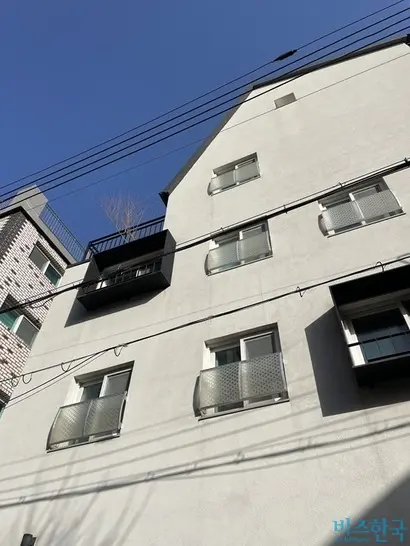
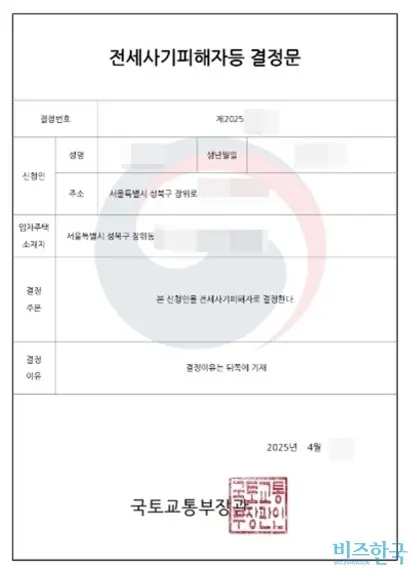
A failure to return security deposits occurred last year at a Seoul social housing unit in Jangwi-dong, Seongbuk-gu. Among the affected, one tenant who could not recover a deposit of approximately 50 million won was determined to be a Jeonse fraud victim by the Ministry of Land, Infrastructure and Transport in April. This marks the first time a Seoul social housing tenant has been recognized as a 'Jeonse fraud victim.'
Once determined as a Jeonse fraud victim under the Special Act, one can receive credit recovery, financial support, and emergency welfare aid. Simply failing to get a deposit back does not automatically qualify one as a victim of Jeonse fraud. Under the Special Act, a victim of Jeonse fraud must meet four requirements: △having a fixed date (date of registration) on the lease agreement, △having a lease deposit of 500 million won or less, △cases where multiple tenants have failed to recover their deposits or such damage is anticipated, and △cases where there is significant reason to suspect that the landlord had the intent to not fulfill the obligation to return the deposit.
The Seoul social housing tenant who was determined to be a Jeonse fraud victim met all four requirements. The Ministry of Land, Infrastructure and Transport determined that the Seoul social housing operator had intentionally withheld the return of the lease deposit.
The biggest reason it is difficult to be recognized as a victim of Jeonse fraud is that it is not easy to prove that the landlord had the 'intent' to deceive the tenant to avoid returning the deposit. Consequently, even actual victims of Jeonse fraud have sometimes been excluded from support or labeled merely as cases of 'failure to return deposits' rather than Jeonse fraud.
Seoul City had also referred to the Jeonse fraud cases in its social housing as 'deposit non-return damage.' Moreover, even in April, when the Ministry of Land, Infrastructure and Transport determined the Seoul social housing tenant to be a victim of Jeonse fraud, Seoul City maintained its position that it had no responsibility for returning the deposits. Only after concerns among social housing tenants spread did the Seoul Housing and Communities Corporation (SH) announce in August that it would directly purchase the social housing units involved in the Jeonse fraud.
However, BizHankook's investigation revealed that Seoul City was already aware of the Ministry of Land, Infrastructure and Transport's decision. A Seoul City official stated in response to BizHankook’s inquiry on the 9th, "We are aware of the fact that one victim was recognized."
A, who was recognized as a victim of Jeonse fraud in Seoul social housing, vented, "Even with the determination of being a Jeonse fraud victim, it takes time to provide housing, so immediate recovery is difficult. Also, the tenant must still bear the burden of the unrecovered deposit. Even after the determination as a Jeonse fraud victim, the Seoul Metropolitan Government's position has not changed. Nothing has been resolved yet. The situation is exacerbating due to the hurried and poorly planned administration by Seoul City."