

[비즈한국] Xcell Therapeutics373110 has stirred controversy by pushing for a paid-in capital increase aimed at shareholders. This comes just over a year after its KOSDAQ listing on July 15 of last year, as the company has returned to shareholders to request financial support. Revenue
growth and other tangible results have yet to materialize, and with the largest shareholder planning to participate in only a portion of this capital increase, the backlash from retail shareholders is intensifying.
According to the Financial Supervisory Service's Data Analysis, Retrieval and Transfer System (DART) on the 8th, the Xcell Therapeutics board of directors resolved on the 14th of last month to conduct a capital increase of 15 billion KRW through a general public offering for unsubscribed shares following an allotment to existing shareholders.
At the time of its KOSDAQ debut, Xcell Therapeutics secured 16.2 billion KRW—more than its initial target—as its offering price was set at 10,000 KRW, exceeding the top end of the anticipated band of 7,700 KRW. Just over a year later, the company is attempting to raise an amount comparable to that initial public offering from its shareholders again.
In the second quarter of last year, prior to its listing, Xcell Therapeutics held current assets of 1.864 billion KRW, including 44 million KRW in cash and cash equivalents, on a consolidated basis. Its total liabilities stood at 9.3 billion KRW, with a deficit of 50.6 billion KRW.
Following the infusion of funds from its IPO, the company’s financial position improved by the third quarter of last year, with cash and cash equivalents reaching 11.9 billion KRW, current assets at 13.7 billion KRW, and total liabilities at 7.9 billion KRW. However, funds have since been depleted rapidly. Cash
and cash equivalents dwindled to 7.8 billion KRW at the end of last year, 5.7 billion KRW in the first quarter of this year, and 3.4 billion KRW in the second quarter. Current assets also decreased from 10.5 billion KRW at the end of last year to 7.6 billion KRW in the first quarter and 5.4 billion KRW in the second quarter. While total liabilities fell to 8.1 billion KRW in the second quarter, the deficit actually widened to 61 billion KRW.
Xcell Therapeutics is focused on the growing cell and gene therapy (CGT) market and operates a cell culture media business essential for cell therapy development. At the time of its
listing, the company set goals to achieve 3.5 billion KRW in revenue and 6 billion KRW in operating loss in 2024; 8.2 billion KRW in revenue and 2.8 billion KRW in operating loss in 2025; and 11.9 billion KRW in revenue and 500 million KRW in operating profit in 2026. However, these targets have become difficult to reach. In the first half of this year,
the company reported consolidated revenue of 550 million KRW and an operating loss of 5.22 billion KRW, marking a 44.9% decline in revenue and a 26.5% increase in operating loss compared to the same period last year.
Consequently, shareholder sentiment is icy. Posts on online communities include remarks such as, "They are stabbing the shareholders who bought the stock based on the company's value at the time of listing in the back," "It will be hard to avoid a downward trend as there are no positive catalysts ahead," and "Shouldn't you be showing results and earning shareholders' trust?"
An official from Xcell Therapeutics stated, "Because the bio-industry environment is harsh, overall performance has been lower than what we aimed for during the listing," adding, "We have decided to raise capital early to build a new business model in response to this situation." They added, "We chose a shareholder-allotted capital increase after reviewing various options that could help the company and its shareholders, and we believe it will contribute to the company's medium-to-long-term financial stability as the funds will be immediately reflected as equity."
Shareholders are also looking unfavorably at the fact that the largest shareholder, CEO Lee Eui-il, plans to participate in only about 30% of his allotted shares in the capital increase. If the process proceeds as planned, CEO Lee's stake will drop from 15.72% to 11.68%. Some shareholders are vehemently protesting, asking, "Doesn't it mean they view shareholders as a cash machine if even the major shareholder isn't participating fully?"
As negative reactions from shareholders mount, the burden on Xcell Therapeutics is bound to increase. It remains to be seen how much interest retail investors will show in the unsubscribed shares resulting from low participation by existing shareholders. As of the closing price on the 5th, Xcell Therapeutics' stock price was 2,770 KRW, down more than 72% from its IPO price of 10,000 KRW.
Even if the general public offering fails, the structure is such that Korea Investment & Securities will absorb the remaining unsubscribed shares, so there is no issue with Xcell Therapeutics securing its 15 billion KRW target. However, Xcell Therapeutics must pay Korea Investment & Securities a fee equal to 20% of the amount the firm invests in acquiring those unsubscribed shares.
Furthermore, Xcell Therapeutics itself projected that "as the purchase price for the lead underwriter's unsubscribed shares is effectively 20% lower than that for general subscribers, it is highly likely the acquired volume will be sold off in the short term, potentially causing a temporary decline in the stock price due to a large influx of supply."
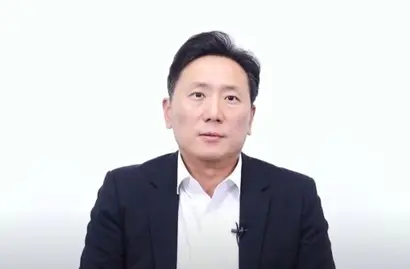
Xcell Therapeutics held an online investor relations (IR) session on the 28th of last month to explain the necessity of the capital increase and future business plans. In the
video, CEO Lee emphasized achievements since listing, such as the advancement of their MSC (mesenchymal stem cell) media business and becoming the first domestic company to register a DMF (Drug Master File) with the U.S. FDA, as well as the development of T-cell (immune cell) and NK-cell (natural killer cell) media, and a contract to exclusively supply T-cell media to the Chinese hyaluronic acid company Bloomage.
CEO Lee also expressed his ambition to leap forward as a provider of integrated CGT solutions centered on cell media business capabilities, while entering new markets such as aesthetics, cosmetics, and the comprehensive media market. He stated, "Xcell has been preparing for its second growth phase through company-wide portfolio rebalancing. This capital increase aims to secure the strategic funding needed to fully drive that change and leap forward, and we will do our best to ensure the market reflects our undervalued corporate value."