

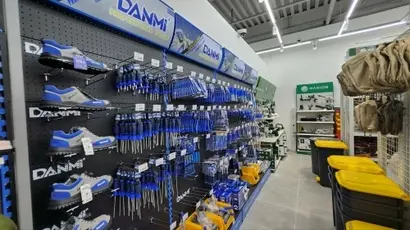
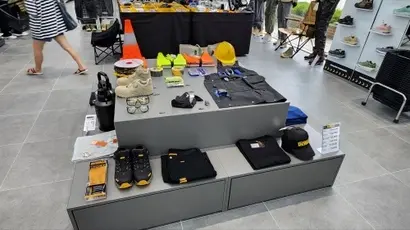
[비즈한국] Stepping into a quiet building located along a national highway in Pocheon, Gyeonggi Province, I was met with an unexpected buzz of activity. There were workers carefully picking out work shoes, a middle-aged head of a household changing into trousers in a fitting room before standing before a mirror, and families with children in tow. In one corner, a young couple was picking up a jacket and asking each other if it suited them. The most spacious area in the middle of the store was packed with various work clothes, and next to it, all sorts of equipment and electrical supplies were on display. It was quite different from the typical fashion outlet scenery one might imagine. Here, consumers weren't just buying “disposable items” needed for work; they were “shopping”—trying on clothes and comparing them. This is the story of ‘WorkUp,’ a workwear specialty store that is recently receiving a lot of attention.
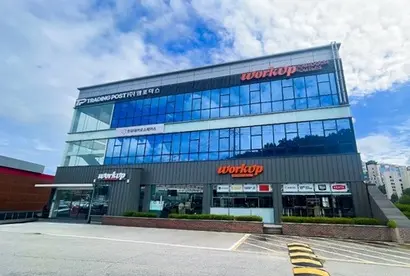
WorkUp is a new venture by Trading Post, the company that originally operated the camping gear distribution brand ‘Gorilla Camping.’ The know-how in mass production, low-cost sourcing, inventory management, and efficient distribution cultivated at Gorilla Camping was naturally transferred to WorkUp. The methods previously used to supply tents and camping chairs are now applied to work clothes, safety shoes, tools, and outdoor goods.
A Successful Japanese Model, Adapted for the Korean Market
WorkUp is gaining more attention from the distribution industry than from consumers. This is because it is a business model that many companies have attempted and failed at in the past. Those in the know are familiar with Japan’s ‘Workman.’ Starting as a chain of construction site workwear stores in the 1980s, Workman is now a massive brand with over 900 stores across Japan. Recently, led by ‘Workman Plus’ and ‘Workman Girl,’ it has elevated workwear to a fashion item, earning the nickname “the Uniqlo of workwear.”
There have been several attempts to benchmark the Workman business model in Korea as well. However, the results were always failures. Either they failed to find the intersection between fashion and utility, or they could not beat the online market in terms of price competitiveness. They also failed repeatedly in attracting consumers while trying to expand offline stores. WorkUp is the first to realize that difficult model in the Korean market. It is significant in that it did not just import the Workman success formula, but transformed it to fit the Korean consumer culture.
The most important differentiator is “fitting.” In Korea, workwear has long been a disposable item bought in bulk at low prices. Size choices were limited, and workers had to endure uncomfortable designs. However, WorkUp offers a wide range of sizes from S to 5XL, allowing anyone to try them on before choosing. The fitting room is not just a space; it creates a moment where a worker becomes a proud “consumer.” Being able to try on clothes and make a choice is a basic consumer right.
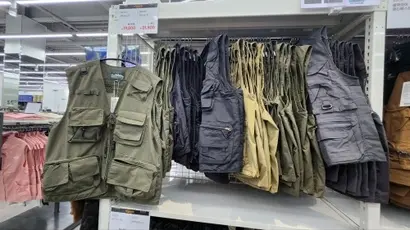
The fact that the number of delivery and construction workers has increased significantly in recent years is also linked to the background of WorkUp’s growth. Equipment like safety shoes, waterproof jackets, and helmets is no longer the domain of only a few industry workers. As work sites grow, so does the demand for workwear that guarantees safety and convenience. Especially in an atmosphere where the government is recently emphasizing safety at work sites and strengthening institutional mechanisms, the perception that “workwear is not a disposable item, but the front line of safety” is spreading. WorkUp’s emphasis on fitting and quality aligns with this trend.
Added to this is price competitiveness. No matter how good the clothing, it is not realistically easy for workers to buy expensive items. WorkUp provides an experience where consumers can try on and buy products at prices lower than the lowest online prices. The secret lies in the supply method. WorkUp’s principle is cash payment, not promissory notes, when receiving goods from suppliers. For suppliers, since cash flow is fast, they can lower unit costs as much as possible, and WorkUp can reduce costs to lower retail prices. Consumers get to have a groundbreaking consumption experience: buying at prices lower than the online minimum, after personally fitting them in the store.
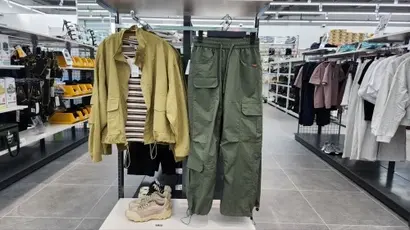
WorkUp’s differentiation doesn't stop at price and utility. They have set their own standards that workwear must also meet a certain level of design. The idea is to provide clothes that don’t look awkward even if you go meet a friend right after working at a site—not clothes you wear simply because they are cheap, but clothes that maintain a minimum level of style and dignity. This stems from a perspective that views workers not just as “operators,” but as consumers who deserve respect in all aspects of life.
Their franchise operation method is also unconventional. They do not charge franchise fees, deposits, or interior costs, and charge a fixed monthly fee of 500,000 won regardless of sales. Instead, the headquarters transparently discloses supply prices and profit margins, building trust with store owners. While this structure is rare in the distribution market, it is receiving a great response among franchisees.
A Path Similar to Daiso and Olive Young, Seoul Expansion is Key
Most offline retailers are currently going through a difficult time. As online shopping becomes the norm, offline stores are being pushed into restructuring and closures. However, there are exceptions during these tough times: Daiso and Olive Young. Daiso, which supplies daily necessities cheaply, and Olive Young, which features reasonably priced beauty and health products, continue to show growth despite the offline slump.
Ultimately, recent consumer trends are leaning toward reasonable mid-to-low-priced consumption rather than premium. WorkUp is on this same trajectory. They have created a space that is cheaper than the online lowest price while allowing customers to see, touch, and try items on. This is why WorkUp stands out in the current offline retail market.
WorkUp still has mountains to climb. Although it grew rapidly in just 18 months of business by recruiting 130 franchisees—at a speed that would make even Baek Jong-won envious—many consumers still find the name unfamiliar. The reason is simple: it hasn't truly taken root in downtown Seoul yet. While there is a flagship store in Seongsu, the main target is still workers near regional industrial complexes and construction sites. Because Seoul has high rent, it is not easy to maintain the price competitiveness that WorkUp has. That is why they are attempting to enter large marts and outlet shop-in-shops. Whether this challenge succeeds will be the next turning point for WorkUp’s growth. This is where the industry’s attention is focused.
Looking around the store slowly, I could naturally feel the brand philosophy. Here, the worker is no longer “someone who roughly buys clothes to throw away,” but a confident consumer choosing clothes that fit their body shape and taste. With the addition of family customers, the store reveals the face of a lifestyle-oriented outlet.
As such, WorkUp’s growth is worth noting in that it has changed the consumer experience for workers. The differentiation of being able to try on clothes before buying, in addition to low prices, is a clear competitive advantage that offline stores can have over online counterparts. However, there are still tasks remaining, such as entering the highly competitive and high-rent Seoul market to achieve economies of scale. If they can pass this test, they have plenty of potential to go beyond being just a workwear brand and establish themselves as a national retail model, like Daiso or Olive Young.