

[비즈한국] HD Hyundai Oilbank has been fined a record 176.1 billion won for the illegal discharge of wastewater containing phenol, a Group 1 carcinogen. However, the initially calculated amount was 314.4 billion won. The final fine was nearly halved after the company received maximum reductions for factors such as voluntary reporting, cooperation with investigations, and discretionary leniency. Bizhankook took a closer look at the reduction process amid criticism that large corporations are receiving special treatment.
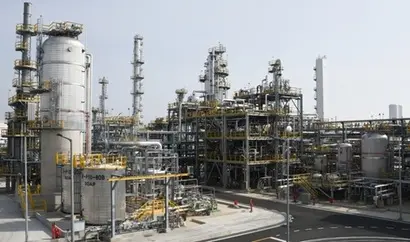
On August 28, the Ministry of Environment imposed a fine of approximately 176.1 billion won on HD Hyundai Oilbank under Article 12 of the Act on the Regulation and Punishment of Environmental Crimes for the illegal discharge of phenol-containing wastewater. This is the highest fine ever imposed for environmental crimes. HD Hyundai Oilbank has not yet decided whether to file an administrative appeal or lawsuit against the fine.
HD Hyundai Oilbank was indicted by the prosecution for this incident. In February of this year, the 27th Criminal Division of the Seoul Central District Court, the first-instance court, sentenced the then-CEO to one year and six months in prison and gave prison sentences to other former and current employees for violations of the Water Environment Conservation Act.
The Fine: Cut as Much as Possible
Fines under the Act on the Regulation and Punishment of Environmental Crimes are calculated based on the "violation fine amount" determined by sales, taking into account the frequency, duration, and severity of the violation, plus purification costs. From this, reductions are applied by comprehensively considering factors such as voluntary reporting, the degree of damage, and financial status.
HD Hyundai Oilbank's violation fine amount was approximately 314.4 billion won, and no purification costs were added. From there, a reduction of approximately 138.3 billion won—the maximum allowable amount—was applied, bringing the final fine to approximately 176.1 billion won. Essentially, it was reduced by nearly half. Democratic Party lawmaker Yoon Kun-young stated, "During the 2023 National Audit, I raised suspicions of collusion between HD Hyundai Oilbank and the Ministry of Environment," adding, "I don't understand why only large corporations are given leniency while ordinary small and medium-sized enterprises or individuals receive the full force of government punishment."
Fine reductions are largely divided into voluntary reporting reductions and discretionary reductions. For voluntary reporting, the reduction rate is determined based on the timing of the report and the level of cooperation with the investigation.
A reduction based on the timing of a voluntary report can be up to 10% if the company reports the violation after the Ministry of Environment becomes aware of it but before the investigation begins. The Ministry of Environment granted the full 10% reduction. HD Hyundai Oilbank voluntarily reported the violation on January 25, 2022, after the Ministry of Environment had already become aware of it through whistleblowing in 2021. However, critics point out that granting the maximum reduction is questionable since the Ministry had already launched an investigation based on the whistleblower report.
The Seoul Central District Court, which found the company and its staff guilty, determined that it would have been difficult to uncover the full extent of the crime without the whistleblower's public interest report. This is because HD Hyundai Oilbank meticulously concealed the crime, such as stopping wastewater supply and replacing it with clean water only when there were odor complaints or administrative crackdowns. Furthermore, since the company and its employees denied criminal liability, the court viewed the purpose of the voluntary report as a way to secure a fine reduction.
The Ministry of Environment also granted the maximum 20% reduction for cooperation with the investigation, citing the company's diligent submission of necessary documents after the voluntary report. A Ministry official stated, "It is not easy to adjust reduction rates quantitatively by analyzing voluntary reports in detail," adding, "The Fine Deliberation Committee, which evaluates fines qualitatively, did not suggest adjusting the reduction rate."
The company also received the maximum discretionary reduction. Discretionary reductions of up to 20% can be applied to the fine after subtracting the voluntary report reduction, based on a comprehensive consideration of the violator's financial status and the extent of environmental damage. For this discretionary reduction, the current restructuring taking place in the petrochemical industry was taken into account, and HD Hyundai Oilbank is known to be in a difficult financial position.
The fact that contamination damage from phenol has not yet been confirmed was also included as a factor for discretionary reduction. For the same reason, no purification costs were imposed. In response, Nam Hyun-woo, co-chair of the Seosan-Taean Korea Federation for Environmental Movements, emphasized, "It is problematic to claim that there is no confirmed pollution damage in the absence of active investigation and objective data," and "It makes no sense to grant a reduction for 'cooperation' while the company continues to deny the charges."
Input into Other Facilities Without Going Through Purification
According to the investigation by the Ministry of Environment's special judicial police, HD Hyundai Oilbank falsely reported measurements of phenol concentration in its wastewater to South Chungcheong Province, thereby obtaining an exemption from installing prevention facilities. Subsequently, from October 2019 to November 2021, the company discharged wastewater exceeding the permissible phenol discharge standard (1.0mg/L) into its nearby subsidiary, HD Hyundai OCI, without passing it through phenol prevention facilities. HD Hyundai OCI used this phenol-containing wastewater as cooling water for its desulfurization towers.
Additionally, from October 2016 to November 2021, the company supplied industrial water that had not undergone proper treatment to another subsidiary, HD Hyundai Chemical. The Ministry of Environment and the prosecution believe that HD Hyundai Oilbank reaped illegal profits through this, including saving approximately 45 billion won in expansion costs for wastewater treatment plants.
In a further investigation, the prosecution discovered that from June 2017 to October 2022, HD Hyundai Oilbank had been using phenol-containing wastewater as cleaning water in its wet gas scrubbing (WGS) facilities at the plant. The prosecution concluded that phenol was emitted into the atmosphere through the WGS towers during this process.
The first-instance court recognized the violation of the Water Environment Conservation Act and fined HD Hyundai Oilbank 50 million won, while sentencing six former and current employees, including the then-CEO, to prison.
The court ruled that the act of inputting phenol-containing wastewater into other facilities without purification while exceeding discharge standards itself constitutes "discharging without flowing into prevention facilities," a violation of Article 38, Paragraph 1, Item 1 of the Water Environment Conservation Act.
An appeal is currently underway. HD Hyundai Oilbank stated, "There was no discharge of pollutants to the outside during the industrial water recycling process," and "As the appellate trial is still ongoing in court, we will do our best to clarify the facts and clear up any anxiety or misunderstanding in the local community."
Many of the employees who received prison sentences were released on bail and have returned to key positions. Seosan City Councilor Moon Su-gi emphasized, "HD Hyundai Oilbank has not even issued a statement or an apology to the citizens. They should be punished more severely, not granted leniency," and "They must admit their wrongdoing to the citizens and prepare to face the consequences."