

[비즈한국] The Seoul Central District Court has ruled in favor of the Korean Red Cross in a lawsuit filed against the Seoul Metropolitan Government and seven Seoul autonomous districts regarding claims of unjust enrichment. The court declared the property and local education taxes collected by the city and its districts illegal and ordered them to return approximately 150 million won. Of this amount, the portion to be returned by the Seoul Metropolitan Government is approximately 90 million won.
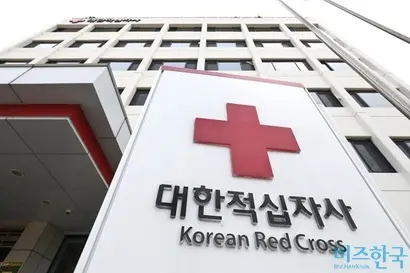
On July 15, the Korean Red Cross achieved a partial victory in an unjust enrichment lawsuit filed against the Seoul Metropolitan Government and seven autonomous districts (Gangnam-gu, Gangseo-gu, Gwanak-gu, Yangcheon-gu, Jung-gu, Jongno-gu, and Nowon-gu).
The first-instance ruling comes about three years after the Korean Red Cross initiated the lawsuit in September 2022. The Red Cross had sued to recover 156,886,936 won, arguing that the calculation methods for property tax and local education tax applied by Seoul and its districts on Red Cross-owned land were illegal.
The Korean Red Cross owns land in various locations across Seoul, including Gangnam-gu, which it has utilized for both medical and non-medical operations. Under the Restriction of Special Local Taxation Act prior to its 2018 amendment, properties used by the Korean Red Cross for medical services were eligible for a 75% reduction in property tax, while those used for non-medical services were eligible for a 25% reduction.
When levying property and local education taxes for 2017 and 2018, the Seoul Metropolitan Government and seven district offices, including Gangnam-gu, classified these properties as subject to either "comprehensive aggregate taxation" or "separate aggregate taxation." They then calculated the tax amounts by applying reductions to the overall tax base. In other words, rather than applying tax rates specifically to the portions eligible for reduction, they calculated taxes on the entire land area and then applied the reduction to a portion of the total.
In response, the Korean Red Cross filed a lawsuit for the return of the paid taxes (unjust enrichment), arguing that these lands should have been classified as subject to "separate taxation," a method where the tax base and rates are calculated by isolating the eligible land from the start.
The Seoul Metropolitan Government and the seven districts argued that if only the eligible portions of land were treated as subject to separate taxation, it would lead to circular, repetitive issues involving overlapping exemptions and land segments. They contended that calculating taxes under the existing method was necessary to avoid such complications.
The court ruled in favor of the Korean Red Cross, determining that the land should have been classified as subject to "separate taxation." The court stated, "Under the former Local Tax Act, the tax base and rates for separate taxation should have been applied... However, calculating property and local education taxes based on the premise that the disputed land was subject to separate aggregate taxation constitutes a grave and obvious defect, rendering it invalid." The court decided that the Seoul Metropolitan Government and the seven district offices must return approximately 150 million won to the Korean Red Cross. Of this, the amount to be paid solely by the Seoul Metropolitan Government is approximately 90 million won.
A Korean Red Cross official explained, "After a relevant Supreme Court ruling in 2018, an accounting firm informed us that it also applied to the Korean Red Cross. Following this, we filed a request with the Board of Audit and Inspection and subsequently initiated this unjust enrichment lawsuit based on those results. The current ruling concerns local taxes; a separate lawsuit regarding comprehensive real estate tax against the South Korean government is still ongoing. Aside from Gangnam-gu, which has appealed, the first-instance rulings have been finalized for the others."
Among the Seoul Metropolitan Government and the seven districts, Gangnam-gu is the only one to have filed an appeal. The first-instance ruling had ordered the Gangnam District Office to return approximately 5.83 million won to the Korean Red Cross. Regarding the reason for the appeal, an official from the Gangnam District Office stated, "As this is a matter currently in litigation, it is difficult to disclose specific details."