

[비즈한국] It has been revealed that the pharmaceutical wholesaler Union Pharmaceutical provided massive kickbacks to general hospitals under the guise of dividends and other payments by having them acquire shares in "ghost entities." According to the prosecution, Ahn Byeong-gwang, Chairman of Union Pharmaceutical, provided approximately 5 billion won in rebates while supplying pharmaceuticals to three general hospitals. This is the first time a rebate scheme involving ghost entities has been uncovered, raising renewed calls for fundamental improvements to the pharmaceutical distribution structure and the overall drug pricing system.
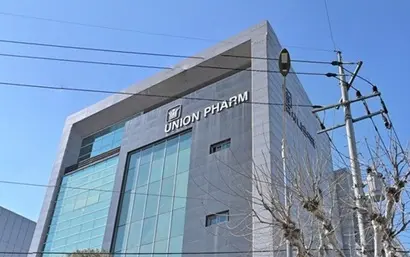
Establishing Ghost Entities Within Company Buildings to Provide Rebates
On the 18th, the Seoul Western District Prosecutors' Office’s Food and Drug Crime Investigation Department announced that it has indicted eight individuals without detention, including Ahn Byeong-gwang, Chairman of Union Pharmaceutical, and Jang Ho-sung, Chairman of Dankook University Hospital, on charges of breach of trust (receiving and giving), violations of the Medical Service Act and the Pharmaceutical Affairs Act, obstruction of bidding, and violation of the Act on Regulation and Punishment of Criminal Proceeds Concealment. According to the prosecution's investigation, Chairman Ahn established shell companies with no actual business operations, allowed the families of hospital board chairs to acquire shares, and then provided approximately 3.4 billion won in rebates under the guise of dividends.
Furthermore, Chairman Ahn falsely registered the board chairs' family members as employees of these ghost entities to pay them salaries and allowed them to use golf club memberships and corporate credit cards under the entities' names. He is also accused of entering into sham loan and consulting contracts, paying approximately 700 million won to Chairman Jang and his father, Honorary Chairman Jang Choong-sik, as "consulting fees" to disguise the receipt of rebates as legitimate transactions. It was also discovered that Chairman Jang had received an additional 1.25 billion won in rebates from other pharmaceutical wholesalers and manipulated bidding results.
The prosecution explained, "In the past, pharmaceutical companies and distributors provided cash, gift certificates, and gifts to hospitals to promote sales, but in this case, the distributor established ghost entities to evade punishment. The hospital board chair's family abused their position of power to receive massive rebates and rigged bids to ensure specific companies won contracts, thereby obstructing competitive bidding."
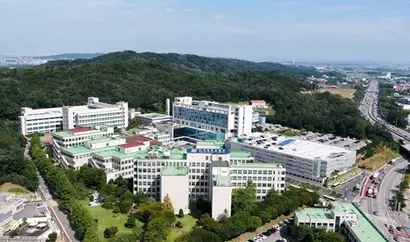
Generic Drug Prices Among Highest in the World; Need to Reform Pricing System
This is not the first time illegal rebates between pharmaceutical wholesalers and medical institutions have been uncovered. During the 2020 and 2021 parliamentary audits, it was pointed out that the profit margins of wholesalers with hospital shareholders were significantly higher than those of other firms, sparking controversy over the legitimacy of private contracts. Although competitive bidding was subsequently introduced, some hospital officials manipulated results by creating bidding scenarios in advance while receiving rebates.
Such a structure ultimately underscores the need for reform in the drug pricing system. The National Health Insurance Union issued a statement, saying, "South Korea's generic drug pricing structure, which is among the highest in the world, ensures massive profits from rebates alone, causing companies to focus on rebate-based sales rather than new drug development." They argued, "There is a need for institutional improvements that encourage price competition among suppliers, such as government bidding systems, individual price negotiations, and a reference pricing system."
A reference pricing system is a method where health insurance only covers up to a certain amount for a group of drugs with the same efficacy, and the patient pays for any amount exceeding that. This system was discussed around the year 2000 to curb the public burden caused by the prescription of high-priced drugs and to prevent the deterioration of health insurance finances, but it was not adopted due to concerns over the decline in the pharmaceutical industry's competitiveness and a drop in medical quality.
Meanwhile, according to 'OECD Health Statistics 2025,' South Korea's per-capita pharmaceutical spending was 47% higher than the OECD average, ranking third among member countries after Belgium and Germany. Specifically, in 2023, South Korea's per-capita pharmaceutical sales were $968.9 PPP (Purchasing Power Parity, an exchange rate that reflects each country's price level), which is $310.8 higher than the OECD average of $658.1.