

[비즈한국] The Lee Jae-myung administration has announced plans to create 500 "Sunshine Income Villages" as a national task. The initiative aims to have village communities lead the installation and operation of solar power systems, thereby achieving energy self-sufficiency and using profits from electricity generation for resident welfare. However, many similar projects supported by past governments have failed to continue after the support ended. A prime example is Junggeum Village in Imsil-gun, North Jeolla Province, which was once hailed as a nationwide model but is now effectively in a state of suspension. There is a growing call to use this failure as a "negative example" (a lesson learned from others' mistakes) while designing the new Sunshine Income Village policy.
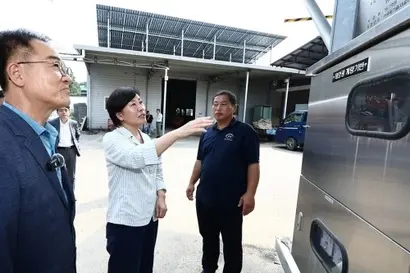
On August 24, Minister of Agriculture, Food and Rural Affairs Song Mi-ryeong visited the "Guyang-ri Sunshine Dure Power Plant" in Guyang-ri, Yeoju. Guyang-ri is considered a leading model for resident-led village solar projects. The government has expressed its commitment to promoting the Sunshine Income Village project based on the Guyang-ri model. The Sunshine Income Village is a business model where village communities install solar power facilities on available land, such as farmland or reservoirs, and return the profits from electricity generation to a village community fund.
Once Hailed as a Rural Energy Self-Sufficiency Model…
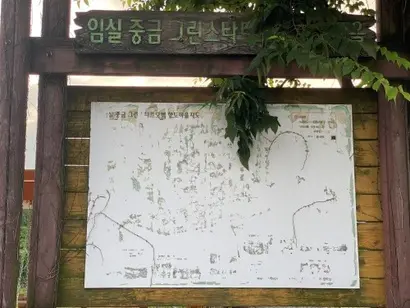
The resident-led solar power business model is more challenging than it seems. The biggest problem is sustainability. A representative case is Junggeum Village in Imsil-gun, North Jeolla Province. Junggeum Village began promoting an energy self-sufficient village project in earnest in 2008. Kim Jeong-heum, the current Imsil County council member who was the village operation committee chair at the time, took the lead in gathering residents. In 2010, the village gained nationwide attention after being designated as a "Green Start Model Local Village" by the Ministry of Environment.
Various attempts were made in the early stages of the project. Village residents used subsidies from the Korea Energy Agency to install eleven 3kW-class solar power systems in homes and the village hall. They also created a village community farm called "Hope Vegetable Garden" and experimented with eco-friendly farming methods. Measurements of CO2 emissions from cabbages grown on this farm showed 0.4kg per head, about 40% lower than the 0.65kg produced by conventional farming methods.
Biodiesel made from collected waste cooking oil was used as fuel for tractors and tillers. Various equipment, including solar cookers, bicycle generators, wind power generators, and solar water heaters, were introduced to Kim Jeong-heum’s home, which was used as an unmanned cafe and eco-friendly experience space. As Junggeum Village was introduced as a "rural energy self-sufficiency model," field trips from across the country followed.
The Fatal Reason for Lack of Sustainability
However, these achievements did not last long. Once government support ended, the momentum for operation weakened rapidly. Crucially, the project was structured in a way that was overly dependent on a specific individual. When Committee Chair Kim Jeong-heum was elected as a county council member in 2022 and left the village, no successor appeared to carry on the project. Because the entire resident body had not fully shared the necessity of energy self-sufficiency, community operations effectively halted.
The solar equipment also revealed problems. Unlike the early days when it covered 65% of household power consumption, residents' electricity usage actually increased over time. As electricity production rose, residents bought more appliances like TVs and refrigerators, ultimately lowering the energy self-sufficiency rate.
Conflicts also arose over how to distribute power generation profits. There were disagreements over whether to manage the funds as a village community fund or what ratio to use for distribution between new and existing residents. Ultimately, internal community conflict weakened the basis for cooperation.
The community "Hope Vegetable Garden" also failed to continue. Although it was a method of collecting profits into a public fund by selling produce grown by residents, in reality, Kim was essentially managing the farming alone. In the end, as operations ceased, the project revealed the structural limitations of relying on a specific person. Reflecting on this, Kim stated, "The failure was that not all residents understood the importance of climate change and energy transition," adding, "The administrative authorities never visited the village even once after the equipment was installed."
What Makes Guyang-ri and Mihodong Different?
Unlike the failed case of Junggeum Village, Guyang-ri in Yeoju is considered a success story. Guyang-ri installed a large 1MW-scale solar power plant on land owned by the village community. This is dozens of times larger than the equipment scale of Junggeum Village (3kW-class). Profits from electricity generation are managed collectively through a cooperative and used for resident welfare, such as operating free meal services and village shuttle buses.
Jeon Ju-young, the head of Guyang-ri, explained, "It is a principle to use power generation profits for the village community rather than distributing them to individuals. When profits return as welfare, residents' interest and participation increase." Economies of scale and community-centered use of profits are cited as success factors.
Mihodong in Daedeok-gu, Daejeon, another cited case, has continued its business independently even after government support ended. Residents formed a cooperative and an energy committee, and they continue to host educational and experiential programs by running an "Energy School" and a resident activist group called "Solar Sisters." When residents build governance spontaneously like this, projects gain sustainability.
Experts consistently point out that "village solar projects cannot be sustained with equipment-oriented support alone." Yang Heung-mo, director of the Energy Transition Haeyu Social Cooperative, said, "If government projects proceed centered on equipment, the remaining facilities could actually become a nuisance to residents. Education and experience programs that allow residents to experience the efficacy of energy self-sufficiency are essential."
Bae Bo-ram, deputy director of the Green Transition Institute, also emphasized, "Even if administrative agencies promote a project, it takes at least a few years to create governance where residents participate together. It is important to prepare a driving force for continuous participation and establish a transparent communication and decision-making system."
An official from the Ministry of Agriculture, Food and Rural Affairs stated, "Since village residents lack expertise related to solar power, continuous management and consultation are necessary," adding, "We will discuss post-project management and support systems from the early stages of policy design."