

[비즈한국] Working between Korea and Europe, the most perplexing time is July and August, when summer vacations are concentrated. During the summer, Europe essentially powers down. A vacation of at least 10 days to two weeks is standard, and it can last up to four weeks. For Korean startups preparing for various exhibitions in September or projects with European companies in the second half of the year, this period often brings anxiety as they receive "out of office" automated email replies from their European partners.
Even in the startup industry, investors head to the beaches, offices become empty, and news and new product announcements go quiet. This is a facet of European culture that prioritizes "work-life balance," contrasting sharply with the "breathless summer" seen in the U.S. style.

Even in Europe, the AI industry didn't rest
However, this summer was different. The artificial intelligence (AI) boom changed the summer landscape of the European startup ecosystem. Fearing that if a model like GPT-5 came out in the U.S., they would lose customers if they didn't apply it to their services within days, many AI startups gave up their summer vacations.
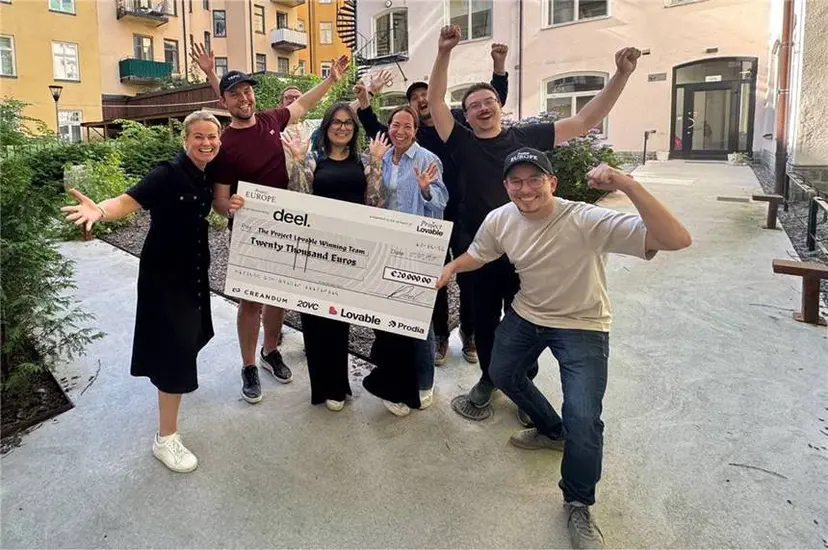
Swedish AI app developer Lovable and "Project Europe," founded by key European tech entrepreneurs, hosted a massive 20-hour hackathon in Sweden from August 12 to 13. Project Europe is a €10 million (16.2 billion KRW) accelerator formed to invest in entrepreneurs under the age of 25.
Among the participating teams, Good Omen took the "AI Journalist Avatar Newsroom" idea proposed by European business news service company Impact Loop and completed two prototypes—a newsroom avatar and an AI video platform—in just 20 hours. They were selected as the final winning team, and Impact Loop decided to acquire their rights for joint development.
Fred Bardolle, head of AI products at cloud service provider Scalesway, told Sifted, "There is no room for the team to rest this summer. This is because when new models like OpenAI's GPT-5 are released regularly, we have to get the model onto our platform within days," describing the busy situation.
U.S. VCs are fueling this atmosphere as they are expanding deal-making in Europe. According to Sifted data, the number of U.S. VCs that executed at least two or more AI investments in the first half of this year increased by 73% compared to the same period last year.
9 AM to 9 PM, 6 days a week? The '996 Debate'
Will the speed competition driven by the AI fever change the overall culture of Europe? Recently, a "996 debate" has emerged in the European startup scene. Martin Mignot, a partner at London- and U.S.-based cross-border VC Index Ventures, emphasized that Europe should adopt the American hustle culture, stating, "Forget 9 to 5, 996 is the new startup standard." '996' refers to working from 9 AM to 9 PM, six days a week.
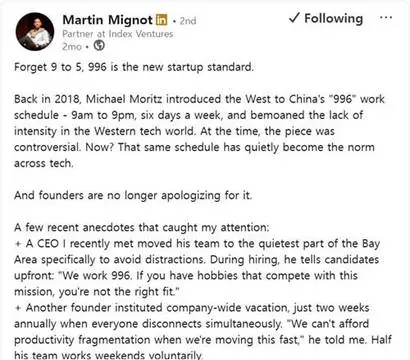
He argues that especially in the current situation—characterized by the AI boom, globalized competition, extreme talent shortages, and a young AI-native generation becoming consumers—"every moment you don't invest in the product becomes a cost" in the AI era.
At the same time, Mignot posed an important question: "When a company moves past the big bang stage, how can you turn this intensity into a sustainable system?" Citing the example of the British fintech unicorn Revolut, in which he invested, he emphasized the need for a strategy tailored to the company's growth stage, noting, "Revolut grew with 996 in its early days, but now it has an institutionalized performance management system."
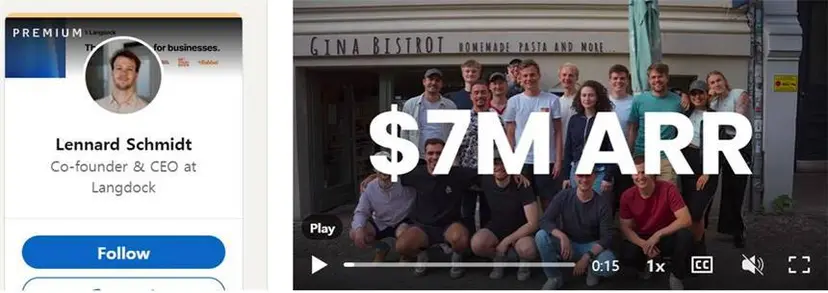
Leonard Schmidt, CEO of AI adoption platform Langdock, emphasizes that the summer should be spent in a different way. With a team of just under 20 people, Langdock has been consistently releasing products even through the summer, surpassing $7 million (9.7 billion KRW) in annual recurring revenue (ARR). In an interview with Sifted, he attributed the secret to "calm urgency"—moving quickly but without excessive stress, and starting the day easily after a late night of work.
Schmidt emphasizes sustainable agility, stating, "All our team members work hard. But it has to be sustainable. To handle more customers with fewer people, what matters most is the quality of decision-making. And the quality of decision-making comes from sleep and health."
Europe's long summer vacation, an opportunity for Korean startups
Europe's summer is long. To Korean startups, it might feel like a frustrating void. However, let's use this gap as a time to catch our breath.
While European VCs and corporate managers are away during the vacation season, Korean startups should use the time to strengthen their internal foundation. It should be a time for a "deep dive" to review IR materials, improve the completeness of product demos, and resolve legal and financial risks in advance. It is the optimal time to examine the regulatory and certification systems of European countries, check schedules for upcoming industry conferences and exhibitions, and finalize business trip routes for the fall and beyond.
Let's make the most of this "free time for preparation" so that when European partners return to work in September, we are ready to engage immediately. While startups are essentially a race of speed, let's also remember that you cannot finish the race with speed alone. If we look at the Europeans and are reminded that resting well is sometimes a prerequisite for long-term innovation, wouldn't we be one step closer to global standards?
The author, Lee Eun-seo, majored in law in Korea and studied theater in Berlin. She is based in Berlin, a city of art and a European startup hub, and leads 123factory, bridging the startup ecosystems of Korea and Germany as she grows with the city.