

[비즈한국] It has been confirmed that the Seoul Metropolitan Government plans to purchase social housing units in Seoul where security deposit non-return cases have occurred. On the 22nd, the Seoul Metropolitan Government sent a notice to residents of social housing units affected by non-return of deposits, stating, "We plan to take measures for the Seoul Housing & Communities Corporation (SH) to purchase the buildings and return the security deposits." This comes approximately one year and a half after the Jeonse fraud incidents occurred in Seoul social housing (Related article: [Social Housing in Crisis] Trusted Seoul City's Name and Moved In, Only to Become a Victim of 'Jeonse Fraud').
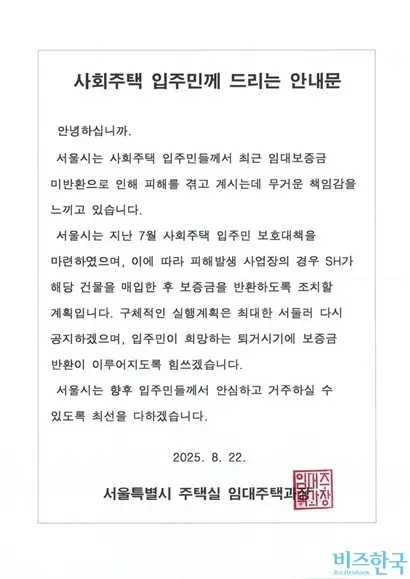
The Seoul Metropolitan Government informed the affected residents, "The city established a protection plan for social housing residents last July; accordingly, for business sites where damages occurred, we plan to have SH purchase the buildings and return the deposits." They added, "We will announce the detailed implementation plan as soon as possible."
An official from the Seoul Metropolitan Government told Bizhankook, "Seoul City and SH are in discussions to proceed with the purchase. The plan is to prioritize sites where security deposits were not returned and provide refunds to the tenants. However, only the general direction has been decided as of now."
Seoul social housing involves SH providing the land while private companies manage the buildings. However, since last year, there has been a significant increase in social housing units experiencing financial difficulties, such as 'seizures,' and cases where security deposits were not returned (Related article: [Social Housing in Crisis] Support Fluctuates with the 'Mayor's' Preferences, Making Stable Operation Difficult).
Although a year and a half has passed since the deposit non-return incidents in Seoul social housing, the city had maintained that there was no particular solution. Although the projects bore the name of Seoul City, the city was not a party to the rental contracts. While there were calls for SH, as the landowner, to purchase the buildings to increase stability and return the deposits, the city had maintained that this would constitute 'breach of trust' under professional duties.
However, the situation changed in June. The Ministry of the Interior and Safety issued an authoritative interpretation that SH providing a 'purchase commitment' for social housing does not constitute breach of trust under the Local Public Enterprises Act. Nevertheless, at the time, Seoul City stated that, in addition to the Ministry’s interpretation, they needed to review ways to address potential issues regarding breach of trust under the Criminal Act.
It appears the city's position has shifted as they recently found ways to resolve these issues. An official from the Seoul Metropolitan Government previously explained, "The remaining legal aspects have also been resolved through consultation."
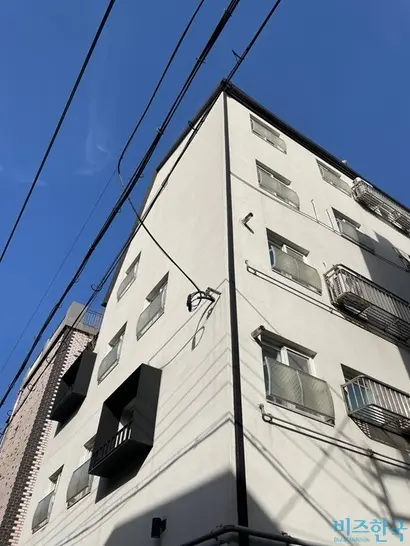
However, it remains questionable whether the city's purchase of the social housing can fully resolve the harm suffered by residents. This is because the social housing units involved in the non-return cases are also burdened with various provisional seizures and attachments on the buildings themselves.
A victim of Jeonse fraud in Seoul social housing, identified as A, criticized the move: "The city recently notified us that they would allow the return of the deposits. However, they say various legal costs incurred by the tenants, aside from the deposit, are excluded. After maintaining for over a year that it wasn't the city's responsibility, they are suddenly offering compensation after the administration changed."
Residents of the affected social housing have recently begun demanding that the city come up with proactive measures. Resident B stated, "We have received the notice from the city and have submitted inquiries regarding the specific implementation plan."