

[비즈한국] The Ministry of Health and Welfare recently launched an AI Welfare and Care Innovation Task Force (TF). The task force is focusing on finding ways to innovate welfare and care services based on AI technology. It will identify innovation tasks and establish a mid-to-long-term roadmap through social discourse. While there have been several cases where government ministries have applied AI technology to welfare administration, they were mostly limited to "AI-based counseling." With the new administration's high level of interest in AI, attention is focused on whether this initiative will lead to different application cases.

Ministry of Health and Welfare Launches AI Welfare and Care Innovation Task Force
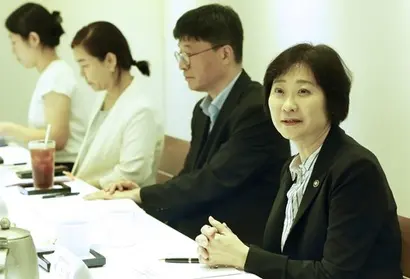
On the 8th, the Ministry of Health and Welfare announced, "In the era of AI transformation, we are launching the AI Welfare and Care Innovation Task Force (TF) to discuss fundamental innovation plans for the welfare and care sectors and to establish a policy roadmap for future implementation." During the first meeting that day, the direction for establishing the roadmap, the division of roles among institutions, and future schedules were discussed. The task force plans to announce the 'AI Welfare and Care Innovation Roadmap' in the first half of next year and will continue its activities until the countermeasures are prepared.
The task force is led by the First Vice Minister of Health and Welfare and consists of: the 'Planning General Team', which oversees the overall roadmap establishment; the 'Welfare Administration and Data Innovation Team', which prepares innovation plans for general welfare administration and ways to open and activate social security data; the 'Care Technology Innovation Team', which prepares technical support measures such as expanding R&D investment in care technology and conducting demonstrations and institutional support for technology commercialization; and the 'AI Innovation Forum Team', which supports social discourse such as forums to ensure that appropriate technology can be established in the field.
This is not the first time government ministries have utilized AI in welfare administration. Previously, the Ministry of Health and Welfare and the Ministry of the Interior and Safety conducted AI projects focused on "monitoring blind spots." In May last year, the Ministry of Health and Welfare established an "Initial Counseling Information System Using Artificial Intelligence" to utilize AI in the early stages of counseling. Previously, local government officials had to make direct contact, but the system enabled counseling that performed follow-up questions regarding crisis information after asking standard questions. Existing human staff were then able to focus on in-depth counseling.
The Ministry of the Interior and Safety also promoted a project to monitor crisis households using AI. For about a year starting in October 2023, the Ministry collaborated with Naver and SKT to conduct a pilot project for crisis household monitoring based on AI phone calls. Using the AI phone service, the system checked in periodically on people who needed management, such as elderly living alone and middle-aged one-person households, and was able to handle repetitive tasks like providing information on welfare benefits and taking requests for sponsored goods.
Will it Move Beyond the 'Phone Model'… Concerns About Errors Must Also Be Addressed
Although government ministries have stepped into AI welfare administration, the efforts have largely remained at the level of a "phone model." Some local governments are operating AI care robots, and among private companies, there is Naver Cloud's generative AI-based "CLOVA CareCall."
While the business has developed around the "phone model," this model also carries several problems. For initial counseling to take place, the subject must answer the AI call, and AI calls generally have lower pick-up rates than standard calls. The Korea Social Security Information Service stated that it is making efforts to increase pick-up rates by sending advance notification messages and utilizing spam-blocking applications.
Even when a subject answers the phone, there is also criticism regarding the resistance to AI calls. After asking standard questions about health, finances, and employment crises, the AI phone asks follow-up questions regarding crisis information. From the recipient's perspective, talking about sensitive topics via an AI call can feel burdensome. Even in cases of AI counselors introduced by corporations, while counseling rates have improved, they often receive poor evaluations in terms of user satisfaction.
The reason for the development centered on AI phone calls in welfare administration was the focus on discovering "welfare blind spots." With incidents continuously occurring in welfare blind spots—such as the three mother-daughter families in Songpa (2014), the mother-son families in Bangbae-dong (2020) and Changsin-dong (2020), and the three mother-daughter families in Suwon (2022)—the state prioritized eliminating these "blind spots."
Nam Chan-seop, a professor of Social Welfare at Dong-A University, stated, "In the Netherlands, there was a case where they created an AI program to screen welfare recipients, but it incorrectly classified all dual citizens as fraudulent recipients, leading to tens of thousands of people being misclassified; it took over a year to correct. One must be cautious when using AI." He added, "In particular, those receiving welfare benefits are people who are disconnected from networks and lack social capital. Simply finding them with AI and providing payments is not desirable. At the very least, in the field of welfare administration, it should develop into a way for human resources to become the lifeline for these individuals."