

[비즈한국] In an era where technology is money, the pharmaceutical and biopharmaceutical industry—seen as a key future growth engine—is no exception. As a fierce race for new technologies unfolds globally to gain the upper hand in the struggle for market dominance, the importance of source technology patents is being emphasized. What is the reality of patents facing the domestic pharmaceutical and biopharmaceutical industry, and what are the tasks ahead?
A technology export contract to ABL Bio298380 was terminated after it was revealed that In2Cell had a prior patent application filed by a Chinese bio-company. Allegations were raised that the company pushed ahead with its KOSDAQ listing in May 23 despite being aware of the prior patent application, leading to an investigation by the Financial Supervisory Service (FSS). The patent controversy gained further prominence alongside the timing of In2Cell's listing, but some in the industry point out that it is common for companies to be unaware of prior patent filings.
The 18-month ‘Black Box’ After Filing… A Critical Risk for Bio-Ventures
Once a patent is filed, information is kept confidential for 18 months from the filing date, meaning no one outside the applicant can know the details. A patent attorney at a law firm specializing in bio-industry patents said, "Because similar things are often developed simultaneously during the technology development phase, there are many cases where patent applications are filed around the same time."
Accordingly, companies conduct a 'prior art search' before filing to determine whether their technology is novel and inventive enough to be patented. Furthermore, before proceeding with the commercialization of technology, they carry out a 'Freedom to Operate (FTO)' analysis to examine whether launching their technology as a product or service might infringe on the patent rights of third parties, potentially leading to disputes.
Since companies do not know when patents similar to theirs were filed, they must check periodically. However, this also presents difficulties. A prior art search costs millions of won per case, and an FTO can cost anywhere from tens of millions to hundreds of millions of won per case. For bio-ventures that are already tight on R&D funding, the cost burden of conducting periodic patent prior art searches and FTOs is significant.
The patent attorney pointed out, "Before listing, companies undergo a listing evaluation by an agency designated by the exchange, which costs a total of 20 to 25 million won. The budget allocated to the patent evaluator is inevitably smaller than this, making the patent evaluation itself difficult from the start. Ventures also face cost issues if they want to check periodically."
Lee Seung-kyu, Vice Chairman of the Korea Biotechnology Industry Organization, suggested, "As new technologies emerge and countless patents are poured out, a massive amount of data must be reviewed to avoid patent collisions. Since it is realistically not easy for a typical venture company to review every patent, it would be desirable for the government to support patent mapping costs by issuing vouchers to ventures through government projects."
KIPO Reorganization and ‘Patent-Based R&D’ Operations
As bio emerges as a new future growth engine, the number of patent applications in the domestic bio sector is surging. According to the Korea Biotechnology Industry Organization, the number of domestic bio (biotechnology + healthcare) patent applications reached 17,845 in 2023, a 37% increase from 13,034 in 2019. This is an average annual growth of 8.2%, more than three times the 2.3% growth rate of total patent applications during the same period.
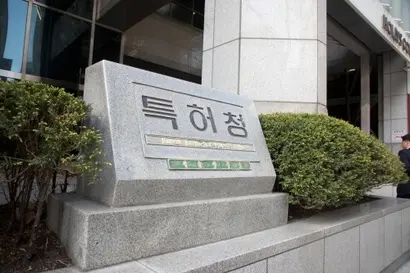
The government has also begun preparing various programs to support domestic pharmaceutical and biopharmaceutical companies in patent filing, registration, and management.
In March, the Korean Intellectual Property Office (KIPO) reorganized the existing Bio-Healthcare Examination Division and newly established four bio examination divisions, including the Bio-Pharmaceutical Examination Team and the Bio-Diagnostic Analysis Examination Team, to strengthen its patent-dedicated organization in the bio sector. To shorten the examination period, which previously took 18.9 months, to 2 months when priority examination is applied, KIPO newly hired 35 examiners from the private sector, securing a total of 120 bio-sector examiners.
A KIPO official stated, "With the reorganization and the need for private-sector examiners to fully adapt to patent examination work, we may not be able to reduce the duration as much as expected right away, but once their proficiency and expertise improve, we will be able to shorten the patent examination processing time."
KIPO also operates programs like the 'Patent-based R&D' strategy support project for effective research, development, and technology protection. By forming teams consisting of Intellectual Property (IP) strategy experts (PMs) from the Intellectual Property Strategy Institute and specialized IP analysis agencies, they support strategies to reinforce existing patents as well as establish new IP creation strategies and patent invalidation/evasion strategies.
Patent-based R&D is aimed at all domestic small and medium-sized enterprises (SMEs), not just pharmaceutical and biopharmaceutical companies. Each year, about 500 companies are selected to receive a budget of 30 to 40 billion won. Last year, 33.1 billion won was invested in 485 SMEs. A KIPO official said, "Although it is not aimed solely at bio-companies, as long as they meet the qualifications, such as being selected for a research project, they can receive Patent-based R&D support," adding, "The budget changes every year, so the number of companies receiving support can fluctuate."