

[비즈한국] 'How am I supposed to evacuate with all of them? They won't even let us into the shelter!' Years ago, when North Korea launched a missile, I received an emergency text message telling us to evacuate, and I was seized with terror. Since I have multiple pets, I was at a loss as to how to take them and where to go. Fortunately, the incident turned out to be a false alarm, but along with a sigh of relief, I was hit with the realization of how ignorant I was. I imagine many pet owners have had similar thoughts.
In an era where disasters are on the rise, a book essential for pet owners has been released. The animal-specialized publisher 'Book Factory Together' has published two 'Disaster Survival Guides'—'Surviving with Dogs' and 'Surviving with Cats'—containing information pet owners must know in disaster situations. True to their names, they meticulously guide readers on what to prepare and check before, during, and after a disaster, from daily routines to emergency evacuations and the return to normalcy.

Disaster Survival Guide: Surviving with Dogs!
Disaster Survival Guide: Surviving with Cats!
Edited by Neko Biyori Editorial Department, Translated by Jeon Hwa-young, Published by Book Factory Together, 120 pages / 148 pages, 15,000 KRW each
The books first emphasize the basic rules to follow during a disaster. The first principle is, unexpectedly, 'people before animals.' This means that only when people survive can they protect their animals. When large wildfires occurred earlier this year, there was a tragic case where an owner died after re-entering their home to retrieve their dog. When a disaster strikes, dogs and cats can fall into a state of panic and hide from their owners. In such cases, the difficult decision to evacuate alone may be necessary. Healthy dogs and cats are more agile than humans and occupy smaller survival spaces, meaning their chances of survival are significantly higher. It is crucial to think rationally about how to protect your pet only after securing your own safety.
Second, disaster countermeasures for pets are the 'owner's responsibility.' In Korea, except for guide dogs, most pets are not allowed in emergency shelters. There are also no relief supplies for pets. Even if they were allowed in a shelter, animals often experience health deterioration due to the unfamiliar environment. This is especially true for cats, which are territorial animals. Owners must have a firm mindset that 'I will protect my own pet' and prepare accordingly. One should mentally visualize a disaster scenario and consider methods such as leaving food and checking on them if you must evacuate alone, or arranging for the pets to be evacuated to a different location.
The final principle is that 'there is no perfect disaster manual.' Preparation methods vary depending on individual circumstances, such as housing type, family composition, and the number and health status of the pets. If you are a single-person household working away from home with one cat, you must devise a way to check on the cat's safety if a disaster occurs while you are gone. If you live with several dogs, including those with chronic illnesses, it is essential to keep a stash of their regular medications. These books provide a basic framework that can be applied to these various situations.
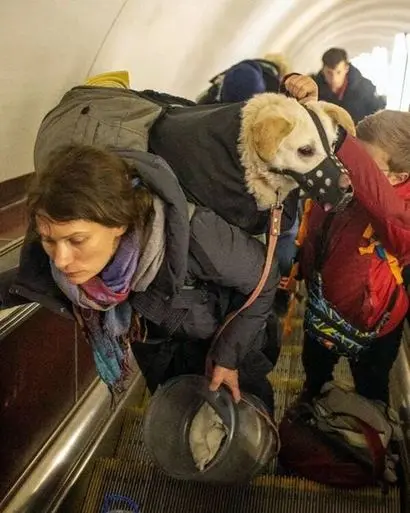
When evacuating, a carrier and a leash/harness for your pet are the most essential items. You should prepare them in advance and ensure the animals are accustomed to them. In the case of cats, you need as many carriers as you have cats. Pet food, prescription medication, and treats are also top-priority items. Keep them in the same bag as your own primary emergency kit. It is also a good idea to have photos of your pets, their health records, and missing-pet flyers prepared in advance.
The books also contain 'pro-tips,' such as using a laundry net to catch a panicked cat, using plastic bottles to save water and filter waste in a home without water or electricity, and how a pet's litter box could potentially be used by humans in an emergency. It also provides first-aid tips for when a pet suffers from bleeding, fractures, or dehydration.
'Surviving with Dogs and Cats!' mentally arms pet owners by covering not only the items to prepare, but also what actually happens when a disaster strikes, what needs to be prepared, and even worst-case scenarios.
More important than supplies is imagination. You must simulate every situation—when a disaster occurs while you are out, when it happens at home, or when a dog runs away from home during a disaster. The key is to think about how to react when facing such situations and to put that plan into action. - Preface
Along with these books, it would be highly beneficial to follow resources like the Ministry of the Interior and Safety’s 'National Disaster Safety Portal' to stay informed and occasionally run simulations in your head. Above all, let us not forget: I am the one who protects my dog and cat.