

[비즈한국] It has been confirmed that Actoz Soft052790, which lost the second trial in the 'Legend of Mir' intellectual property (IP) lawsuit, has recently filed an appeal against the Seoul High Court's ruling. Actoz Soft has been embroiled in a years-long legal battle with Wemade112040 over the 'Legend of Mir' IP. While the first and second trial courts ruled in favor of Wemade, the Supreme Court remanded the case. Wemade secured a favorable judgment again in the Seoul High Court remand trial this July. Despite losing several rounds of trials, Actoz Soft continues to tenaciously pursue the legal dispute.
Following the Seoul High Court's ruling last July, Wemade stated, "With this ruling, the long-standing legal dispute between Wemade and Actoz Soft is expected to end soon," and added, "We plan to continue cooperating with both companies in various ways to enhance the value of the Mir IP." Contrary to Wemade's wishes, as Actoz Soft has filed an appeal, it is expected that more time will be needed to resolve the legal dispute.
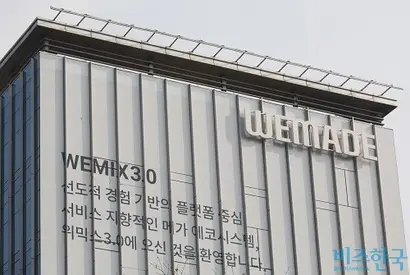
Wemade and Actoz Soft jointly held the IPs for Legend of Mir 2 and Legend of Mir 3. The Legend of Mir series began to be exported to China in the 2000s. It was agreed that royalty distribution would be 20–30% for Actoz Soft and 70–80% for Wemade, depending on the contract type.
In 2017, Wemade transferred its Legend of Mir-related IP to its subsidiary, Wemade IP (Chunghyup IP), which was created through a physical division. Since then, Wemade IP has entered into contracts related to the Legend of Mir IP with numerous Chinese companies. Actoz Soft protested these actions by Wemade. Actoz Soft maintains that it did not consent to the transfer of the Legend of Mir IP to Wemade IP, and therefore, the contracts that Wemade signed with Chinese companies are invalid.
Actoz Soft also argued that even if Wemade IP’s ownership of the IP were recognized, it should receive 50% of the relevant profits. The rationale was that the original profit-sharing ratio agreed upon by Actoz Soft applied to PC games, while the recently sold Legend of Mir IP is used for mobile games. Ultimately, Actoz Soft filed a lawsuit for damages against Wemade in 2017.
The first and second trial courts ruled in favor of Wemade. They ruled that there was no issue with Wemade IP’s ownership of the Legend of Mir IP and that profits should be distributed according to the original agreement: 20% for Actoz Soft and 80% for Wemade. However, in May last year, the Supreme Court overturned the previous ruling and sent the case back to the Seoul High Court, citing that Chinese law, not South Korean law, should apply. The Supreme Court explained, "Both South Korea and China are members of the Berne Convention, and Chinese law becomes the governing law regarding the plaintiff's (Actoz Soft) claims."
However, in July of this year, the Seoul High Court ruled that even when applying Chinese law, Wemade IP’s ownership of the Legend of Mir IP is legitimate and Wemade’s argument regarding profit distribution is correct. After the Seoul High Court’s ruling, the gaming industry expected the legal battle between Actoz Soft and Wemade to conclude. Wemade has sent messages of reconciliation to Actoz Soft multiple times. In April of this year, it stated, "We plan to continue a close cooperative relationship with Actoz Soft to create a sustainable business environment." However, with Actoz Soft filing an appeal, the conflict with Wemade is expected to continue.
Nevertheless, in the legal community, the sentiment is that the likelihood of Actoz Soft winning is low. The Supreme Court previously remanded the case on the grounds that Chinese law should be applied; if there is no problem with the ruling even when applying Chinese law, there is no justification for the Supreme Court to remand the case again.
The parties involved are remaining tight-lipped. Bizhankook attempted to contact Actoz Soft several times, but the calls were not answered. Wemade also did not provide a specific statement regarding this appeal.