

[비즈한국] As the financial health of Yeochun NCC deteriorates, the conflict between its major shareholders, Hanwha Solutions009830 and DL Chemical, is intensifying. Hanwha Solutions and DL Chemical are at odds over the supply prices of Yeochun NCC’s products. Even if an agreement on pricing is reached, the outlook remains bleak given the recent downturn in the petrochemical industry.
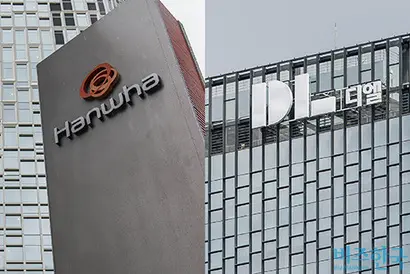
Yeochun NCC is a manufacturer of basic petrochemical raw materials established as a joint venture between Hanwha Group and DL Group. Currently, Hanwha Solutions and DL Chemical each hold a 50% stake. Yeochun NCC experienced rapid growth in the 2010s, fueled by the boom in the petrochemical industry. At one point, it even held the title for the highest average salary among domestic companies.
However, since the start of the 2020s, the petrochemical industry has entered a slump, and Yeochun NCC has not been able to avoid poor performance. It recorded losses for three consecutive years from 2022 to 2024, and in the first half of this year alone, it posted an operating loss of 156.7 billion KRW. At this rate, it is highly likely to record another loss this year. The consecutive deficits have also worsened its financial structure. Yeochun NCC's debt-to-equity ratio rose from 217.88% at the end of June 2022 to 338.04% at the end of June this year, an increase of 120.16 percentage points (p) over three years. Total liabilities reached 2.357 trillion KRW as of the end of June this year.
Ultimately, major shareholders Hanwha Solutions and DL Chemical stepped in to provide support. The two companies recently decided to lend 150 billion KRW each, totaling 300 billion KRW, to Yeochun NCC. With the possibility of bankruptcy recently being mentioned, Yeochun NCC has temporarily avoided the crisis by securing these funds.
However, a nerve war broke out between Hanwha Group and DL Group during the support process, as Hanwha Solutions and DL Chemical disagreed over supply pricing. Yeochun NCC's supply prices are determined through negotiations among the three parties: Yeochun NCC, Hanwha Solutions, and DL Chemical. Although negotiations for new pricing have been ongoing since the previous contract expired last December, no progress has been made. Consequently, they have been trading at temporary prices since January of this year, with an agreement to settle the difference once price negotiations are finalized.
The products manufactured by Yeochun NCC include ethylene, isobutene, and C4R1. Ethylene is supplied to both Hanwha Solutions and DL Chemical, while isobutene and C4R1 are supplied exclusively to DL Chemical. It is known, however, that the volume of ethylene supplied to Hanwha Solutions is about twice that supplied to DL Chemical. The structure dictates that Hanwha Solutions is highly sensitive to ethylene prices, while DL Chemical is sensitive to the prices of isobutene and C4R1.
The conflict between Hanwha Solutions and DL Chemical is rooted in these product pricing issues. The argument is that both companies have been purchasing Yeochun NCC products at excessively low prices, leading to the deterioration of Yeochun NCC's management. DL Group criticized Hanwha, stating, "We have been trading ethylene at prices that allow Yeochun NCC to secure price competitiveness for its self-sustenance, but Hanwha insists on prices that inevitably cause losses for Yeochun NCC. Since the beginning of this year, Hanwha has neglected its duties as a major shareholder by contacting other petrochemical companies to purchase ethylene instead of relying on Yeochun NCC, further exacerbating the company's difficulties."
On the other hand, Hanwha Group countered, "In a tax audit by the National Tax Service early this year, Yeochun NCC was assessed 100.6 billion KRW in additional taxes, including corporate tax, due to the low-price supply of products like ethylene and C4R1 sold to DL. Of that, 96%, or 96.2 billion KRW, was tax on transactions with DL," adding, "The ethylene price Hanwha receives is the same as the price DL trades at, and it is at the level of market prices as of the first half of 2025."
Oh Yoon-jae, a senior analyst at Korea Investors Service, analyzed, "Considering that the oversupply trend for core products like ethylene and propylene is expected to continue for the time being, a significant recovery in mid-to-short-term profit generation is unlikely. Given the low cash flow generation and the annual interest burden of around 80 billion KRW, restoring financial stability to a meaningful level in the short term will not be easy." Jang Mi-soo, a senior researcher at Korea Ratings, predicted, "Performance improvement is expected to be limited due to unfavorable industry conditions, and surplus cash generation capability will likely remain constrained by sluggish operating cash flow in the mid-to-short term."
If Yeochun NCC's finances worsen again, the conflict between Hanwha Solutions and DL Chemical could reignite. In particular, DL Chemical’s own financial position is not entirely stable, making large-scale support for Yeochun NCC potentially burdensome. As of the end of last year, DL Chemical’s total consolidated liabilities were 6.0069 trillion KRW, with a debt-to-equity ratio of 339.54%. In fact, to provide the loan to Yeochun NCC, DL Chemical carried out a 200 billion KRW capital increase. In a situation like this, if major shareholders do not provide support, the future of Yeochun NCC cannot be guaranteed.
The best-case scenario for both Hanwha Solutions and DL Chemical is for Yeochun NCC to recover its performance on its own. However, the prevailing sentiment in the petrochemical industry is that even if the market recovers, it will be difficult for Yeochun NCC to regain its glory days of the 2010s. Unlike in the past, many Chinese companies have entered the market, leading to a bloodbath of competition. Even within the domestic market, the number of competitors is increasing, such as S-Oil010950 pursuing the 'Shaheen Project.' The Shaheen Project is a project to build a petrochemical production facility in Ulsan Metropolitan City with a total investment of 9.258 trillion KRW, with completion scheduled for 2026.
In any case, Hanwha Solutions and DL Chemical are seeking ways for Yeochun NCC to become self-reliant. Realistically, there is no clear solution other than self-sufficiency. A Hanwha Group official stated, "We will actively cooperate with the government's plans for industrial restructuring to overcome the crisis in the petrochemical industry and do our best to normalize Yeochun NCC." A DL Chemical official also said, "Through a joint task force (TFT) with Hanwha, we plan to thoroughly analyze the management status of Yeochun NCC and then derive and implement practical measures to strengthen competitiveness and secure proper self-sustainability."