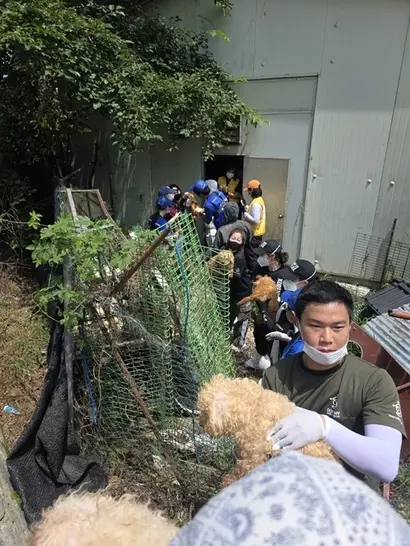
[비즈한국] Recently, an animal rights group rescued over 300 dogs from a licensed breeding farm in Ganghwa-gun, Incheon. The breeding farm kept the dogs in unsanitary conditions, surrounded by uncleared waste, and housed them in "raised cages"—an illegal breeding facility. Among the rescued dogs, over 100 were infected with "canine brucellosis," prompting government-led quarantine measures. The fact that even a licensed breeding facility was found in such appalling conditions has fueled calls criticizing the lack of management and oversight by the government and local authorities. Animal rights groups are demanding reforms to the animal production and sales system, including the abolition of pet auctions.
Hellish Conditions and Rampant Infectious Diseases
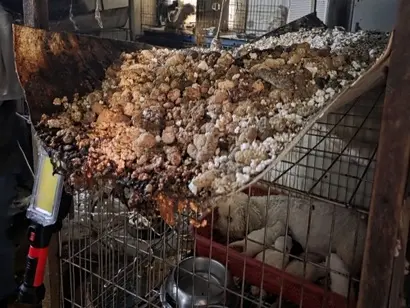
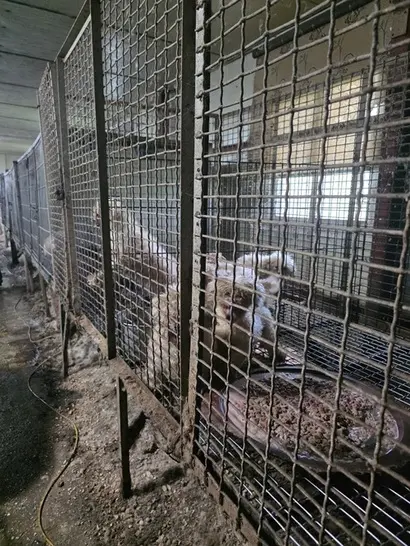
July 24, Breeding Farm A in Ganghwa-gun, Incheon. The breeding farm, where waste remained uncleared, was filled with the stench of ammonia, and unidentified animal feed waste was rotting. Dogs inside the raised cages, through which their feet would slip, were left neglected and covered in filth. Some dogs had nylon cords tied around their hind legs, leaving them on the verge of necrosis. Despite being a licensed facility, it failed to comply with any of the operational standards mandated by the Animal Protection Act.
The coalition of animal rights groups, "Lucy's Friends," rescued over 300 dogs that day, including breeding dogs and dogs used for grooming practice. The rescued dogs are currently being cared for by each organization. Lucy's Friends is a coalition of about 10 animal rights groups, including Animal Rights Action KARA, KK9 Rescue, Korean Dogs, Dorothy Keepers, and the animal welfare organization LIFE.
Many of the breeding dogs exposed to the unsanitary environment contracted canine brucellosis, a zoonotic disease. As of August 18, 106 out of the 300 rescued dogs have been confirmed infected. In dogs, brucellosis primarily causes reproductive disorders such as miscarriages and inflammation of the reproductive organs, while in humans, it can cause symptoms such as chills and fever. Most cases of canine infection occur in breeding dogs, spreading due to the crowded conditions and intensive breeding activities typical of such facilities.
On August 14, the Ministry of Agriculture, Food and Rural Affairs (MAFRA) announced that it had conducted emergency quarantine measures at Breeding Farm A, including cleaning and disinfecting the premises, isolating positive cases, and performing epidemiological investigations. A MAFRA official stated, "We plan to conduct joint inspections of relevant animal production and sales businesses between August and September and will take strict measures if any violations are found," adding, "We will also develop and distribute guidelines that animal production and sales operators must follow."
Gaps in Oversight of Licensed Breeding Farms
Under the Animal Protection Act, local governments are required to conduct comprehensive inspections of breeding farms at least once a year, with additional unscheduled joint inspections by MAFRA and local authorities. However, as non-compliance remains a recurring issue among the nearly 2,200 licensed breeding farms nationwide, critics argue that the current management and oversight system has reached its limits.
Ganghwa-gun was already aware of the situation at Breeding Farm A. During an inspection early last year, the county uncovered issues including unsanitary conditions, improper waste disposal, and failure to meet facility standards, resulting in several million won in administrative fines. However, no active follow-up measures, such as verifying compliance with operator obligations, were taken. The cited violations were left uncorrected for over a year until the recent rescue by animal rights groups. Following the rescue, Ganghwa-gun issued a 15-day business suspension to Breeding Farm A.
On July 31, Lucy's Friends filed criminal complaints with the police against the breeding farm operator, the Governor of Ganghwa-gun, and the public officials responsible at the Ganghwa-gun office. The group alleges neglect of duty regarding the inspection requirements mandated by the Animal Protection Act and the failure to revoke the registration of the breeding farm despite repeated violations. A Ganghwa-gun official stated, "Even when fines are imposed, some breeders have an attitude of simply paying the fine and moving on," adding, "Revoking a registration is a measure that can only be taken once abuse is legally confirmed."
Local governments are struggling with a shortage of personnel to inspect animal-related businesses. In many basic local government units, a single official is responsible for all animal-related business tasks, including production, sales, imports, grooming, and transportation. An official in charge of animal-related businesses in one local government said, "It is true that it is overwhelming to inspect all types of businesses, ranging from production and sales to grooming and boarding services."