

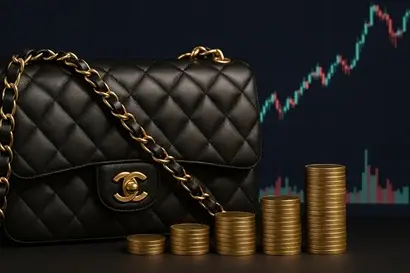
[비즈한국] As former President Yoon Suk-yeol's wife, First Lady Kim Keon-hee, becomes embroiled in allegations involving the receipt of luxury goods, interest in luxury brands is growing. If you feel a sense of regret over the Chanel Flap Bag, whose price seems to rise every time you wake up, becoming a shareholder in the company that sells those bags might prove more helpful for your future wealth accumulation. According to market research firm Fortune Business Insights, the global luxury goods market is projected to grow from $284 billion in 2023 to $340 billion by 2030. In particular, forecasts suggest that luxury-related stocks may gain attention as consumption levels rise, centered around the Asian region.
Ways to invest in global luxury brands include purchasing company shares directly through the U.S. or European stock markets, or investing in Exchange Traded Funds (ETFs) or related funds created by domestic asset management firms. On the French stock market, one can choose companies like Hermès, LVMH (Moët Hennessy Louis Vuitton), and Christian Dior, or buy Kering, which owns brands like Gucci, Yves Saint Laurent, Bottega Veneta, and Boucheron. The British market lists Burberry, while the Swiss market includes Richemont, which owns Cartier, Montblanc, Vacheron Constantin, and Van Cleef & Arpels. There is also Prada, which is listed on the Hong Kong stock exchange.
In the U.S. stock market, Tapestry, which owns fashion brands Coach and Kate Spade, is gaining attention. In particular, Coach has succeeded in a branding strategy targeting the MZ generation, who have emerged as big spenders in the luxury world. There is also Capri Holdings, which owns Michael Kors, Jimmy Choo, and Versace.
Of course, if you invest solely based on brand recognition, your actual returns might fall far short of expectations. This year, due to the global economic downturn and U.S. tariff policies, ultra-luxury brand performances have stuttered, while relatively lower-priced brands have shown a strong rebound. The 'STOXX EUROPE LUXURY 10 Index,' which includes the top 10 companies by market capitalization among luxury brands listed in Europe—such as Hermès and LVMH—stood at 3325.4 as of the 15th, down 6.76% this year, with Hermès and LVMH falling by 10.26% and 25.07%, respectively. Conversely, Tapestry and Burberry have risen by 54.20% and 13.04%, respectively, year-to-date.
On the other hand, major luxury ETFs and related funds have recorded relatively better performance this year. Examples include NH-Amundi Asset Management's 'HANARO Global Luxury S&P (Synthetic)' ETF, Samsung Asset Management's 'KODEX European Luxury 10 STOXX' ETF, and IBK Asset Management's 'IBK Luxury Lifestyle.' Because ETFs and funds diversify assets across multiple brands, they demonstrate that the entire portfolio can show relatively stable performance even if individual companies suffer from poor performance or sharp drops. The performance of luxury funds this year can certainly be seen as having fared better than individual luxury stocks.
Meanwhile, Chanel is a private company, so its shares cannot be purchased, but it does disclose figures indicating its corporate fundamentals every year. Chanel's revenue last year was $18.7 billion, down 4.3% from the previous year, and its operating profit was $4.5 billion, a 30% decrease from the year before. Physical investment in Chanel products is also a way to indirectly invest in brand value and market growth. Because the resale market for Chanel bags is active, there is even talk of "'Chanel-tech' (Chanel investing)."
The price of a luxury bag is driven by its utility and perceived value. In contrast, stock prices react to dividends, earnings, and other factors. While luxury goods follow trends, the best luxury stocks grow your assets. Amidst the global economic downturn and tariff variables, luxury stock prices have shown a sluggish trend this year. However, analysts suggest that thanks to the structural growth of the luxury consumer market and expanding demand in Asia, they are still worth noting as a long-term investment theme. If you are not confident in selecting individual stocks, investing through ETFs and funds can be an alternative.