

[비즈한국] Citibank Korea has released its first-half performance results. While it managed to avoid a downward trend in net income, total revenue fell due to a decline in interest income. Profitability indicators are also showing a downward trajectory. The bank faces the task of filling the gap left by the departure of individual business owners following the shutdown of its consumer banking (retail banking) division. Citibank is in the process of withdrawing its retail banking operations from the domestic market. While rapidly reducing its local branches, it is expanding collaborations with commercial banks to ensure consumer protection.
On the 14th, Citibank announced its Q2 performance. Both net income and total revenue decreased compared to the same period last year. Q2 net income was 100.7 billion won, a 1.1% decline from the same period last year (101.8 billion won). During the same period, total revenue fell by 3.4% (from 301.3 billion won to 291.0 billion won). Total revenue is the sum of interest income and non-interest income.
Citibank explained, "While non-interest income focused on corporate banking—such as revenue from foreign exchange, derivatives, and securities—rose 67.1% compared to the same period last year, interest income fell due to a decrease in interest-earning assets and a decline in net interest margin."
Looking at the first half as a whole, the bank avoided negative growth in net income. Citibank's net income for the first half of 2025 was 183.1 billion won, with total revenue reaching 559.5 billion won. While total revenue was 6.7% lower than the same period last year (600 billion won), net income increased by 4.5% compared to the 175.1 billion won recorded in the first half of the previous year.
As in the second quarter, the decline in interest income impacted total revenue. Interest income in the first half of 2024 was 410.1 billion won, but it fell by 34.3% to 269.5 billion won a year later. Although non-interest income grew by 52.7% from 189.9 billion won to 290 billion won during the same period, it could not offset the decrease in interest. However, net income avoided negative growth thanks to cost-cutting measures. Expenses were reduced from 322.1 billion won in the first half of 2024 to 293.1 billion won in the first half of this year.
Citibank is focusing on corporate banking as it exits the domestic retail market. Following the announcement of the closure of its consumer banking division in October 2021, it suspended new business operations for loans, deposits, and funds starting in February 2022. According to the user protection plan, loan products for individual customers can be extended until the end of 2026, and starting in 2027, the bank will support installment repayments over seven years. Credit cards will remain valid until September 2027.
As of the first quarter of 2025, there were 17 branches nationwide (8 in the Seoul metropolitan area, 9 in other regions), but in April, the bank closed four additional branches: two in Seoul (Cheongdam Center and Gangnam Branch), one in Incheon (Gyeongsu Branch), and one in Changwon (Changwon Branch). Considering the accessibility for financial consumers, the bank plans to continue operating nine branches (two in the capital area, seven in other regions).
While closing its own branches, it has expanded collaboration with commercial banks. The bank has previously supported deposits and withdrawals for individual customers through KB Kookmin Bank and the Korea Post, and recently signed a customer transition agreement with iM Bank. The agreement between the two companies took effect on July 21. Dedicated counters have been installed at iM Bank branches designated as "pairing branches" with Citibank in areas such as Seoul, Incheon, North Chungcheong, Daegu, and Busan. Consumers who have received a "Citibank Customer Confirmation" can receive services at iM Bank branches. This is also beneficial for iM Bank, which aims to increase its individual customer base nationwide following its transition to a commercial bank.
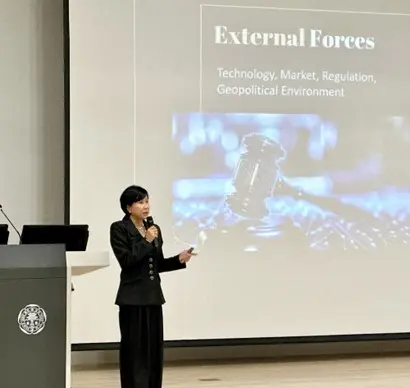
With the abolition of retail banking largely underway, the task of filling the resulting void remains. Citibank's loan asset size is shrinking, which translates to a loss of market share. Total customer loan assets decreased from 10.9735 trillion won in the first half of 2024 to 7.5532 trillion won in the first half of this year. During the same period, individual loans fell from 4.2506 trillion won to 3.166 trillion won. Credit card usage also declined, dropping from 1.1088 trillion won in the first half of 2024 to 890.5 billion won in the first half of this year.
The expansion and diversification of corporate loans are also key factors. Because retail banking was abolished, loans to individual business owners within the corporate loan segment have significantly decreased. According to Korea Investors Service, loans to individual business owners within Citibank's corporate loan portfolio fell from 4.263 trillion won at the end of 2021 to 257 billion won at the end of 2024.
Profitability indicators have also deteriorated. The net interest margin fell from 2.95% in the first half of 2024 to 2.56% by the end of 2024, continuing its downward trend to reach 2.36% in the second quarter. A higher net interest margin generally indicates better profitability.
However, Citibank explained that deposits have increased in the corporate banking sector. Due to the closure of retail banking, deposits in 2024 fell 4.5% year-on-year to 17.9756 trillion won, but thanks to an increase in corporate deposits, the bank reached 19.1659 trillion won in the first half of this year. This represents an increase of more than 1 trillion won in deposits over half a year. Compared to the same period last year (18.3616 trillion won), this is a 4.4% increase.
Yoo Myung-soon, CEO of Citibank Korea, stated on the day of the earnings release, "The non-interest income of the corporate banking sector, which we are strategically focusing on, continues to show strong growth, and we are consistently improving our profitability and cost efficiency. Based on Citigroup's network, we have established ourselves as a unique and trusted financial partner for Korean companies in their global transactions."