

[비즈한국] The conflict between BR Korea, an SPC Group affiliate that operates Baskin-Robbins, and its franchisees is intensifying. The Franchisee Association is protesting, claiming that the headquarters is forcing franchisees to agree to promotional events against their will. Franchisees, who are currently undergoing a dispute mediation process, are considering further actions such as filing a report with the Fair Trade Commission if the headquarters does not accept the mediation proposal, raising concerns that the conflict may be prolonged.
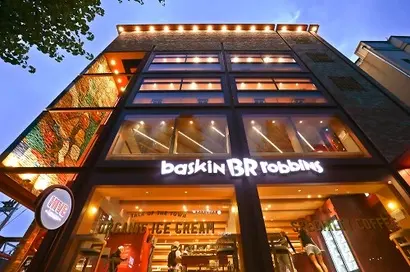
Franchisees claim, "Voting continues until the 70% approval rate is met"
Last April, the Baskin-Robbins Franchisee Association applied for dispute mediation with the Gyeonggi-do Fair Economy Division against their headquarters, BR Korea. BR Korea is an SPC Group affiliate that operates the ice cream brand Baskin-Robbins and the donut brand Dunkin'. The Association requested to ensure the transparency of electronic voting regarding advertising and promotional events and to correct unfair measures taken against franchisees who participated in the promotions. Specifically, they demanded that electronic voting (consent forms) be conducted through an external company (within the industry's top 5) and that all franchisees participating in telecommunications carrier promotions be provided with the same tubs (the large ice cream containers inside store display cases).
An official from the Baskin-Robbins Franchisee Association said, "Following the first hearing last May, the final mediation review was held on the 15th of this month. We expect a recommendation or a mediation proposal to be issued soon," adding, "So far, the headquarters has effectively expressed its intention to reject the mediation proposal requested by the Association. If the final mediation proposal is issued and the headquarters rejects it as well, we are considering actions such as filing a complaint with the Fair Trade Commission."
The core issue of the conflict between the Baskin-Robbins Franchisee Association and the headquarters is the consent rate for promotional events. According to the Enforcement Decree of the Fair Transactions in Franchise Business Act, the franchise headquarters must obtain consent from at least the ratio prescribed by the decree (70% for promotional events) before conducting advertising or promotional events for which franchisees bear the costs. In other words, for Baskin-Robbins to conduct a telecommunications discount event at stores nationwide, it must obtain consent from at least 70% of the franchisees in advance.
The Association points out that BR Korea uses expedient methods to meet the consent rate for promotional events. They claim that the headquarters tracks the voting status of franchisees and identifies and pressures those who do not agree or have not responded.
One franchisee stated, "The consent process is not conducted fairly. The headquarters even knows who has not agreed and who has not responded. They visit non-consenting franchisees in person to pressure them to change their vote. It's hard to endure because there are cases where they follow you until late at night or show up before the store even opens." Another franchisee added, "There is no clear voting period. Pressure to exceed the 70% consent rate continues until the day before the event. The voting only ends once the 70% mark is surpassed."
The Association maintains that they cannot trust the results tallied by the headquarters because the company is cajoling and pressuring franchisees to boost the consent rate. In fact, it was revealed last year that BR Korea had manipulated the consent rate to meet the 70% requirement, causing a controversy.
The Association official noted, "Our key demand is to entrust the electronic voting (consent forms) to an external agency so that franchisees can express their opinions fairly," adding, "However, the headquarters has refused this so far citing costs and other reasons. One has to wonder if they are worried that it would become difficult to push through events in the way they want."
Regarding this, BR Korea stated, "We are diligently participating in the mediation process raised by the Franchisee Association," adding, "As we have not yet received the mediation proposal, it is difficult to comment on the possibility of a settlement."
Increased number of stores amid falling sales leads to worsening profitability for existing stores
There are also allegations that to boost the consent rate for promotional events, BR Korea provides benefits to stores that agree to the events while excluding those that do not. According to the Association, when the consent rate fell short of 70% during the process for an SKT promotional event last January, BR Korea offered to provide one free tub of ice cream per month to franchisees who agreed to the event to increase the rate.
The Association official claimed, "When the consent rate was around 50%, the headquarters announced they would provide a tub of ice cream to stores that agreed. Subsequently, the consent rate reached 70% and the event was held nationwide," adding, "While a few stores that complained strongly were left out of the event, most stores participated. However, while conducting the same event, the headquarters did not provide the tubs to stores that had not agreed or to stores that switched their status to 'agreed' later on. This goes against fairness and may even be illegal."
Kang Sung-min, Honorary Chairman of the Korea Franchise Association, pointed out, "If the same event is being conducted, the same benefits should be provided to the franchisees," and added, "Giving preferential treatment based on whether they agreed or not can be interpreted as a retaliatory measure and has the potential for unfair trade practices."
In response, BR Korea explained, "We fulfilled our obligations exactly as we guided the franchisees during the promotional event consent process."
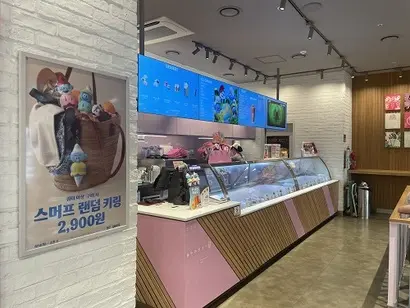
Baskin-Robbins franchisees are complaining about worsening profitability. They argue that store-by-store sales have plummeted due to BR Korea's aggressive expansion of franchise locations during the pandemic. One franchisee said, "Baskin-Robbins is a specialty dessert, so the main customers' purchase frequency is about once a month," and added, "You shouldn't expand the number of stores excessively like a cafe or a bakery. However, the headquarters increased the number of franchises too much, which caused franchisee profits to drop significantly. Sales are down 30–40% compared to before COVID-19."
In fact, the number of Baskin-Robbins franchises has increased rapidly in recent years. The number of stores, which was 1,106 in 2014, increased by 290 over five years to 1,396 in 2019. Afterward, 257 more were opened in just three years, reaching 1,653 in 2022. The industry estimates the current number of Baskin-Robbins franchises to be over 1,700.
Franchisees raised their voices in criticism, saying that despite the worsening profitability of their stores, the headquarters is pushing through promotional events solely to increase sales. One franchisee stated, "After the SPC boycott in 2022, sales started to drop significantly, and that’s when the headquarters began massively increasing events," adding, "The more events there are, the greater the burden on the franchisee. Since the cost of the event is shared with the headquarters, there is essentially no profit left. With ice cream material costs approaching 60%, and electricity bills, labor costs, and taxes all rising, it’s hard for franchisees to hold on if the burden of these events is added on top of that."
A BR Korea official stated, "Baskin-Robbins is developing and implementing various plans to increase store sales, such as product development, promotion, and various partnership activities. We will continue to make efforts for mutual growth with our franchisees."