

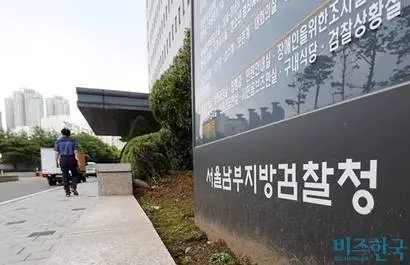
[비즈한국] “The prosecution? We can't conduct investigations right now. The prosecutors who are considered capable, or the people who would be working, have all been summoned to the special counsel offices; there is absolutely no atmosphere at the Seoul Southern District Prosecutors’ Office to conduct proactive investigations.”
This is what a source within the prosecution had to say. Although President Lee Jae-myung personally ordered strict punishment for financial criminals, such as those involved in stock manipulation, the atmosphere at the Seoul Southern District Prosecutors’ Office—often dubbed the "Grim Reapers of Yeouido"—is quite different. Talk of the office being in a "de facto shutdown" is openly circulating within the legal community. With a large number of financial crime investigators from the Southern District office dispatched to three separate special counsel teams, the consensus is that “there is no one left to investigate,” and the situation is further unsettled by upcoming personnel reshuffles.
15 Dispatched: “Proactive investigations have come to a complete halt”
As the three special counsel teams began their operations, the very first thing they did was request the dispatch of prosecutors. Because investigations only yield results when they have capable prosecutors, the demand was high. Over 100 prosecutors have been sent out: about 50 for the insurrection special counsel, 40 for the Kim Keon-hee special counsel, and around 10 for the Marine Corps Corporal Chae special counsel. Excluding the Seoul Central District Prosecutors’ Office, the most sought-after personnel were those from the Seoul Southern District Prosecutors’ Office.
Because complex cases involving corruption, elections, and finance are intertwined, prosecutors with extensive experience in proactive investigations were highly coveted. In particular, every special counsel team prioritized requests for prosecutors from the Seoul Southern District office, known for its expertise in "tracking fund flows." Special Prosecutor Min Joong-ki, tasked with investigating the case of First Lady Kim Keon-hee, even visited the Southern District office in person to request cooperation and discuss the dispatch of prosecutors and investigators. This is also partly because the Southern District office had been investigating allegations related to the shaman known as Geonjin Beopsa, Jeon Seong-bae.
Consequently, the scale of the drain on the Seoul Southern District Prosecutors’ Office is significant. It is known that the number of prosecutors dispatched from the Southern District office (around 15) is the second-largest after the Seoul Central District Prosecutors’ Office (around 20), which is the largest office in the country. This means the equivalent of three full departments’ worth of prosecutors from the Southern District office have been called away to the special counsel teams.
A source in the legal community said, “Since the special counsel teams prioritize prosecutors who know how to track fund flows or have experience in major bribery and stock manipulation cases, a large number of prosecutors in the anti-corruption and financial crime divisions received dispatch requests,” adding, “While the criminal divisions are facing severe staffing shortages, the proactive investigation divisions have essentially seen their operations grind to a halt.”
Personnel gaps exacerbate the issue… Financial crime investigations likely to be delayed
Although financial authorities have taken steps such as forming a "response team" in line with President Lee Jae-myung's orders, concerns are growing over the prosecution's lack of investigative capacity to handle charges and indictments.
On the 30th of last month, the Financial Services Commission launched the "Joint Response Team for Eradicating Stock Manipulation" with the Financial Supervisory Service and the Korea Exchange. As a follow-up to the action plan to eradicate unfair trade in the capital market, the initiative aims to consolidate the authorities scattered across the three agencies to respond efficiently to capital market crimes. The plan is to immediately banish stock manipulators from the market through a "one-strike-out" system, which includes imposing fines of up to twice the amount of illegal profits and publicizing the identities of offenders.
However, since the prosecution must eventually work hand-in-hand with financial authorities to indict and prove guilt after accusations are filed, concerns about the gap in investigative power are mounting. A lawyer who is a former prosecutor with extensive experience in financial crimes lamented, “It’s not just the Seoul Southern District office; all frontline prosecutors’ offices are currently experiencing delays in case processing due to a lack of prosecutors. Given the nature of financial crimes, which require quickly gathering difficult evidence to prove guilt, a certain level of investigative personnel is essential. With so many dispatched to the special counsel teams, case processing keeps being pushed back.”
Although promotions and appointments for high-ranking prosecutors (deputy and chief prosecutors) could be announced as early as this week, observers suggest that even after the reshuffle of general prosecutors is completed, the prosecution's financial crime investigations will likely remain limited for some time.
A prosecution official noted, “In line with prosecution reform, there is an atmosphere that 'direct investigations should be restricted,' so we intend to investigate only within the scope of cases referred by financial authorities,” adding, “With over 100 prosecutors dispatched to special counsel teams, every frontline office is citing a lack of investigative capacity. I expect they will first reduce the scale of prosecutors in proactive investigation departments, and if that happens, the financial crime investigation staff at the Seoul Southern District Prosecutors’ Office will naturally shrink as well.”