

[비즈한국] Investors in Lime Asset Management funds (Lime funds) have won a partial victory in a civil lawsuit filed against their seller, Daishin Securities003540. The ruling comes approximately three years after the lawsuit was filed in October 2022. While the court acknowledged the right to damages for some investors, it dismissed all claims regarding the cancellation of the Lime fund contracts. Investors expressed backlash, arguing that the ruling places the burden of responsibility on them despite the court acknowledging that Daishin Securities provided false documentation during the sales process.
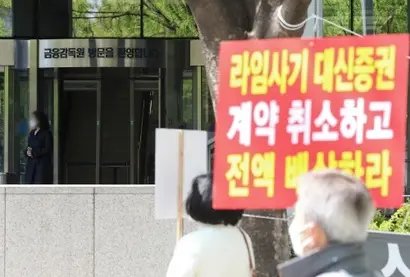
On August 14, the 30th Civil Division of the Seoul Central District Court ruled partially in favor of the plaintiffs in an unjust enrichment lawsuit filed by 23 Lime fund investors against Daishin Securities. The court ordered Daishin Securities to pay approximately 267 million KRW plus interest to one of the plaintiffs, identified as Investor A. The claims of the remaining 22 plaintiffs were entirely dismissed.
This lawsuit was initiated in October 2020 by individuals who invested in Lime funds sold by Daishin Securities, demanding contract cancellation and the return of investment losses. Initially, 54 people participated in the suit, but more than half withdrew during the process, leaving only 23.
The investors expressed their intention to appeal, calling the ruling unfair. They view the decision as effectively a dismissal, as the court only acknowledged liability for damages regarding Investor A out of the 23 plaintiffs. Investor A had claimed both damages and contract cancellation after failing to reach a settlement during the Financial Supervisory Service's dispute mediation, while the other 22 individuals had only claimed contract cancellation. However, as the court did not accept the request for contract cancellation, the claims of the 22 were dismissed, and Investor A’s claim for contract cancellation was also denied.
Jung Gu-jip, co-representative of the Daishin Securities Lime Fraud Victims' Committee, stated, "It is only logical for investors to bear responsibility if they were properly informed before signing up. We cannot accept a result that puts the burden on the investors when the damage was caused by a licensed financial institution—not an unlicensed firm—providing false materials." He added, "It is absurd to see this result when the criminal trial of the sales staff and Daishin Securities already concluded that this was fraud."
Daishin Securities has not yet stated its position on the first-instance ruling, including whether it will appeal.
The Lime fund scandal is an event that occurred in 2019 when funds managed by Lime Asset Management suspended redemptions, resulting in trillions of won in losses. Daishin Securities was one of the major sellers of the Lime funds. The majority of the Lime funds sold by Daishin Securities were handled at its Banpo WM Center.
The former head of the Banpo WM Center, who led the sales of the Lime funds at the time, was sentenced to two years in prison for fraudulent, unfair trading practices and violations of the Financial Investment Services and Capital Markets Act (Capital Markets Act). This was due to "incomplete sales," such as selling products with structural issues using materials containing false explanations. Daishin Securities was also fined 100 million KRW for violating the Capital Markets Act, as it was found to have neglected its duty of care and supervision. Controversy later erupted when Daishin Securities filed for 1.8 billion KRW in indemnity claims against 12 of its sales employees who sold the funds.