

[비즈한국] Genres like legal or medical dramas have always been popular. Recently, it is the legal genre that has been heating up the small screen: 'Seocho-dong' concluded on August 10th, while 'Esquire' has aired up to its 4th episode (as of August 13th). Both are 12-episode series that focus on the growth of lawyers and feature litigation lawyers (lawyers who represent clients in lawsuits) as protagonists. They were even both written by writers who are lawyers in real life. However, their flavors are vastly different. In terms of food, it’s the difference between a mild, clean bowl of Pyongyang cold noodles and a tongue-numbing bowl of Mala-tang, isn't it?
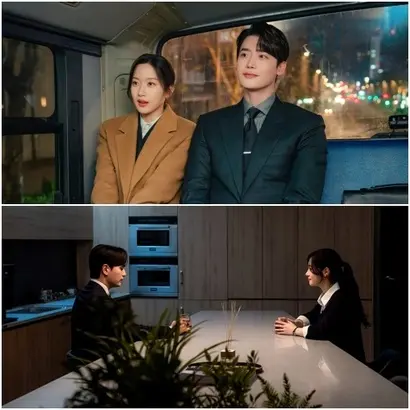
The difference between the two works is clear from the title alone. 'Seocho-dong,' which depicts the growth story of five associate lawyers (lawyers employed by a law firm), focuses on the realistic lifestyle of lawyers living in the Seocho-dong legal town, as the title suggests. 'Esquire,' which might not be immediately intuitive, is not a men's magazine name but a term used as a title of respect for lawyers in English-speaking countries. It originally referred to the aristocratic class in the Middle Ages, but today it is widely used as 'Esq.' after a lawyer's name, signifying professionalism and morality.
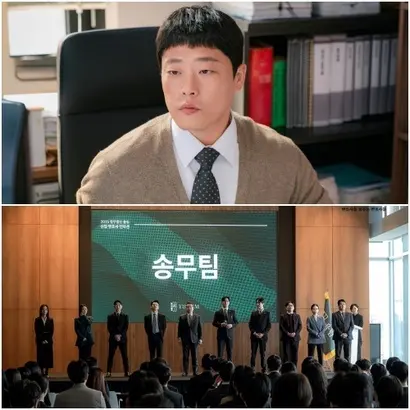
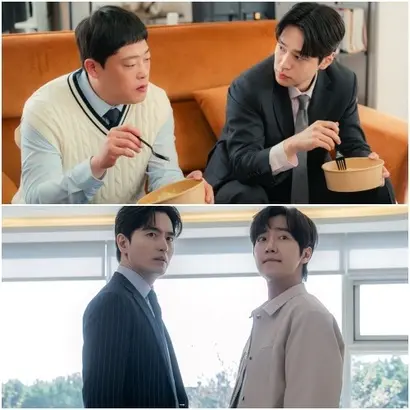
As 'Seocho-dong' focuses on the "office worker moments" of lawyers, their human side is strongly emphasized. It resonated with workers everywhere from the very first dialogue: the sigh of "Ah, I don't want to do this" before changing into slippers and entering "work mode" after getting off at Seoul National University of Education Station and heading to the office. Seeing associate lawyers of similar age from different offices huddled together for lunch was also a reflection of workers who are "serious about lunch." In that it depicts the growth of peers working in the same profession, it brings 'Misaeng' to mind, and the fact that eating scenes are treated as important and characters build "food rapport" makes one think of the 'Let's Eat' or 'Hospital Playlist' series.
From 9th-year lawyer Ahn Ju-hyung (Lee Jong-suk) to Bae Moon-jung (Ryu Hye-young), who struggles with maternity leave, Ha Sang-ki (Im Sung-jae), who weighs his PhD studies against his legal work, Jo Chang-won (Kang You-seok), who fundamentally questions if law is the right aptitude for him, and 1st-year lawyer Kang Hee-ji (Moon Ga-young), the show seriously depicts the various concerns faced by workers in their mid-to-late 30s born between 1989 and 1993, offering a fresh atmosphere that differs from existing legal dramas.
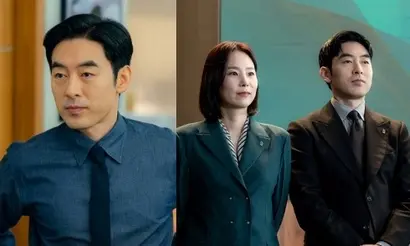
On the other hand, 'Esquire' is a dramatic legal thriller. The protagonists are Yoon Seok-hoon (Lee Jin-wook), an ace litigation lawyer at Yulrim, one of the top five law firms in the country, and rookie lawyer Kang Hyo-min (Jung Chae-yeon). The two characters' genius talents unfold dramatically from the very first episode. Although Hyo-min is in a position to learn from Seok-hoon, a narrative is expected to unfold where Seok-hoon is also moved and changed by Hyo-min. Given that Seok-hoon is a divorcee, the series hints that they might get involved in a "romantic storyline." Furthermore, as it is a large law firm, office politics, including the machinations for the position of the next CEO, appear to be a major storyline.

Both works deal with litigation lawyers who meet clients and conduct lawsuits, but the texture of their stories is worlds apart. The episode in 'Esquire' where Yoon Seok-hoon takes on the personal litigation of fund company CEO Choi Cheol-min (Do Sang-woo) is a good example. The request was to settle a dispute with a housekeeper who raised allegations that Choi Cheol-min was abusing his own daughter, and the process of resolving this is truly "Mala-flavored." To punish Choi Cheol-min, who was indeed a child abuser, Yoon Seok-hoon provides information about Choi's embezzlement to mobsters who control his finances, delivering a "tit-for-tat" brand of justice that gives viewers a thrilling catharsis. Needless to say, he even throws a punch at the abuser himself.
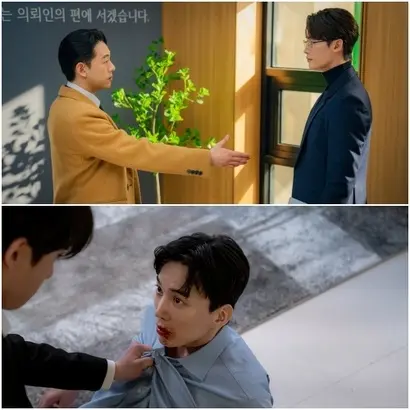
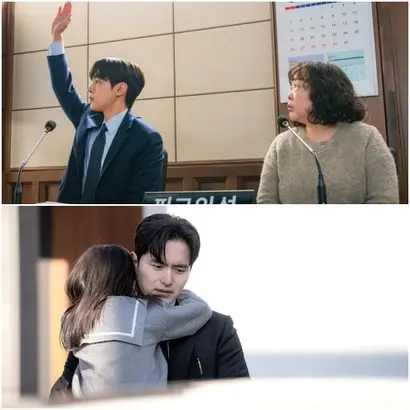
In contrast, 'Seocho-dong' declared from the first episode that it is not a passionate drama where heroes and villains clash like existing series by featuring a cameo of a rookie lawyer (Kim Do-hoon) who prepares his arguments solemnly while watching a legal drama, only to feel embarrassed later. In Ahn Ju-hyung’s case, even when his ex-girlfriend’s husband intentionally hires him for a divorce suit, he tries his best not to lose his composure. Even when the ex’s husband keeps acting provocatively and "begging for a beating," Ju-hyung only offers quiet warnings. Jo Chang-won swallowing his anger while acting as a visiting lawyer for a wealthy second-generation chaebol is also far from the "cider-like" (refreshingly satisfying) moments in typical dramas. The cases also deal with the mundane daily lives of ordinary citizens. Like the victim of a voice-phishing scam who ends up in prison for labor because they can't pay the fine, there are many who don't get the satisfying "tit-for-tat" conclusion seen in 'Esquire'.
Personally, I liked the mild and clean taste of 'Seocho-dong.' The growth of the associate lawyers was good, but the portrayals of the representative lawyers at their firms were also interesting. From the annoying, money-chasing lawyer Sung Yu-deok (Lee Seo-hwan), who would be a villain in any other drama, to the seemingly emotionless lawyer Na Kyung-min (Park Hyung-soo), and the gentle yet enigmatic lawyer Kang Jung-yoon (Jung Hye-young), their "boss moments" were quite intriguing. The points where the representatives' positions and psychology clashed with those of the associate lawyers gave me plenty to think about. Watching the actors' natural performances was also a treat.
'Esquire,' with its fast-paced, eye-catching development, is also seeing its viewership ratings rise rapidly. The 1st episode had a 3.7% rating, but it hit 8.3% by the 4th, ranking first in overall weekend drama ratings. That means it has truly shaken the hearts of viewers. There is also a great joy in watching Lee Jin-wook’s sharp suit-fits and Jung Chae-yeon’s sharp acting. I don't particularly like Mala-tang, but one cannot help but be instinctively drawn to stimulating things. I plan to keep watching to see how the story unfolds.
Which atmospheric legal drama you prefer is a matter of taste, but if you love legal dramas, I highly recommend watching both. The experience of comparing such different legal dramas will be quite unique.
About the writer, Jung Su-jin?
She has worked for various magazines, covering and writing about movies, travel, and popular culture. While she doesn't want to fall behind trends, she has become an "old person" who anticipates only the most obvious clichés while watching the latest dramas. She is trying to regain her lost sense by drifting through the vast OTT world, and her current wish is for a unified OTT subscription plan.