

[비즈한국] As the Lee Jae-myung administration plans to supply over 35,000 public housing units for young people and the working class by utilizing aging government offices and idle state-owned land in city centers, attention is focused on whether this will alleviate the hardships of those who have struggled due to the recent reduction in public housing supply. Over the past decade, housing policies have faced criticism for veering away from housing stability, as the supply of public rental housing for young people or the working class with limited funds has decreased, while public housing for sale targeting the middle class has increased.
Furthermore, because the government and public institutions have increasingly favored purchasing existing homes for rental purposes rather than constructing new public housing, the overall housing supply has stagnated, exacerbating the housing crisis for young people and the working class. In this context, all eyes are on whether the series of public housing policies unveiled by the Lee Jae-myung administration will serve as a solution to the housing problems faced by these groups.
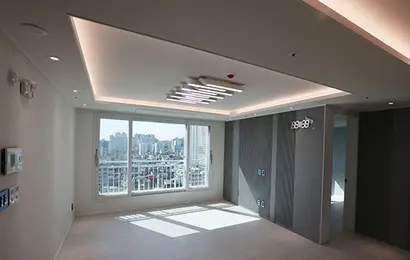
Koo Yoon-cheol, Minister for Government Policy Coordination and Deputy Prime Minister, presided over the 27th State Property Policy Deliberation Committee at the Government Complex Seoul on the 12th and announced plans to supply over 35,000 public housing units for young people and the working class by utilizing aging government offices and idle state-owned land. Of these, 20,000 units will be public housing, such as youth rentals. The government also decided to supply at least 15,000 additional new public housing units by identifying aging public office buildings and idle land in station areas within city centers.
Previously, on July 10, the government announced plans to expand public housing for sale, utilizing models like equity-sharing and profit-sharing, through the first Ministerial Meeting on Current State Affairs presided over by Prime Minister Kim Min-seok. The equity-sharing model allows successful applicants to pay only 10-25% of the housing equity at the time of purchase, with the remaining equity acquired in installments over up to 30 years. The profit-sharing model allows successful applicants to move in by paying only a portion of the sale price and permits them to sell the property back after completing a five-year mandatory residence period. Both models are considered to ease the financial burden of purchasing a home in an era of high prices.
The government's introduction of public rental housing for young people and the equity/profit-sharing public housing plans is interpreted as a move to rectify the problems caused by recent public housing policies that prioritized sales over rentals. While public rentals are affordable compared to market rates and help ease the housing crisis for young people, newlyweds, and low-income families, public housing for sale effectively benefits the middle class due to issues like high sale prices. Moreover, unlike national and public rentals, public housing for sale eventually becomes private property, raising the concern that the government is supporting private investment in home ownership rather than providing residential support for the working class.
Looking at housing construction permit statistics, in 2014, among 63,320 public sector permits, 57,431 (90.7%) were for national or public rentals, while only 5,892 (9.3%) were for public sale. By 2018, however, total public sector permits were 81,082, with national/public rentals dropping to 63,274 (87.0%) and public sales rising to 17,808 (22.0%).
This trend worsened last year, as national and public rentals accounted for only 63,032 units (48.8%) of the 129,047 total public sector permits, failing to reach even half. Specifically, permits for national rental housing plummeted from 23,946 units in 2018 to just 291 last year. Conversely, the proportion of public housing for sale reached 66,015 units (51.2%), surpassing national and public rentals. Public housing supply has been directed toward the middle class, who have enough funds to aim for home ownership, rather than young people or the working class who lack the funds and require rental housing.
In addition, the shift toward purchasing existing homes for rental purposes rather than constructing new public housing has drawn criticism, as this method fails to address the housing crisis for young people and the working class. Purchasing existing homes does not increase the total number of housing units but merely cycles them. Consequently, this leads to a lack of overall housing supply, driving up prices and inevitably impacting young people and the working class.
According to the status of expenditures from the Housing and Urban Fund, the budget for constructing national and public rental housing was 2.1609 trillion won in 2020, but it decreased by nearly half to 1.4223 trillion won in 2024. In contrast, the budget for purchasing existing homes for rental increased from 2.4026 trillion won to 4.3712 trillion won during the same period.