

[비즈한국] The Ministry of Culture, Sports and Tourism has distributed 10 billion won in performance and exhibition discount vouchers to stimulate arts and culture consumption, but popular music and popular dance were excluded. While the government explains that the focus was on supporting basic arts, indie musicians and the regional popular arts sector expressed their disappointment, calling it a “decision that ignores the issue of survival.” Even though the government stated that the intent was to focus on fields that receive less attention than popular genres, some in the arts community point out that this support may create an “invisible hierarchy” between art genres and undermine equity.
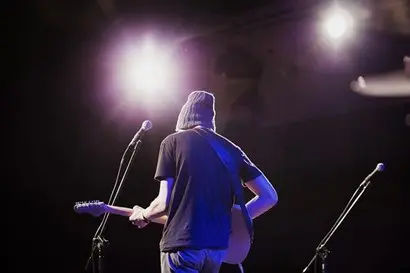
Using approximately 10 billion won from a supplementary budget, the Ministry of Culture, Sports and Tourism distributed a total of 2.1 million performance and exhibition discount vouchers starting August 8. The vouchers were issued through five booking platforms: Nol Ticket, Interpark035080, Melon Ticket, Time Ticket, Ticket Link, and Yes24053280. The vouchers consist of 500,000 for performances and 1.6 million for exhibitions, offering a 10,000 won discount for performances and a 3,000 won discount for exhibitions.
Each person can receive up to two vouchers per booking platform, with an additional two vouchers available for performances and exhibitions outside the capital region. Vouchers must be used by September 19, the end of the issuance period.
Performance genres covered by the discount include plays, musicals, classical music, traditional Korean music (gugak), dance, and multidisciplinary works, while popular music and popular dance were excluded. For exhibitions, the vouchers can be used for visual art exhibitions held in venues like museums, as well as art fairs and biennales, but industrial expos and similar events were excluded.
The Ministry of Culture, Sports and Tourism stated that it prioritized basic arts because the goal of the project is to boost consumption. They explained that they focused on basic arts, which receive relatively less attention, rather than popular arts, which are already so popular that scalped tickets are being sold.
However, the popular arts community is concerned that a project focused on basic arts could establish a hierarchy in the arts. They cited the COVID-19 pandemic, during which large crowds were allowed for classical music or musicals, while strict capacity restrictions were applied to popular music concerts. They argue that support is needed for the sustainability of indie music and regional popular arts, as their business structures are often small-scale. Since indie musicians and regional creators also face financial hardships similar to those in basic arts, they point out that excluding them from support is unfair.
Indie musicians typically operate centered around small performance venues or live clubs. It is a structure where both artists and venues struggle to generate sufficient profit. There are calls for support projects like discount vouchers. Lee Hyun-pa, creator of the YouTube channel "What the Music," emphasized, "I question the justification for providing discounts for multiplex cinema tickets while excluding popular music venues," adding, "Not all popular music genres are as prosperous as K-pop, and many clubs and performance venues have shut down even after the pandemic."
The situation is similar for the regional popular arts scene. Due to a relative lack of cultural infrastructure compared to the capital region, they face greater difficulties in securing audiences and attracting funding. Lee Chang-won, CEO of 'Indie 053,' a cultural planning firm based in Daegu and Gyeongbuk, expressed his disappointment, saying, "There was a lack of policy design to fill the gaps in culturally vulnerable areas at the county level," adding, "One could have imagined creating a fund for regional cultural development from the proceeds generated by booking platforms through these vouchers."
The Ministry of Culture, Sports and Tourism discussed including small-scale performances like indie music or magic shows in the discount vouchers, but excluded them due to concerns over feasibility. A Ministry official stated, "Small-scale performances are either not registered on booking platforms or, even if they are, they are not categorized separately from other popular arts performances," adding, "We judged that it was difficult to separate them within the popular arts category to issue vouchers."
In response, Song Seung-tae, CEO of the Daegu-based cultural planning group 'Others Map,' said, "Under the current Performance Act, almost all performance venues are registered," and added, "If the government has the will, they can categorize performance venues by size."
The performance and exhibition discount vouchers have been popular, and as of August 10, they were sold out on all platforms except for Time Ticket. On platforms like Nol Ticket and Yes24, the vouchers were exhausted within 10 minutes of release. Time Ticket, the only platform exclusively for non-capital region vouchers, even had to post an apology due to access issues and delays caused by heavy traffic.
Currently, about 1.38 million vouchers remain, mostly those dedicated to the non-capital regions. A Ministry official stated, "If many vouchers remain unused by September 19, we plan to issue a second batch in October," adding, "We are considering allowing other booking platforms to issue non-capital region vouchers during the second round."