

[비즈한국] Korea Investment & Securities has surpassed 1 trillion KRW in net profit (consolidated) for the first half of the year. This is a first among domestic brokerage firms. Since 'young CEO' Kim Sung-hwan took the helm, Korea Investment & Securities has been recording all-time high performance. Recognized for his contribution to driving these earnings, CEO Kim successfully secured a second term in March. While the firm continues to see strong performance this year, it has also faced consecutive institutional sanctions from financial authorities, drawing attention to whether internal controls will be strengthened under Kim's leadership.
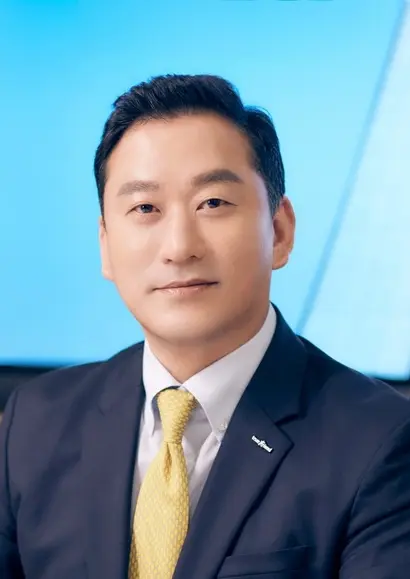
Character
Korea Investment & Securities CEO Kim Sung-hwan, born on November 21, 1969, is a young CEO at 55. He graduated from Danggok High School in 1988 and earned his bachelor's degree in Economics from Korea University in 1994. In 2009, he received a master's degree in Real Estate Finance Investment from Konkuk University, and in 2021, he completed his doctorate in the same field at the same institution.
Throughout his time in the securities industry, he has repeatedly earned the "first" title. He has demonstrated a progressive and aggressive leadership style, pioneering new fields based on his professional expertise.
Career
His career as a financier began at an insurance company. He started his professional life in 1994 at the Corporate Loan Department of Kyobo Life Insurance. In 2001, he moved to LG Investment & Securities, where he served as a team leader for Asset-Backed Securities (ABS) and Project Financing (PF), and in 2004, he moved to Dongwon Securities to serve as an executive in charge of project finance.
In 2005, when Dongwon Securities and Korea Investment & Securities merged, he began his career as a "Korea Investment Man." At Korea Investment & Securities, he saw the youngest and fastest promotions. He became an executive in 2007 when he was appointed as the director of real estate finance, and was promoted to head of the Project Finance Division in 2012—the youngest executive in company history at the time. From 2016, he served as the head of the Investment Banking (IB) Group, and in 2017, he reached the position of Vice President of Corporate Planning. From 2019, he served as Vice President of the Retail Customer Group, overseeing retail and asset management.
Acknowledged for his expertise and drive, he was appointed CEO of Korea Investment & Securities in 2024. The firm's Executive Recommendation Committee evaluated him as "a figure who contributed to the company's development through excellent management ability," adding that he "possesses rich experience and knowledge regarding the entire financial sector." He successfully secured a second term in March, recognized for achieving earnings growth after taking office.
Capability
CEO Kim Sung-hwan is considered an expert in IB and real estate PF. While at Kyobo Life, he introduced PF to the insurance industry for the first time, and at Dongwon Securities, he created a dedicated real estate PF department. He pioneered the market, allowing the securities industry to adopt real estate PF as a new growth driver. He is also the individual who introduced ABS and Asset-Backed Commercial Paper (ABCP) based on real estate PF to the industry.
Since taking on the role of CEO at Korea Investment & Securities, he has achieved record-breaking results. In 2024, his first year in office, the company recorded a consolidated operating profit of 1.2837 trillion KRW and a net profit of 1.1189 trillion KRW. These figures represent a 93.3% and 87.5% increase, respectively, compared to the same period the previous year. Both operating and net profits exceeded 1 trillion KRW, maintaining the industry's top spot. This was due to balanced profit generation across all divisions, including asset management and IB.
In this year, for which he secured a second term, he set a new record by surpassing 1 trillion KRW in net profit in the first half alone. Korea Investment & Securities' consolidated net profit for the first half of 2025 was 1.0252 trillion KRW, a 44.2% increase from the same period last year (710.9 billion KRW). This is the first time a securities firm has exceeded 1 trillion KRW in net profit on a semi-annual basis.
Critical
The firm has faced criticism regarding internal control issues due to frequent sanctions from financial authorities. Since the beginning of this year, the Financial Supervisory Service has issued three institutional warnings/cautions to Korea Investment & Securities. On March 31, the firm received an institutional warning and a fine of 4.49 billion KRW for violations of the prohibition on unfair business practices by discretionary investment and trust businesses. Some employees received disciplinary actions such as three-month suspensions or pay cuts.
On April 1, the firm was issued an institutional caution and a fine of 18 million KRW for violating obligations to ensure the stability of electronic financial transactions. On April 18, it received an institutional warning for issues such as the mis-selling of financial investment products like private equity funds, failure to fulfill explanation obligations, and violation of the prohibition against unfair solicitation. Large-scale accounting errors also occurred. In March, Korea Investment & Securities corrected the revenue and operating expenses in its business reports for the five-year period from 2019 to 2023. As the revenue difference before and after the correction exceeded 5 trillion KRW, it is known that financial authorities have launched an investigation.
CEO Kim Sung-hwan addressed the importance of risk management and strengthening internal controls early this year. In his 2025 New Year's address, he stated, "The company's size and social responsibility have grown significantly. A single mistake or lapse in judgment can lead to unbearable losses," adding, "We must build a 360-degree risk management process that can analyze and manage risks from all angles to prepare for any situation."
Challenges
CEO Kim Sung-hwan has set 'differentiation' and capturing the global market as his goals. Through his New Year's address, he ordered employees to find differentiated businesses in every sector. He also mentioned strengthening individual customer management through hyper-personalized financial content or digital-based customized consulting services. Furthermore, he emphasized expanding networks beyond the Asian market to overseas markets such as the U.S. and the U.K., and discovering deals abroad.
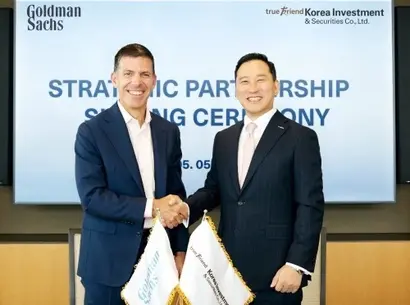
He is particularly dedicated to strengthening global capabilities. In May, the firm signed an MOU with Goldman Sachs, securing the right to sell Goldman Sachs funds domestically. It is also exclusively providing local U.S. research reports. While he is putting great effort into overseas business, the net profits of overseas subsidiaries in the U.S. IB, Vietnam, and Hong Kong decreased in the first quarter compared to the previous year. Whether he can achieve performance improvements by the end of the year remains a point of interest.