

[비즈한국] The State Affairs Planning Committee plans to announce a financial supervisory system reorganization plan this week, the core of which is the dissolution of the Financial Services Commission (FSC) and the establishment of a Financial Consumer Protection Agency. The plan involves effectively dissolving the FSC by merging its supervisory functions into the current Financial Supervisory Service (FSS) to reorganize it into a Financial Supervisory Commission, while transferring domestic financial policy, previously managed by the FSC, to the Ministry of Economy and Finance. Additionally, the Financial Consumer Protection Bureau within the FSS is to be separated and established as an independent organization, the Financial Consumer Protection Agency.
Demonstrating ‘necessity’ rather than backlash?
The FSC has traditionally been responsible for domestic financial policy while also holding certain supervisory powers. However, critics point out that separating policy and supervisory functions and transferring them to the Ministry of Economy and Finance and the Financial Supervisory Commission, respectively, will lead to inevitable confusion and make prompt responses difficult.
While there is no shortage of such backlash within the FSC, the organization seems to be emphasizing its necessity rather than rebutting the reorganization plan point-by-point. Their strategy is to focus on the tasks assigned by President Lee Jae-myung rather than raising their voice externally to prevent 'dissolution.' In fact, since the launch of the new administration, they have swiftly introduced policies such as the June 27 loan regulations, the promotion of productive finance, and plans to limit loans to companies with repeated serious disasters, earning positive evaluations from President Lee Jae-myung.
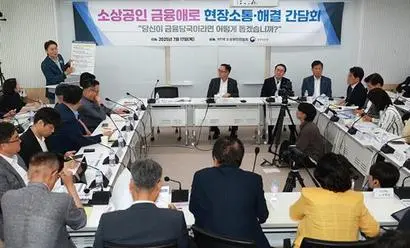
When President Lee gave instructions to resolve small business owner debt by saying, "(To small business owners) You must ask what they would want done if they were the financial authorities and review it," the agency held four 'Fresh Start Fund' seminars in Seoul, Daejeon, Jeonju, and Busan. When President Lee criticized the financial sector's profit-taking through interest rates, they immediately held a meeting with association heads.
FSS, not an administrative body, also faces a 'crisis'
The FSS stands to take over virtually all 'supervisory powers' from the FSC. However, there is significant internal backlash within the FSS regarding the plan to separate the Financial Consumer Protection Bureau from the FSS and upgrade it to a Consumer Protection Agency. There is concern that if the agency is established without being granted supervisory powers, it will lack effectiveness, so it might eventually seize supervisory rights as well. The reason the previously separate Financial Consumer Protection Agency was merged under the FSS was precisely because it held some 'supervisory powers.'
For the FSS, an increase in the number of supervisory bodies would make inter-organizational conflict inevitable, and financial institutions would also face two organizations with supervisory powers to contend with. This is the background behind the FSS labor union’s active stance. In a statement issued on the 7th, the FSS labor union argued, "While keeping the Financial Consumer Protection Bureau as an independent body within the FSS, the position of the Bureau Chief must be upgraded to be on par with the FSS Governor, and independent operation of budget and personnel must be guaranteed." On the following day, the 8th, the union visited the offices of lawmakers on the National Assembly's National Policy Committee to explain why they oppose the separate independence of the Consumer Protection Bureau.
Bank of Korea also eyes bank supervisory rights
However, some point out that transferring financial supervisory authority from the FSC to a Financial Supervisory Commission could be 'unconstitutional.' A similar discussion took place in 2017; at the time, the Ministry of Government Legislation held a government legislative policy working council with the Office for Government Policy Coordination, the Ministry of Economy and Finance, and the FSC, interpreting that "administrative actions such as sanctions against financial institutions and approvals for establishment/mergers are administrative powers that directly affect the rights and obligations of citizens, and therefore, must be carried out directly by administrative agencies," concluding that "transferring them to a private organization could be unconstitutional."
The Ministry of Government Legislation based its reasoning on Article 66, Paragraph 4 of the Constitution and Article 6 of the Government Organization Act, which specify that administrative powers that directly affect the rights and duties of the people, such as sanctions, approvals, and mergers of financial institutions, must be carried out directly by administrative agencies. In other words, the principle is that a civil service organization must exercise public authority. Of course, there is a counterargument that there is no risk of unconstitutionality when granting administrative authority to public corporations like the current FSS. The current FSS also handles 'infringing administrative actions' such as disciplinary actions and sanctions against financial company executives and employees.
The movements of the Bank of Korea (BOK), which seeks to regain supervisory authority over banks, are also a variable. The BOK submitted a financial stability policy system reorganization plan to the State Affairs Planning Committee, which includes strengthening the BOK's macroeconomic supervisory powers. It suggests that the BOK should participate in decisions such as the Debt Service Ratio (DSR), Loan-to-Value (LTV) ratio, countercyclical capital buffer, and liquidity coverage ratio, which are currently controlled by the FSC. In particular, it included the opinion that expansion of powers, such as independent examination rights of financial institutions and the right to demand data from and supervise non-bank financial institutions, is necessary. This reveals their will to reclaim the functions of the Bank Supervision Department that existed under the BOK before the 1997 Asian financial crisis.
Although it is highly unlikely that the BOK's expansion of supervisory powers will be included, as this economic ministry reorganization plan focuses on the partial separation and integration of functions among the Ministry of Economy and Finance, the FSC, and the FSS, observers say it highlights the 'desire for expansion' of these organizations amidst the flow of financial reorganization.
A financial authority official remarked, "Over the past two months, numerous candidates have been rumored, and many names have changed due to reports of people dropping out due to personal matters or wealth formation processes, or others giving up on personnel verification by the Presidential Office." The official added, "If the FSS had the most powerful authority during the Yoon Suk-yeol administration with an FSS governor from a prosecutorial background, might the FSC, which received immediate praise after the launch of the Lee Jae-myung administration, or the newly established Consumer Protection Agency gain more influence? It will also be interesting to see who is appointed to lead each organization after the reorganization."