

[비즈한국] OpenAI, the leader in the AI industry, continues its aggressive moves in both technology and the market with the release of its latest language model, GPT-5. CEO Sam Altman declared that “growth takes precedence over profitability,” stating that the company will continue to invest in training and computational infrastructure even while absorbing massive losses. Alongside the enhanced performance of GPT-5, OpenAI’s investment and financial strategy is once again shaking up the global AI competition landscape.
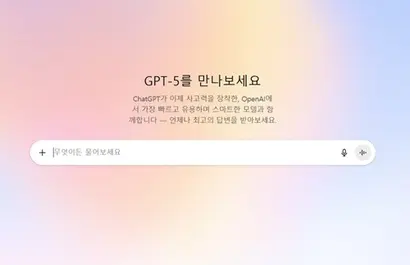
Enhanced GPT-5: Expanding into Conversation and Practical Tasks
On the 7th (local time), OpenAI officially announced its next-generation large language model, GPT-5. Applied as the new base engine for ChatGPT, GPT-5 is available to free users, while paid subscribers can choose from high-performance versions including GPT-5 Pro, Mini, and Nano.
OpenAI CEO Sam Altman compared GPT-5 to a “PhD-level expert in your pocket.” The performance improvements are also confirmed by the numbers: the hallucination rate in the healthcare sector has dropped to 1.6%, and overall hallucination rates have been reduced by 20–80%. Processing speed and accuracy have improved significantly across various fields, including coding, creative writing, mathematics, and visual comprehension.
GPT-5 introduces an architecture that integrates existing language models with reasoning models, allowing it to select the optimal model in real-time based on the complexity of the request. Conversation styles can also be customized, with options such as "Cynic," "Robot," "Listener," and "Nerd." Agent capabilities like app creation, scheduling, and research briefing have been strengthened, and a “Vibe Coding” feature has been added, allowing users to implement apps without writing code directly.
“Prioritizing Growth Despite Losses”… Surging Investment and Corporate Value
The day after the GPT-5 launch on the 8th, CEO Altman stated in an interview with CNBC that “as long as the AI model is tracing a clear growth curve, it is reasonable to absorb losses for a significant period,” affirming that growth and infrastructure investment will come before profitability.
OpenAI posted $3.7 billion (4.9 trillion KRW) in revenue last year but is estimated to have incurred a loss of approximately $5 billion (6.95 trillion KRW). The annualized revenue for this year is projected to be in the $12–13 billion range, with the loss-making trend expected to continue.
CEO Altman said, “OpenAI could turn a profit faster than expected if it wanted to, but since we are not a publicly traded company, we are free from the pressures of the public market and will continue to invest,” adding, “It is wonderful that we are not a public company.”
OpenAI is raising massive amounts of capital to fund large-scale investments. Following a $6.6 billion (9.1 trillion KRW) raise last October, the company announced a $40 billion funding round this year. While external estimates regarding the specific terms vary, the company's valuation is estimated to have grown from $157 billion last October to $300 billion in March, reaching approximately $500 billion (695 trillion KRW) currently.
ChatGPT's weekly active users have surpassed 700 million, and paid business users have exceeded 5 million. Microsoft plans to integrate GPT-5 across all its platforms, including MS 365 Copilot. In response, Elon Musk remarked, “OpenAI will swallow up Microsoft.”
When asked about his relationship with Musk, CEO Altman replied, “I don’t think about him that much,” and drew attention by adding, “It seems like Musk spends all day on social media saying our models are not good.”
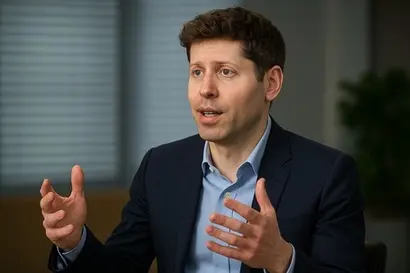
The Evolution Toward AGI: What Challenges Remain?
In the AI industry, GPT-5 is evaluated as a model that significantly increases practicality and reliability on the path toward Artificial General Intelligence (AGI). However, some communities like Reddit have pointed out initial bugs, including performance issues in certain areas compared to the previous 4o model.
The launch of GPT-5 clearly demonstrates the direction of OpenAI’s business strategy alongside its technological evolution. Reduced hallucination and strengthened agent capabilities increase the potential for AI in practical applications, while personalized conversation and app development features broaden the customer touchpoints. However, the strategy of focusing on growth while absorbing losses could become a risk depending on the funding environment and competitor responses.
Furthermore, while close cooperation with Microsoft is advantageous for ecosystem expansion, some point out that excessive reliance on a specific platform could delay the establishment of an independent business model. Additionally, the critique that GPT-5 still lacks creativity and human-like sensibilities in some areas suggests that technical and ethical challenges remain for the development of future models.
Beyond this, there are many hurdles to overcome before achieving AGI, including computational infrastructure, data quality, and social acceptance. How long OpenAI can maintain its card of “long-term investment without public market pressure” is considered a key variable for its future growth curve.