

[비즈한국] The controversy over music copyright infringement related to 'WAKJMAX', a fan-made derivative game of gaming YouTuber Woowakgood, has escalated into a multi-billion won licensing fee dispute with the Korea Music Copyright Association (KOMCA), the nation's largest music rights organization. It has been confirmed that KOMCA recently notified Woowakgood and the game's developer of its intention to collect approximately 6.5 billion won in licensing fees, holding them jointly liable. KOMCA maintains that the game unauthorizedly used around 300 songs managed by the association and intends to pursue legal responsibility. Woowakgood’s side is pushing back, arguing that KOMCA is abusing its status as a copyright holder to demand excessive fees.
Deemed Unauthorized Use of Music in Game Without Prior Permission
Last month, KOMCA issued an official letter notifying Woowakgood that it would collect 6.45922 billion won in usage fees. The letter stated that since the music was used without prior authorization, the parties must sign a usage agreement based on the payment of copyright fees for the period of unauthorized use. KOMCA is a trust organization that shares the management of the music copyright market with other groups like the Together Music Copyright Association (KOSCAP). It has been identified that the association sent the same notice sequentially to Parable Entertainment, the agency to which Woowakgood belongs, and the main developer of WAKJMAX (known by the handle ‘Simsimhanmogi’).
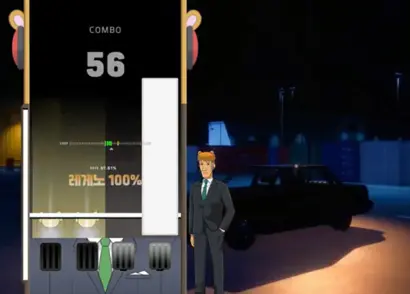
WAKJMAX is a fan game modeled after the keyboard-based rhythm game ‘DJMAX Respect V’. It was created by developers who gathered voluntarily within Woowakgood’s fandom. Neowiz095660’s DJMAX series is considered a representative domestic rhythm game with a 20-year history. WAKJMAX won a fan game competition held by Woowakgood at the end of 2022 and was released for free on his Naver fan café in January of the following year. The game featured numerous tracks, including songs by ‘ISEGYE IDOL’, a popular virtual girl group conceptualized by Woowakgood, as well as various popular cover songs.
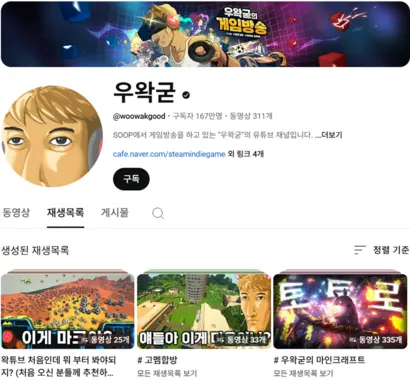
Despite being unofficial content, the game spread through community channels for about two and a half years, gaining significant attention. Woowakgood, who has a YouTube channel with 1.6 million subscribers, is one of the most prominent virtual creators (who perform using a virtual avatar without revealing their face) in Korea. As a solo broadcaster who has developed various content, including games and virtual experiences, since the early days of internet broadcasting, his influence is characterized by high fan participation, particularly within his active fan café.
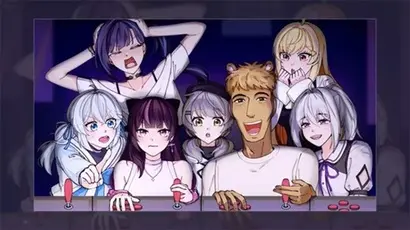
The controversy surrounding WAKJMAX was ignited when DJMAX fans raised issues after Neowiz, the operator of DJMAX, announced plans to include songs by ‘ISEGYE IDOL’ in a new update. DJMAX fans, who harbored resentment over past remarks by Woowakgood that seemed to belittle the original game, protested. Consequently, Neowiz canceled the inclusion of the songs and revised its guidelines to completely prohibit the creation and distribution of derivative fan games without prior approval.
The issue expanded into unauthorized copyright use. The inclusion of cover songs of popular K-pop tracks—such as those by aespa and (G)I-DLE—performed by ISEGYE IDOL became a focal point. As it became known that the music was utilized and distributed without the permission of the original rights holders, such as singers and composers, Woowakgood suspended the platforms where WAKJMAX was distributed. KOMCA responded by flagging potential violations of copyright law, stating that the game "exceeds private reproduction (personal use for non-profit purposes)" and signaled legal action.
Divergent Claims Over Calculation Basis; How Much Fan Creation is Permissible?
KOMCA is seeking joint liability from both the developer and Woowakgood. According to the official letter, KOMCA considers the developer who created and posted the game as the primary infringer of reproduction and public transmission rights for music managed by the association, stating that "civil and criminal liability for intellectual property infringement is clearly established."
Woowakgood was identified as an enabler of copyright infringement. KOMCA cited as evidence that Woowakgood organized the game competition, and even after being aware that the music was being used without authorization, he played the game on his live broadcasts, thereby deriving commercial benefit. A KOMCA official stated, "We received legal advice regarding the infringer," adding, "Considering that he did not take any measures regarding the posts on his community platform where the game containing copyrighted music was being distributed, and even promoted it, we interpreted that there is joint responsibility."
Woowakgood’s side argues that the 6.5 billion won demand is excessive, claiming that the trust organization is asserting rights far beyond a reasonable scope. They also emphasized that for the developer, the project was an extension of fan activities, and apart from the 1.5 million won competition prize, no profit was generated from the development and operation. While they admit the copyright infringement and are seeking solutions, they argue it is problematic to use high-priced collection demands—which are disconnected from the actual scale of damage—as a tactic to force an agreement.
Parable Entertainment, Woowakgood’s agency, stated, "A demand reaching 6.5 billion won is excessive when considering the nature of fan-created content and the realistic scale of damage," and added, "Notifying of a high-cost demand at a level applied to corporations for derivative works, even though it was not content produced and distributed for profit, is a measure that goes beyond appropriateness."
Setting aside the specific copyright controversy over WAKJMAX, it is worth examining the basis for the fee calculation in this case, especially as dissatisfaction with KOMCA’s licensing fee calculation standards and collection methods has been accumulating in the broadcasting and OTT industries. In 2023, KOMCA was sanctioned by the Fair Trade Commission for charging excessive fees to broadcasters, which hindered the business of its competitor, KOSCAP. Furthermore, early this year, KOMCA filed a civil lawsuit worth 40 billion won against the OTT platform Wavve over unpaid usage fees.
The estimated usage fee of 6.4 billion won presented by KOMCA consists of approximately 6.382 billion won for the on-demand download service sector and approximately 77 million won for the online game and animation sector. The on-demand download portion, which accounts for the vast majority of the total, was calculated using the formula: ‘341 association-managed songs included in WAKJMAX × unit price per song (77 won) × number of downloads (264,400) × stake ratio (91.93%).’
The number of downloads suggested here is equivalent to half the number of views of the post where WAKJMAX could be downloaded. When asked about the basis for setting the download count and the calculation of the claimed amount, a KOMCA official explained, "The number of game downloads is a figure provided directly by Woowakgood’s side to the association," and added, "The total amount was calculated by mapping the copyrighted music used in the game with the databases of the association and the Japanese Society for Rights of Authors, Composers and Publishers (JASRAC), in accordance with the association's collection regulations."
On the other hand, an official from Parable Entertainment stated, "While inquiring about the basis for the claim, we heard from the association that the download count was based on the cumulative view count of the post. We explained that it is difficult to determine the actual number of downloads and that the number of users who actually downloaded and ran the game would be less than half that amount, yet the next official letter stated the figures as if they were values proven and revealed by Parable."
As both sides are in a position where it is difficult to determine the exact number of downloads, it appears that estimates were reflected in the total amount regardless of the actual scale of usage. Given that the number of downloads was applied without objective verification, it seems inevitable that the calculation of the fees will be criticized as arbitrary.
This case is evaluated as having initiated a full-scale discussion on the scope and application standards of copyright responsibility in a situation where fandom-based derivative works are actively consumed online, regardless of content genre.
Pop culture critic Jung Deok-hyun explained, "This is a problem stemming from a lack of awareness regarding copyright. However, copyright law is not an exclusive law for the protection of rights holders alone; it is a law that simultaneously holds a public role, such as cultural creation. Judgments on 'derivative works' (parodies based on original works, fan art, etc.) also vary in permissibility depending on individual situations and conditions." Critic Jung noted, "While average fans are unlikely to pursue actual profits or commercialization, entities with a certain level of influence or profit structure have a responsibility to obtain prior permission from the copyright holder."