

[비즈한국] The coastal and offshore fishing vessel reduction project, which has been underway for over 30 years with the goal of restoring marine resources, is failing to deliver the expected results. Despite investing over 2 trillion won, while the number of fishing vessels has decreased, marine resource levels remain far below targets, and the catch volume has hit an all-time low. Fisheries experts advise that the vessel reduction system must be improved to be more effective.
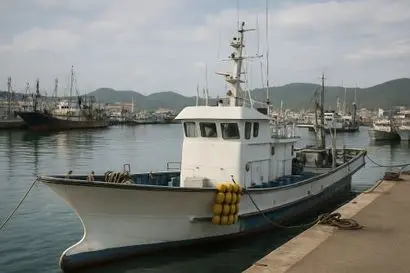
According to registered fishing vessel statistics released by the Ministry of Oceans and Fisheries on August 1, the number of domestic fishing vessels in 2024 was 63,731, a decrease of 502 vessels compared to 2023. The primary reason for the decline in the number of registered vessels is the coastal and offshore vessel reduction project. Last year, the number of coastal and offshore fishing vessels decreased by 202 to 38,807.
Started in 1994, the vessel reduction project was intended to improve the structure of the coastal and offshore fishing industry, which was facing declining marine resources and worsening management conditions. Coastal and offshore fishing production peaked at 1.725 million tons in 1986 and has been on a continuous decline since. The cause has been attributed to the depletion of marine resources due to an excessive number of fishing vessels and fishing activities. The necessity for reduction emerged as South Korea's number of fishing vessels relative to production was 4.5 times that of Japan and 6 times that of Norway.
Over the past 30 years, more than 2 trillion won in total has been invested to reduce over 30% of all coastal and offshore fishing vessels, but the effect has been minimal. Most significantly, the recovery of marine resource levels has been stagnant. As of 2021, the marine resource volume was approximately 3.45 million tons, failing to even reach 70% of the target volume of 5.03 million tons. The catch volume has also dropped significantly, with last year's coastal and offshore production recorded at approximately 841,000 tons, the lowest level since 1971.
Consequently, there is growing support for the idea that for the project to be effective, reductions must be carried out on a large scale over a short period. The argument is that only by completing the reductions quickly can we buy time for marine resources to recover. An official from the National Federation of Fisheries Cooperatives stated, "If we reduce vessels little by little, the remaining vessels and foreign vessels will catch all the fish," adding, "It is necessary to concentrate the budget, which is currently planned in 5-year increments, to reduce the number of vessels all at once."
Currently, there is high demand from fishermen to have their vessels decommissioned. With declining catches due to the climate crisis and the aging of the workforce, more fishermen are looking to retire their boats and leave the industry. Fishermen selected for the program receive decommissioning subsidies, including closure grants based on the sum of their earnings over the previous three years as determined by appraisal, the residual value of the vessel and fishing gear, and livelihood stabilization funds for crew members.
However, because the number of vessels selected for reduction cannot keep up with demand, the selection process has become so competitive it is referred to as a "reduction race." The average competition rate is as high as 3 to 4 to 1.
While the demand for reduction is high, the budget is insufficient. Last year, the annual reduction target could not be met due to a lack of budget. The "3rd Basic Plan for Improving the Structure of Coastal and Offshore Fisheries" (2024–2028) set a target of reducing 524 offshore vessels and 1,500 coastal vessels. While an annual reduction of about 100 offshore and 300 coastal vessels is required, only about 80 offshore and 200 coastal vessels were reduced last year.
Fishermen are demanding the easing of conditions and the expansion of eligibility for the reduction program. To apply for reduction, one must meet one of the following three conditions: 60 days or more of operation within one year; 90 days or more of operation within two years; or annual sales of marine products through fishery management of at least 1.2 million won over the past year.
Even if an applicant is eligible, the Ministry of Oceans and Fisheries selects vessels for reduction by considering the vessel's age, number of operating days, and performance. Kim Hae-seong, Chairman of the Korea Coastal Fishermen's Central Association, said, "Last year in South Gyeongsang Province, 88 people applied but only 6 or 7 were selected," adding, "Fishermen are engaging in unreasonable fishing that doesn't even turn a profit just to meet the operating day requirements, so the conditions for reduction should be eased."
Meanwhile, some argue that the causes of declining marine resources and production must be viewed through a more complex lens. They suggest that reduction alone is not the solution. In a "22nd National Assembly Legislation and Policy Guidebook" published on May 30, 2024, the National Assembly Research Service concluded that it is practically difficult to reach the target marine resource level of 5.03 million tons solely with the current reduction system. Legislative Researcher Yoo Je-beom stated, "A multidimensional approach is needed, such as adjusting fishing grounds due to climate change, establishing a joint management system for marine resources among neighboring countries, and modernizing fishing vessels."
The Ministry of Oceans and Fisheries plans to improve the reduction project by securing budget and linking it with other fishery policies. A ministry official stated, "We are in discussions with financial authorities to increase the relevant budget due to the high demand," adding, "We will strive to increase the effectiveness of the reduction project by linking it with other policies such as fishing gear management, carrier vessel management, and crackdowns on illegal fishing."