

[비즈한국] The U.S. Food and Drug Administration (FDA) has issued a warning that certain anticonvulsants may increase suicidal ideation even after patients stop taking them. Anticonvulsants are used to treat conditions such as epilepsy and neuropathic pain. The drugs in question have been released in Korea as over 400 improved new drugs and generics, including the original medications, with a market size reaching 180 billion won. Significant caution is required for both patients taking these medications and the medical staff prescribing them.
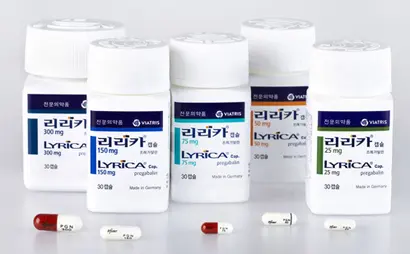
According to the FDA on the 5th, warning labels were added in April for Lyrica, Neurontin, Gralise, and Horizant, stating that "patients who are planning to take or stop taking the medication may experience suicidal thoughts and behaviors even after discontinuation."
Concerns that the pregabalin component in Lyrica and the gabapentin component in Neurontin, Gralise, and Horizant increase the risk of suicidal thoughts and behaviors in patients have been raised for a long time. The latest warning indicates that not only current users but also patients who have stopped the medication must remain vigilant.
Additionally, through post-market surveillance, the FDA has included cases of adverse reactions that may occur upon discontinuation. These include not only suicidal thoughts and behaviors but also seizures, depression, disorientation, psychotic symptoms, dizziness, and malaise.
A warning has also been added stating that if pregnant women take these drugs in combination with opioid painkillers just before delivery, there is an increased risk of neonatal withdrawal syndrome in newborns, characterized by irritability, hyperactivity, abnormal sleep patterns, high-pitched crying, tremors, vomiting, diarrhea, and low birth weight.
Pregabalin and gabapentin are used as anticonvulsants, primarily for treating epilepsy and neuropathic pain. As the FDA raises awareness regarding these drugs, attention is also turning to the need for enhanced safety measures for treatments released in the domestic market.
Lyrica is an original medication released in Korea by the global pharmaceutical company Viatris, with annual sales exceeding 70 billion won. In addition to Lyrica, about 260 generics containing the pregabalin component have been approved in Korea, including Gabanuro (Hanlim Pharm), Gabelin (Samil Pharm000880), Neurogabalin (Mothers Pharm), Neurocaba-PG (Samjin Pharm005500), Nucapen (Kyungdong Pharm011040), Dongkwang Pregabalin (Dongkwang Pharm), Laraca (Yuyu Pharma), Rigalin (Korea Pharma032300), Ricafree (Daewoong Pharm069620), Yuhan Pregabalin (Yuhan Corporation), J-Gaba (Jeil Pharmaceutical), Cavalin (HK inno.N), and Pgabalin (Vivozon Pharmaceutical). Including these products, the domestic pregabalin market is estimated at 140 billion won annually.
Neurontin and Gralise, which contain the gabapentin component, are also available in Korea. Viatris's Neurontin is sold as the original drug, while Gralise, which uses an extended-release tablet formulation rather than a capsule, was released by Alvogen. The domestic market for gabapentin-based drugs is worth 40 billion won annually, with Neurontin estimated to account for about half of that.
Beyond Neurontin and Gralise, approximately 140 improved new drugs and generics have been released in Korea, including Gabafenin (Hanmi Pharmaceutical), Neurogapen (Celltrion Pharm), Dong-A Gabapentin (Dong-A ST), Megapentin (Ildong Pharmaceutical), RP Gabapentin (RP Bio), Witherpentin (Withus Pharmaceutical), and Hyundai Gabapentin (Hyundai Pharm).
An official from the Ministry of Food and Drug Safety stated, "We are reviewing data submitted by domestic pharmaceutical companies, domestic and international approval status, and domestic adverse event reports regarding the changes in overseas approval for these components. We plan to reflect any necessary updates based on the results of our review."