

[비즈한국] As the U.S. government applies new reciprocal tariff rates for each country, changes in the global production strategies of domestic companies are expected. Although Korea-U.S. tariff negotiations have concluded, semiconductor and home appliance companies face remaining challenges such as securing export price competitiveness in North America and pressure to increase local production, forcing them to adjust manufacturing plans. Consequently, they are seeking countermeasures, such as increasing the utilization rates of U.S. local factories and leveraging overseas production bases with lower tariff rates. With uncertainty rising in industrial sectors, focus is turning to the strategy shifts companies are making to prepare for prolonged tariff risks.
Sensitive to Semiconductor Tariff Criteria, Global Supply Chains Become More Complex
Following the results of the Korea-U.S. negotiations, the tariff rate, adjusted from the existing 25% to 15%, will be fully reflected starting on the 7th (local time). Tariff rates by semiconductor product category are expected to be finalized next week, following the announcement by the U.S. Secretary of Commerce. With the Trump administration's announcement of product-specific tariffs imminent, major companies are on high alert regarding the details, including specific clauses, tax rates, and application criteria.
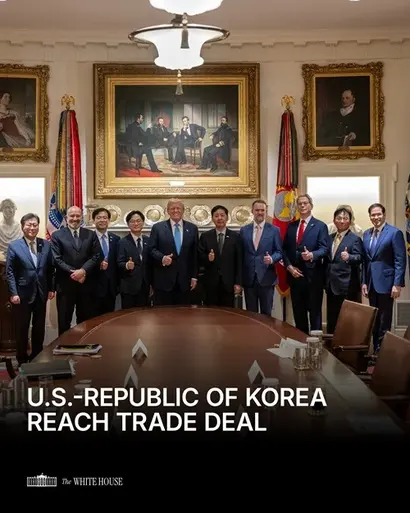
While the tariff war seems to have subsided as the U.S. has notified 69 countries of the adjusted reciprocal tariff rates, the burden on the industry remains as production bases are scattered across different countries and the final regulations have not yet been confirmed.
While it is positive that the semiconductor sector has been promised 'Most Favored Nation (MFN)' status, creating favorable conditions for entry into the U.S. market, experts suggest the benefits may be limited. Semiconductors are complex intermediate goods produced through global division of labor. Korea's direct exports to the U.S. account for $10.6 billion (approximately 14.7117 trillion won), which is lower than that of China (32.8%), Hong Kong (18.4%), Taiwan (15.2%), and Vietnam (12.7%). However, considering the volume passing through Taiwan foundries (contract manufacturing) like TSMC or Southeast Asian packaging plants before reaching the U.S., the impact of tariffs is even greater.
This is why the detailed regulations for MFN application are seen as a substantial variable. Since these benefits are based on a product's country of origin, the detailed criteria to be decided later are considered more important than the broad promise. Major export destinations for domestic semiconductor companies like Samsung Electronics005930 and SK Hynix000660 include China, Hong Kong, Taiwan, Vietnam, India, the Philippines, and Malaysia. The structure involves finished goods reaching the U.S. via these countries.
The Beginning of a Great Migration of Production Bases Considering Tariffs and Logistics?
The calculation for home appliance exports, which were previously 'tariff-free,' has also become complex. Moves to adjust production hubs to reduce tariff shocks are expected to gain momentum. The strategy is to analyze all costs, including tariffs and logistics applied to overseas production bases, when exporting products to the U.S., and concentrate volume in the country with the lowest total cost.
On the 31st of last month, Park Soon-chul, CFO of Samsung Electronics, stated during a Q2 earnings conference call, "In addition to semiconductors, finished goods such as smartphones, tablets, PCs, and monitors (included in the Department of Commerce's investigation) are expected to be affected. We plan to prepare countermeasures to minimize the impact by analyzing opportunities and risks from various angles, based on the investigation results and the outcomes of Korea-U.S. consultations regarding semiconductors."
Reciprocal tariff rates vary for countries where domestic home appliance production networks are centered, such as India (25%), Vietnam (20%), Indonesia (19%), and Mexico (25%). India, which purchased large quantities of Russian oil, is facing pressure from President Trump that even higher tariff rates could be applied, despite a 25% high tariff being pre-announced. The conflict between the U.S. and India is not a positive signal for Korea. India accounts for up to 30% of Samsung Electronics' total smartphone production and is one of LG Electronics'066570 major overseas production sites.
In the case of Vietnam, variables other than the base tariff rate are notable. During the tariff negotiations, Vietnam agreed to impose a 40% tariff on Chinese transshipment goods passing through its territory, signaling its participation in the U.S.'s containment strategy against China. A reduction in export volume to the U.S. produced in Vietnam is expected to be inevitable.
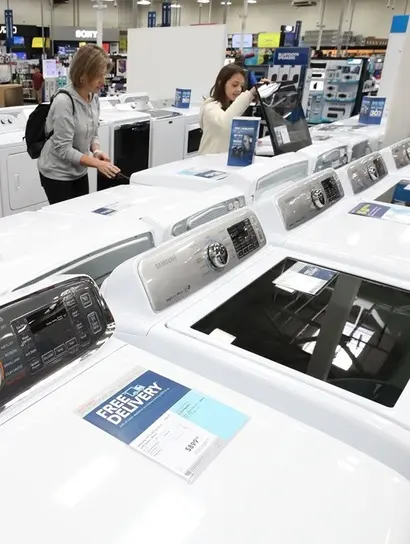
Conversely, strategies to increase the share of production lines near the U.S., such as plants in Mexico tied to the United States-Mexico-Canada Agreement (USMCA), are likely to be implemented. The direction is to reduce volume from India and Vietnam and reorganize it toward Mexico. Mexico was initially warned of a 25% tariff, but a 90-day grace period was added. Canada was hit with a high rate of 35%, but the effective tariff rate is relatively low due to the USMCA's 'automatic tariff exemption' clause. Bloomberg and the Bank of Canada assessed the effective tariff rate for both countries at 6.9%.
Samsung Electronics produces home appliances such as TVs and refrigerators in the Tijuana and Queretaro regions of Mexico. LG Electronics operates plants in Reynosa and Monterrey. During a conference call held late last month, an LG Electronics executive stated, "For washing machines, we plan to secure flexibility in responding to tariffs by adding production in the Mexicali region of Mexico starting in September."
While the clearest solution is localization in the U.S., the burden is significant when considering labor costs, taxes, and energy-related expenses, leading to deep deliberation. An industry official said, "Rather than making an immediate decision, there is a need to observe market conditions further," adding, "While expanding local production is one of the main scenarios, the speed and direction may change." Samsung Electronics and LG Electronics are increasing the proportion of production at their U.S. local plants—such as those in South Carolina and Tennessee (for washing machines)—while also maximizing the use of production hubs in Mexico, Vietnam, and Southeast Asia to disperse the tariff shock.
Hwang Yong-sik, a professor at Sejong University's School of Business, pointed out, "Imposing tariffs will ultimately lead to price increases across the market. To maintain competitiveness in the new 'Trump 2.0' era, complex factors beyond price—such as establishing stable global supply chains that guarantee production capacity, procurement capabilities, and the quality of premium products—will come into play."