

[비즈한국] Although the Korea-US tariff negotiations have concluded, a state of emergency has been declared in the non-ferrous metal industry as a 50% tariff remains in effect for certain items, including steel, copper, and aluminum. Because a large portion of the non-ferrous metal sector consists of small and medium-sized enterprises (SMEs), it is difficult to cope with such high tariffs.
Steel and aluminum have been classified as excluded items in this negotiation, meaning the existing 50% tariff continues to apply. The Trump administration imposed a 25% tariff on aluminum on February 10 and raised it to 50% on June 4. Starting August 1, a high tariff of 50% will also be applied to certain copper products.
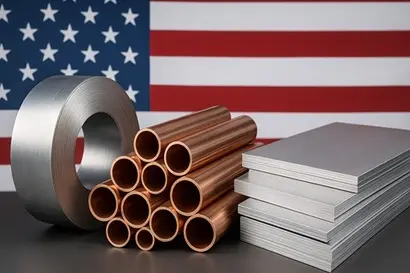
Consequently, the non-ferrous metal industry appears set to take a direct hit. Copper and aluminum account for approximately 80% of total non-ferrous metal exports, and the US is Korea's largest export destination alongside China. As of June 2025, the US accounts for about 16% of total non-ferrous metal exports. An industry official stated, "The tariff burden is so great that I am worried the industry's situation will worsen," adding, "If import prices rise, the burden on US consumers will eventually increase as well, and I’m not sure if they can bear it."
Since most domestic non-ferrous metal companies are SMEs, local production in the US is not easy. They lack the financial capacity, and given the high costs of living and labor in the US, the profitability of operating local factories is uncertain. While the industry is attempting to diversify its export markets, the Southeast Asian market is already dominated by Chinese firms, making entry difficult. Lee Seung-hoon, head of the Korea Non-Ferrous Metal Association, stated, "The US is a market with high profit margins relative to costs, so it's not easy to give up," and added, "We plan to request tax benefits such as corporate tax cuts and electricity bill reductions from the government."
The sentiment within the industry is mixed depending on the scope of the tariff application. Raw materials such as copper ore, concentrates, and electrode plates were excluded from this round of tariffs, allowing smelters and electrolytic copper producers to breathe a sigh of relief. On the other hand, semi-finished copper products (pipes, wires, copper rods, copper plates, etc.) and copper derivatives (pipe fittings, electrical wires, connectors, electrical components, etc.) are subject to the 50% tariff.
In the case of copper products used in automobiles, they are not subject to double taxation with the automotive tariff (15%). Some in the industry are showing confidence based on their technological superiority. Particularly for items like electrical wires or copper foil for secondary batteries, exports are expected to maintain a certain level despite the tariffs, as there is a lack of production infrastructure within the US.
Taihan Cable & Solution001440 stated, "We are reviewing investment plans, including local production, to minimize the impact of tariffs," and projected, "As investment in US power infrastructure expands and the preference for our products remains high, exports will likely continue for the time being."
Conversely, there is concern that for general-purpose semi-finished goods such as copper rods or copper plates, a sharp decline in exports is inevitable if they lose out in price competition, as the US already has established production infrastructure for these items.
On August 1, the Ministry of Trade, Industry and Energy held an emergency impact review meeting for the copper export industry. The ministry plans to designate the Non-Ferrous Metal Association as a channel for response, periodically monitor the impact by item, and prepare additional support measures. Na Seong-hwa, Director General for Industrial Supply Chain Policy at the Ministry of Industry, stated, "A decline in export volume to the US may be inevitable, but we will minimize the shock through export diversification and support for domestic production."